Personalized Christmas books for kids: what to order and when
Personalized Christmas books for kids: what to order and when
A book built from your child's own drawing is the Christmas gift that survives January. What to order, the December deadlines that actually matter, and when to give up and go digital.
A book built from your child's own drawing lands differently than a name-swap book under the tree, because they recognize the character as something they made. DoodleTale turns one photographed drawing into a printed 30 page storybook, $29.99 for an 8×8 inch softcover or $9.99 digital. Order the printed book by December 1. The printer is not the risk in December, the carrier is. After roughly December 15, digital is the only honest answer.
Most Christmas gifts for kids get played with through January, then quietly forgotten. Books tend to stick around longer, but not all personalized books are worth the same, and the December ordering advice you find on most of them is written for an ordinary month.
Why drawing-based books work as Christmas gifts
A name personalized book is a nice gift. A child's name in a story gets attention and prompts re-reads, and for a toddler who has just worked out that those letters mean them, it can be genuinely thrilling.
A book built from their drawing does something different, and the difference is worth understanding before you spend the money. A name-swap book is a story that already existed, with a variable filled in. The child is inserted into somebody else's world. The recognition is real but it is shallow, and it tends to wear off around the third reading, once the novelty of the name has been absorbed.
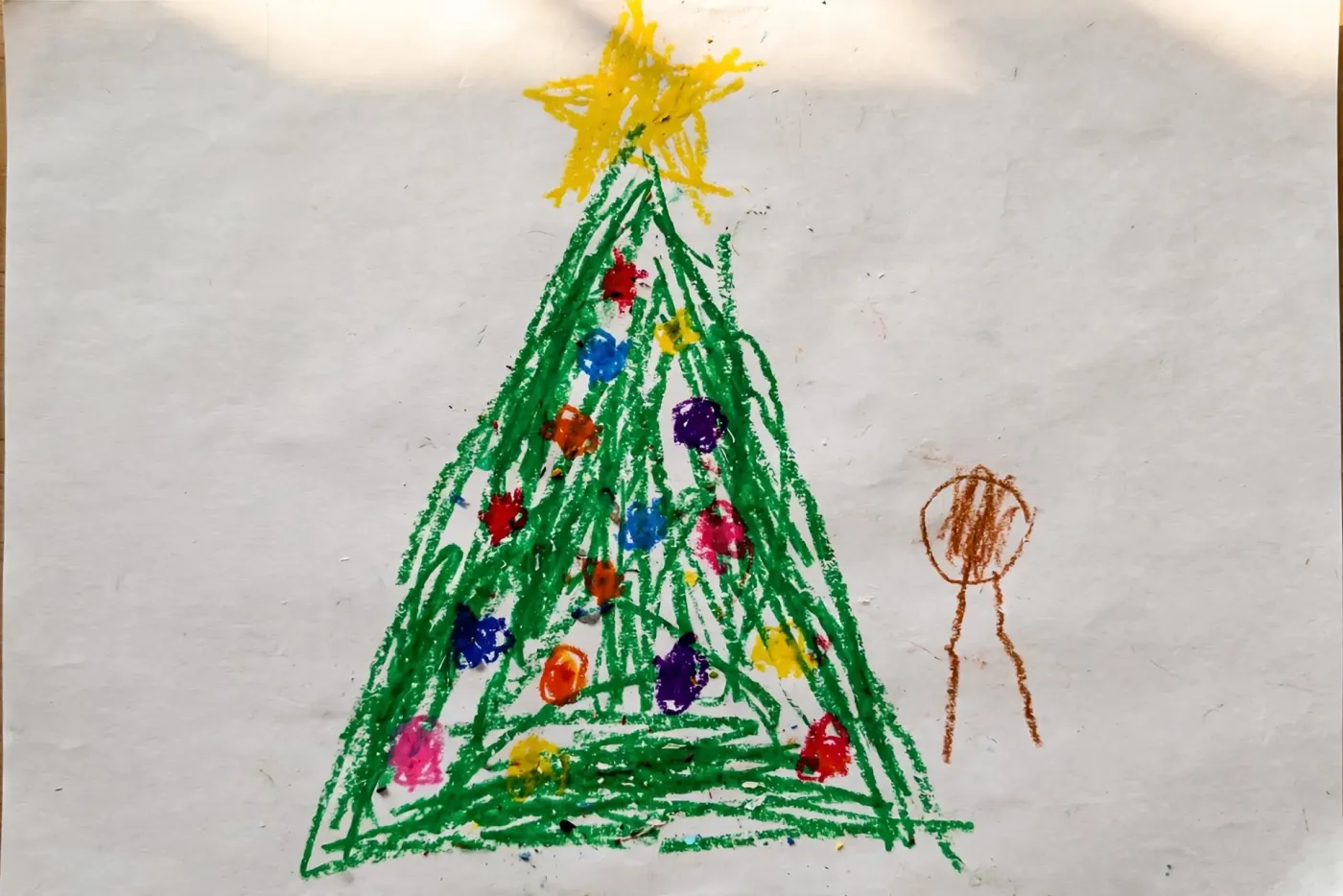
A drawing-based book inverts that. The story is built around something the child invented. When they open it and see the character they drew on the cover, that specific wobbly creature or circle-headed person with the legs coming out of its head, the recognition is of their own work, not their own name. They are not being inserted into a story. They are seeing what happened to something of theirs.
That distinction matters more at Christmas than at any other point in the year, because Christmas morning is a volume problem. Fifteen things get opened in ninety minutes. Almost nothing gets more than a minute of real attention. A gift that produces a genuine double-take survives that morning; a gift that produces polite interest does not.
DoodleTale makes the drawing-based kind. You photograph a drawing your child made on plain paper and upload it. The AI builds a character from what they drew and writes an original story around it, with your child as the named hero. A printed book ships to your door, and you see the whole thing free before you decide whether to pay for it.
What age range this works for
This gift works best for children aged 3 and up who draw on their own. A 4-year-old's circle-head figure makes a perfectly good character. It does not need to be sophisticated, and the wobblier it is the more clearly it reads as theirs.
For children under 3, a name-based personalized book is the better fit. Most kids this age are not producing drawings with distinct characters yet, and they respond strongly to hearing their name. Buying them a drawing-based book is buying a gift for the parent, which is a fine thing to do as long as you know that is what you are doing.
The Christmas ordering deadlines, in one place
Two dates matter, and only one of them is about DoodleTale.
Order by December 1 for a printed book. Processing is 1 to 3 days and delivery is 3 to 7, so 4 to 10 days in total. In a normal month that would put December 12 comfortably inside the window. December is not a normal month. December 1 buys you a fortnight of slack for a job that nominally needs a week.
After about December 15, switch to digital. The $9.99 edition is ready as soon as it is generated, so there is no shipping window left to miss. It prints perfectly well at a local copy shop if you want something physical under the tree, and plenty of families do exactly that: print it, staple or spiral-bind it, and let the proper printed copy arrive in January as a second, quieter moment.
If it is December 23 and you are reading this, digital is the only honest answer. Anyone promising you a printed keepsake by Christmas at that point is quoting you a production time and ignoring the carrier.
What December actually does to a delivery
Here is the part that gift guides skip, and the reason the December 1 date is not padding.
The printing is not the risk. The book is produced locally, in a day or two, and that stays true in December. What changes is everything that happens after the box leaves the printer, and the failure is not that the parcel moves slowly. It is that it stops moving at all.
We have watched this happen to one of our own orders. A book left the printer on Christmas Day and the carrier did not scan it as picked up until January 2. Eight days sitting still, in a building, with a tracking number that said nothing had gone wrong. Once it was actually in the network it moved normally and landed four days later. Off-season, that same journey from printer to doorstep takes about three days end to end.
That is the shape of the December risk. It is not a slow parcel, it is a queue you cannot see, at a handoff nobody's tracking page describes. No amount of paying for faster shipping fixes a parcel that has not been collected yet, which is why the answer is a calendar date rather than a shipping upgrade.
The carriers publish holiday cutoff dates every October, and those dates are the last day they will attempt delivery by December 25, not a date they guarantee. Ordering to hit a carrier's published cutoff exactly is a bet on nothing going wrong at the busiest moment of their year. December 1 is not a cautious version of that bet. It is a different bet, made early enough that the queue does not matter.
What to avoid ordering in December
Two things reliably go wrong at Christmas specifically.
The first is ordering a physical gift that depends on a drawing you have not got yet. If you need to ask a parent for a photo, ask in November. The gap between "I'll ask them this week" and actually having the photo is where most late orders come from, and it is nearly always a week longer than anyone plans for.
The second is a subscription. Personalized book subscriptions get marketed hard in Q4 because a recurring charge dressed up as a gift is excellent business, and a year later most families have forgotten they are paying for it. If the point is one memorable thing under the tree, buy one memorable thing. The subscription math is worth reading before you commit anyone to twelve months.
Getting the drawing if you're not nearby
You do not need the original drawing. Text the parent and ask for a photo of something the child drew on plain paper, something they invented, clear light, no shadows. That is enough to place the order, and the book ships directly to the child.
This is the case where a drawing-based book quietly beats everything else a distant grandparent can buy, because the thing that makes it good is the one thing you can get by text. There is a fuller gift guide for grandparents covering how to ask without spoiling the surprise.
What makes a drawing work well
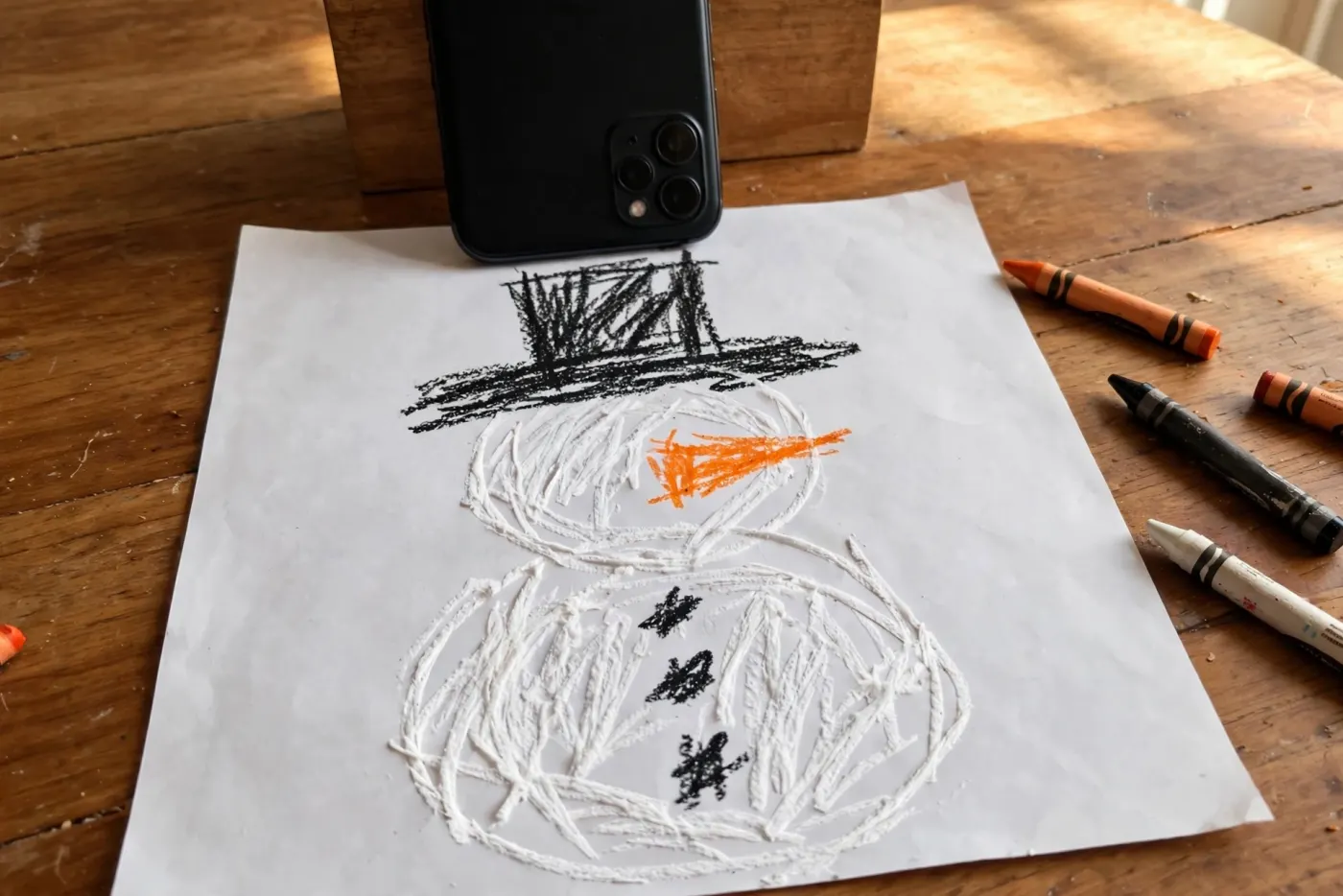
The best drawings for this are ones the child made up, not coloring pages, not tracing. A monster with too many eyes, a family portrait where everyone is the same height. That is what the AI works with best, and it is what makes the story feel written specifically for that child rather than for any child.
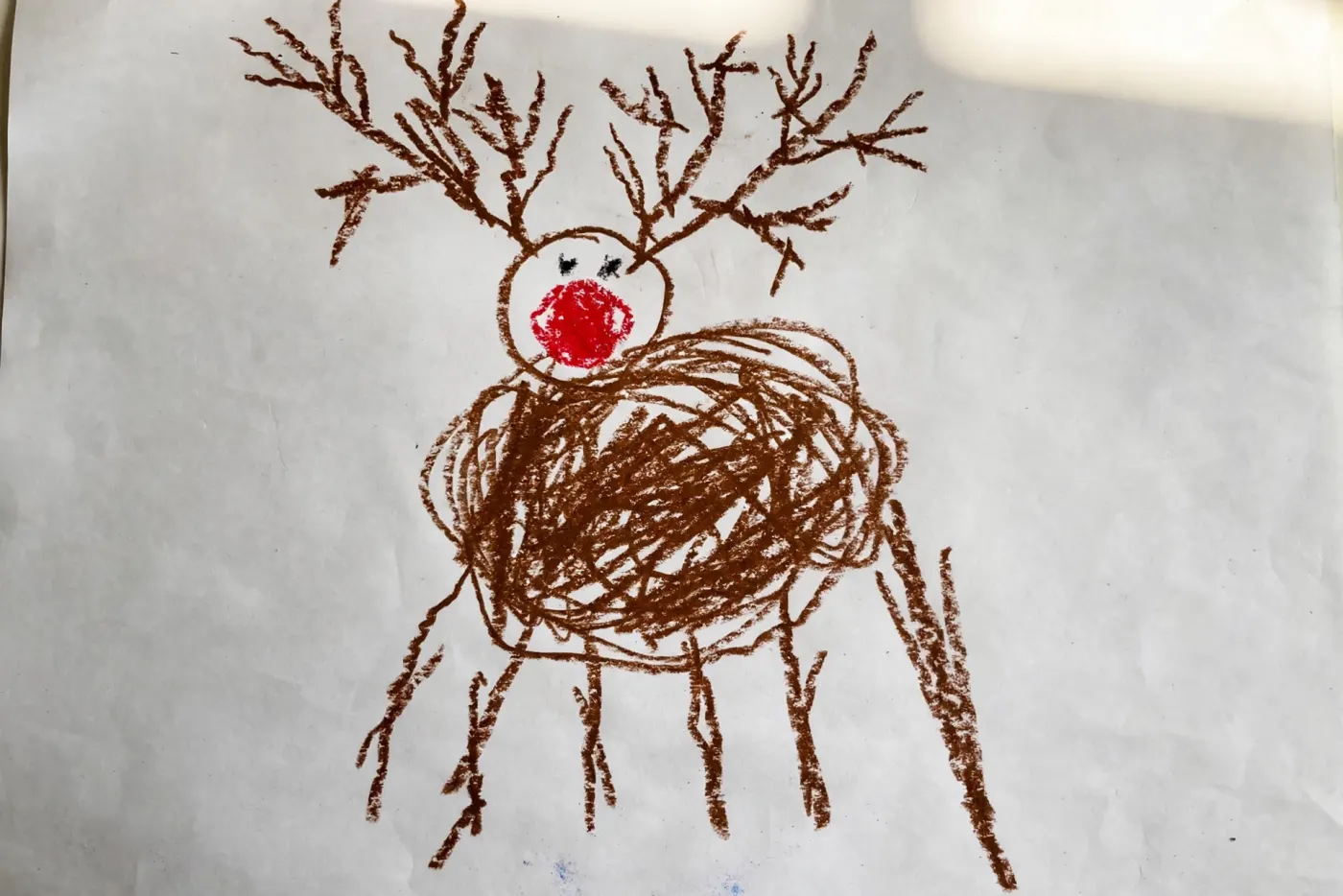
It also does not need to be Christmassy, and asking for a Christmas drawing in December is usually a downgrade. A reindeer produced on request is a performance. The dinosaur they drew in March because they felt like it is the one they will recognize.
Making it last past New Year's
The problem with Christmas gifts for children is not that they are bad, it is that there are fifteen of them opened in one morning and most are forgotten by the time school restarts.
A book made from something the child drew survives that morning better than most things, for a reason that has nothing to do with the book being good: the child made half of it. They are not receiving it so much as seeing what happened to something of theirs. That reaction is different from unwrapping, and it lasts past the day.
Two practical things help. Open it late rather than early, once the pile has been worked through and there is attention to spare. And read it that night rather than putting it on a shelf, because the first read is when the recognition happens.
The ones that show up in February, still being carried around, are usually the ones with the child's own drawing on the cover.
Try it yourself
Turn your child's drawing into a real storybook
Free preview. No account needed. Ships to US & Canada.
Start for free