Are Wonderbly books AI? What's actually behind the personalization
Are Wonderbly books AI? What's actually behind the personalization
No, Wonderbly's stories and illustrations are made by people. Here's what its personalization really does, what an AI children's book is, and how to tell them apart.
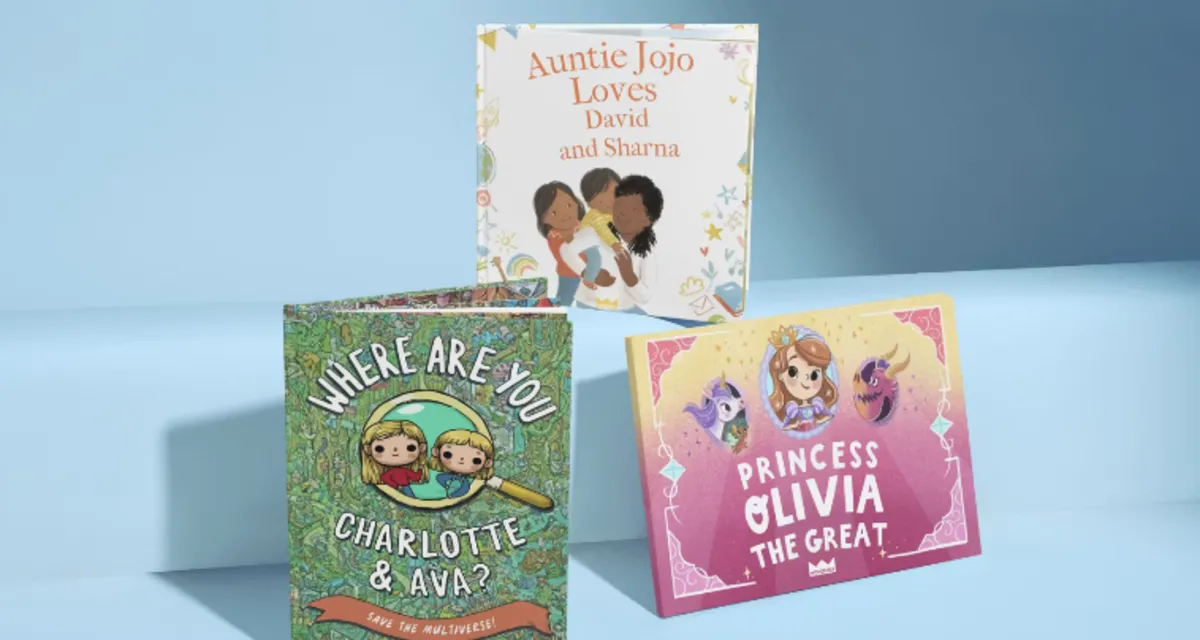
No. Wonderbly's stories are written by authors and its illustrations are drawn by illustrators. A rendering engine then drops your child's name into artwork that already exists. That's personalization technology, not generative AI. Books that do use AI are a newer and separate category, the kind that can turn your child's own drawing into an illustrated storybook. It's worth knowing which one you're buying.
This question comes up constantly now, and it's a fair one to ask. Personalized children's books hit most people's feeds at roughly the same moment AI image generators did, so the two got tangled together.
Wonderbly is the brand most parents name first, so it takes the brunt of the question. The short answer is no. The longer answer is more useful.
The short answer, and why people keep asking
Wonderbly's books are made the traditional way. Someone writes a story, an illustrator draws it, and the finished book exists in full before a single customer orders a copy.
Its homepage puts it plainly: "Award-winning authors, illustrators and translators craft our books with care." There's no mention of AI or generated imagery anywhere on the page (checked on wonderbly.com, 24 August 2026).
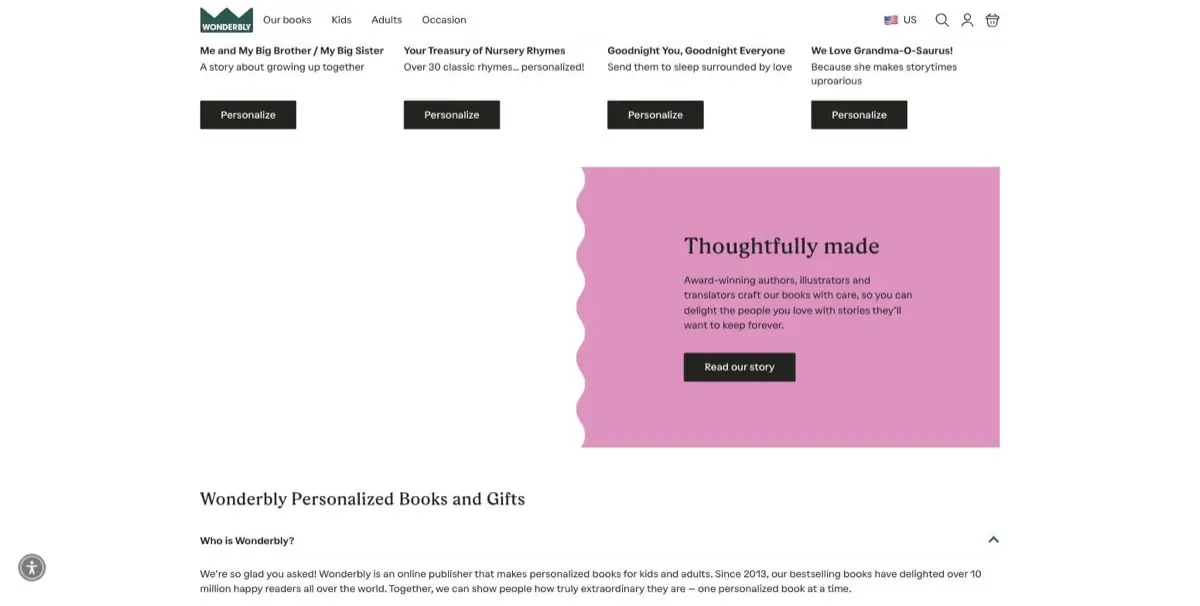
The company started in 2012 as Lost My Name, built around a book where a child's name spells out the adventure, and sold three million copies in its first few years (Canva's interview with the founders). All of that predates usable image models by years, which is a decent clue on its own.
So the confusion isn't really about Wonderbly. It's about what "personalized" now means to people who've spent two years watching AI make custom images on demand.
What happens when you type your child's name in
The thing doing the work is a rendering engine, not a model that invents pictures. The artwork, the layout and the story are fixed. Your inputs get composited into slots the illustrator left open on purpose.
That engine turned out to be the valuable half of the business. In 2019 Wonderbly spun it out as Wonderbly Studios and began licensing the pipeline to other brands, describing years of work on the rendering engine and a print-on-demand network spanning four continents (TechCrunch). They built a manufacturing system that can print a one-off book profitably. That's genuinely hard, and it has nothing to do with AI.
On most titles the personalization means a name. On some it stretches to skin tone, hair and a dedication page. Everything else, every character and scene and joke, is the same book every other child receives.
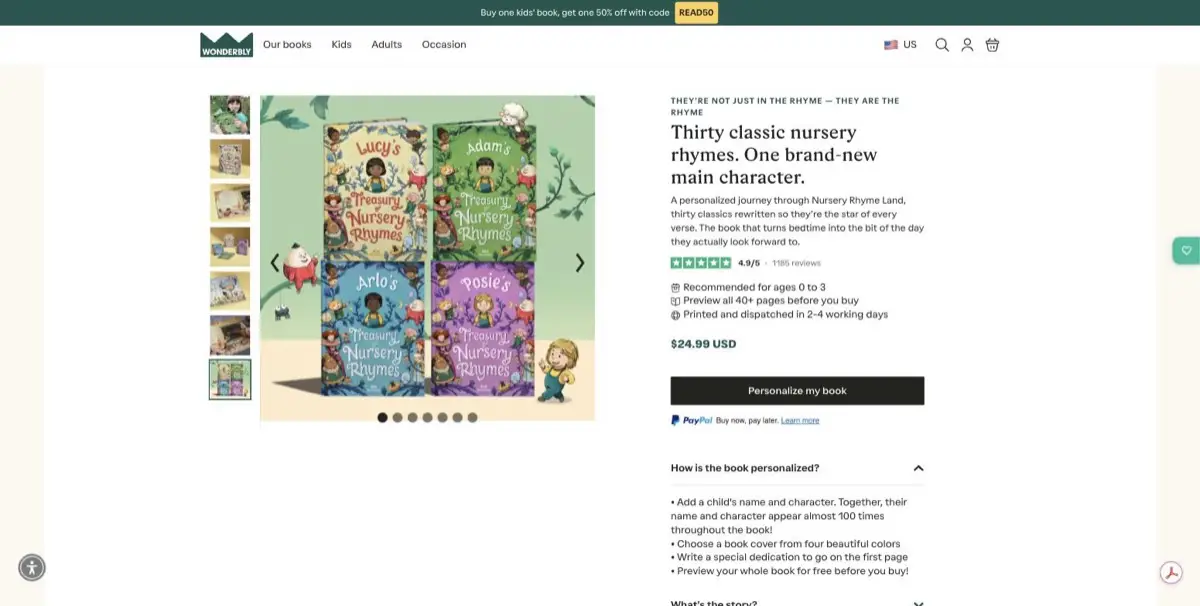
Their product pages spell this out if you open the right accordion. On Your Treasury of Nursery Rhymes, the whole personalization is a name and character, a cover color from four options, and a dedication.
Why parents assume it must be AI
Three things push people toward the wrong conclusion, and none of them is silly.
Timing is the big one. Almost every personalized-book brand launched after 2023 really is AI-based, so a parent comparing five sites is mostly looking at AI products and reasonably assumes the sixth is too.
Then there's speed. A preview appears seconds after you type a name, and that responsiveness now reads as "a model made this," when a template is just being filled in fast.
And the word itself has drifted. "Personalized" used to mean monogrammed. Now it implies something was created for you specifically. Template personalization does everything except that.
What an AI children's book actually is
The real AI category splits in two, and they're easy to tell apart once you know to look.
The first kind starts from a photo. You upload a picture of your child, it generates a character who resembles them, then illustrates a story around that character. Every copy differs because every child looks different.
The second kind starts from a drawing. The child draws something, a purple dog or a robot with too many legs, and the service builds the illustrations around that specific character rather than around a photograph. DoodleTale sits in that second group.
Either way, the illustrations don't exist until you order. That's the real dividing line, and it makes for a better question than "is it AI": were these pictures drawn before I arrived, or because I arrived?
Does it matter which one you buy?
It matters, though not in the direction most articles about this imply.
If you object to AI art on principle, that objection is real and Wonderbly answers it. Paying for human illustration and receiving human illustration is a clean transaction. Their books are good, too. The art holds together, the writing is professional, and there's nothing dishonest about a name-personalized book.
If your objection is that the book wasn't really about your child, Wonderbly won't fix that no matter how it was made. The child in the book is a stand-in wearing your child's name. Plenty of four-year-olds don't notice or care. Plenty of seven-year-olds notice immediately.
The ethics argument around AI children's books has mostly circled people generating whole books in an afternoon and selling them, a contested practice for good reasons (TIME). Whether a family should use AI to make one keepsake from their own child's artwork is a different question, and the two keep collapsing into one argument. We went further into that in is it safe to use AI for kids' books.
What a pre-drawn book still does better
Generated illustration isn't strictly better, and pretending otherwise would be silly.
A book that was fully illustrated before you arrived has been proofread, art-directed and printed thousands of times. The typography has been considered. The page turns land where the writer wanted them. Nothing surprising happens on page nineteen. That reliability costs money to produce, and it's what you're paying Wonderbly for.
Pre-drawn books are also the safer gift when you barely know the child. A name, an age and a rough sense of what they like is enough to order confidently, which is why these books own the grandparent and last-minute-present market. There's no drawing to collect first.
The trade is that the book can't be about anything the publisher didn't already anticipate. It can be about a child named Maya. It can't be about the three-legged dragon Maya invented in July and has drawn every day since.
Where DoodleTale sits, since we build the other kind
We use AI, and it would be strange to write this post without saying so.
Here's why it exists. A five-year-old draws a lopsided orange cat with three whiskers and one enormous eye. Turning that into a thirty-page book means drawing that exact cat thirty more times, in different poses, in a consistent style, without losing the lopsidedness that made it hers. An illustrator can absolutely do that. It costs far more than most families would spend on a keepsake.
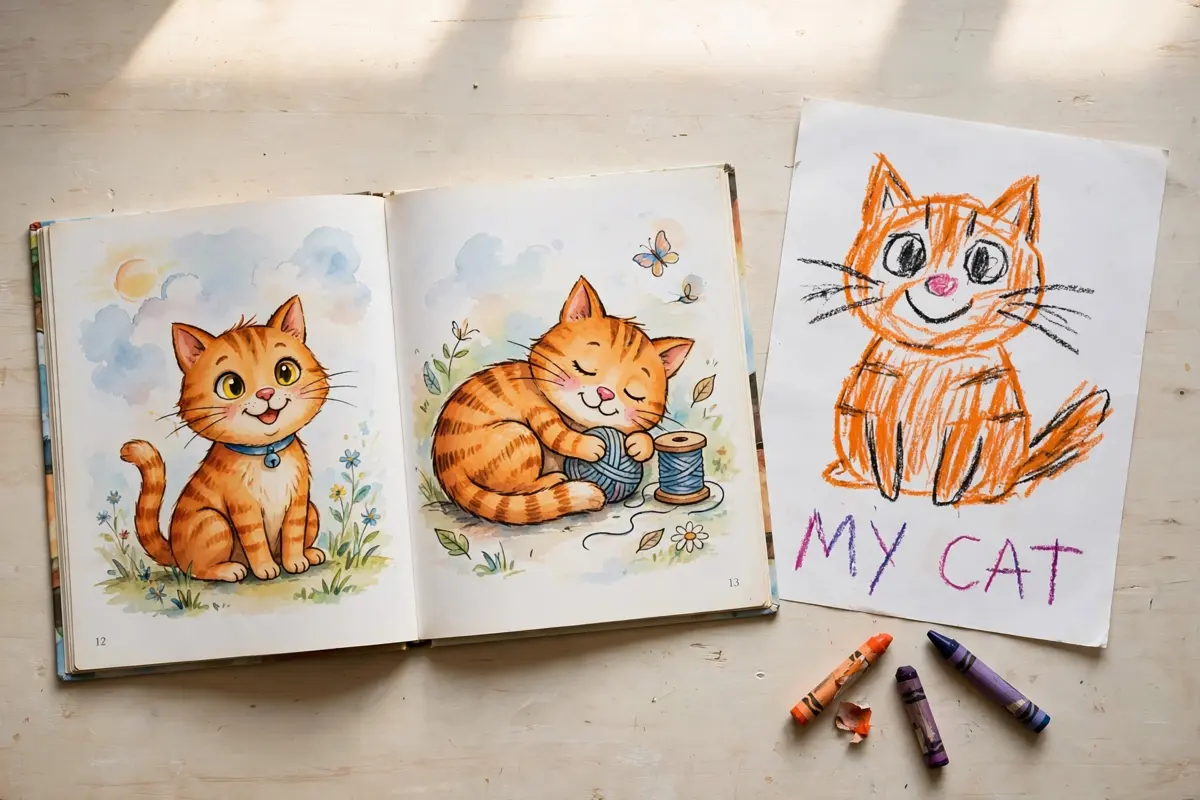
That's the job AI is doing here. Not replacing an artist on a book that would otherwise exist, but making one book possible for one child, from something she already made, at $29.99 printed. The original drawing stays recognizable, which is the entire point, and you see the character, read the full story, and see the cover for free before you decide to pay.
For the full side-by-side on price, personalization depth and what each book feels like on a shelf three years later, see DoodleTale vs Wonderbly.
The same question, for the other big names
Wonderbly isn't the only brand people ask this about, and the answers cluster.
Hooray Heroes markets a "No AI" position directly, and it holds up: the stories are written by people and the character is built from an avatar menu you fill in. Lost My Name is not a separate company to check, it's Wonderbly under its original name, so the answer there is the same one.
Anything launched after 2023 with a photo upload or a drawing upload is almost certainly generating illustrations, whether or not the marketing says so. If a site can produce a book featuring your specific child's face, there's no other way it could be doing it.
We compared the human-illustrated route against the drawing-based one in the Hooray Heroes comparison, which covers what you give up in each direction.
How to tell, on any site, in about a minute
You'll hit this question again on the next site, so here's a check that works without inside knowledge.
Look at what the site asks you for. A name, a gender and a hair color means a template. A photo or drawing upload means the illustrations are being generated.
Look at the sample pages. If every example shows the same characters with different names, the art is pre-drawn. If the examples look like different books entirely, they're being made per order.
Look for credited creators. Publishers who pay illustrators name them, because it's a selling point they paid for. AI services almost never do, because there's nobody to name.
Look at price and turnaround. A hand-illustrated custom book takes weeks and costs hundreds. Anything promising a bespoke thirty-page book for the price of a hardback, in minutes, is generating it.
Frequently asked questions
No. Wonderbly's stories are written by authors and its illustrations are drawn by illustrators. Its own site credits "award-winning authors, illustrators and translators" and mentions no generative model anywhere. What gets mistaken for AI is a rendering engine that drops your child's name, and on some titles their skin tone and hair, into artwork that already exists.
Yes. Every Wonderbly title is illustrated as a finished book before anyone orders it, then personalized at print time. That's why each copy of a given title looks the same apart from the personalized details, and why the art style holds together from page one to the end.
The personalization is real but shallow by design. Your child's name is woven into the story and the artwork, and some titles let you pick appearance and add a dedication. The plot, the characters and the pictures stay identical for every child who orders that title.
Depends what you object to. If you want to pay for human illustration, buy human illustration. That's a clean position and Wonderbly is the answer to it. If you want a book built around something your own child made, no illustrator is going to redraw that character thirty times for $30, so AI is the only reason the product exists at that price.
Name personalization inserts your details into a book that already exists, so the illustrations are pre-drawn and shared by everyone. AI personalization generates the illustrations, and usually the story, for your copy specifically. That's why those books can put your child's own drawing or photo on the page.
Most parents asking "is this AI" are really asking "is this about my kid." Ask the second one and the answer gets obvious fast.
Related: DoodleTale vs Wonderbly · Personalized books with names, photos, or drawings · Is it safe to use AI for kids' books? · The best AI storybook for kids in 2026
Try it yourself
Turn your child's drawing into a real storybook
Free preview. No account needed. Ships to US & Canada.
Start for free