Is it safe to use AI for kids' books? What parents need to know
Is it safe to use AI for kids' books? What parents need to know
Yes, with the right product. Here's what to check: data privacy, content guardrails, and age calibration before you buy any AI kids' book.
Yes, when the product was built specifically for children. Three things worth checking before you buy: whether the company stores or uses your child's data for model training, whether AI output is reviewed for age-appropriate content before it reaches you, and whether the story is calibrated to your child's actual reading level. A product that handles all three is safe by any reasonable parent standard.
The question is reasonable. "AI-generated storybook for your child" combines two things parents take seriously (AI's reputation for unpredictability, and books for young children) into something worth pausing on before clicking buy. The good news is that the concern is worth taking seriously, which also means it's worth answering with specifics rather than reassurances.
Most parents are actually asking three separate questions. They're worth separating.
Data privacy: what happens to what you upload
When you upload your child's drawing or enter your child's name, you're sending personal information about a minor to a third-party server. The right questions to ask before doing that:
Does the company use your uploads to train their AI? Some do, some don't. Look for specific language in the privacy policy around model training and data retention. A reputable children's product should either not use upload data for training at all, or give you a clear opt-out before you proceed. Vague language about "improving our services" is a flag. It usually means yes.
Does the company share data with advertisers? A privacy policy that mentions "third-party marketing partners" means your child's name and drawing may be used in ways you didn't intend. What you want: an explicit statement that uploaded content is processed only to generate the book.
How long does the company retain your data? Some services delete uploads within 30 days; others retain them indefinitely. For a minor's personal information, a short retention window with a clear deletion policy is better than no stated policy.
Does DoodleTale use my child's drawing to train AI?
No. DoodleTale's privacy policy says your child's artwork, name, and personal information are never used to train AI models, its own or any third party's.
- Sharing: uploads aren't shared with, sold to, or licensed to any third party without your explicit permission, and are processed only to create your book.
- AI providers: they process the artwork only to produce your book, under data protection agreements, and don't train on it.
- Retention: no fixed period is stated, but you can request deletion of your content and data at any time at privacy@doodletale.ai.
Content safety: can AI write something inappropriate for a child?
This comes up a lot, and it's a fair concern. AI language models can technically produce content that's not child-appropriate. The question is whether the product you're using has guardrails.
A product built specifically for children's books should use a constrained generation system where output is reviewed against content rules before it reaches you. In practice that means: story vocabulary filtered for age-appropriate content, violence and adult themes excluded by design rather than by accident, and reading level calibration that means a book for a 4-year-old actually reads like a book for a 4-year-old.
Two different product categories exist here, and the distinction matters:
| Type | What it is | Content risk |
|---|---|---|
| Children's-specific AI book product | Built from scratch for kids, with guardrails, age levels, and review steps | Low, content rules are designed in |
| General-purpose AI tool with a "kids book" mode | A platform like GPT-4 with a child-friendly prompt | Higher, content rules are an afterthought |
The practical test: does the product have distinct reading levels for different age ranges? Can you preview the output before purchase? Does their documentation mention content moderation? A product that shows you the AI-generated character before you commit is showing you that a review step exists, not just a pipeline that outputs straight to your cart.
Developmental safety: is AI-generated content okay for young children?
This is the most nuanced concern, and also the one where the evidence is most reassuring.
The developmental value of a storybook comes from the reading experience itself: vocabulary exposure, narrative engagement, shared attention with a caregiver, repetition. None of those benefits depend on whether the words were written by a person or an algorithm. The content quality is what matters: age-appropriate vocabulary, a coherent story arc, and enough engagement to hold a young child's attention.
Research supports the engagement case for personalization. In a small study published in First Language, Kucirkova, Messer and Sheehy (2014) read 18 preschoolers (average age just under 4) a picture book with personalized and non-personalized sections, and the children showed significantly better knowledge of the new words that appeared in the personalized sections. The mechanism isn't surprising: children pay more attention to things that feel like they're about them. A book where the character shares a name or resembles the child creates a recognition response that a generic protagonist doesn't.
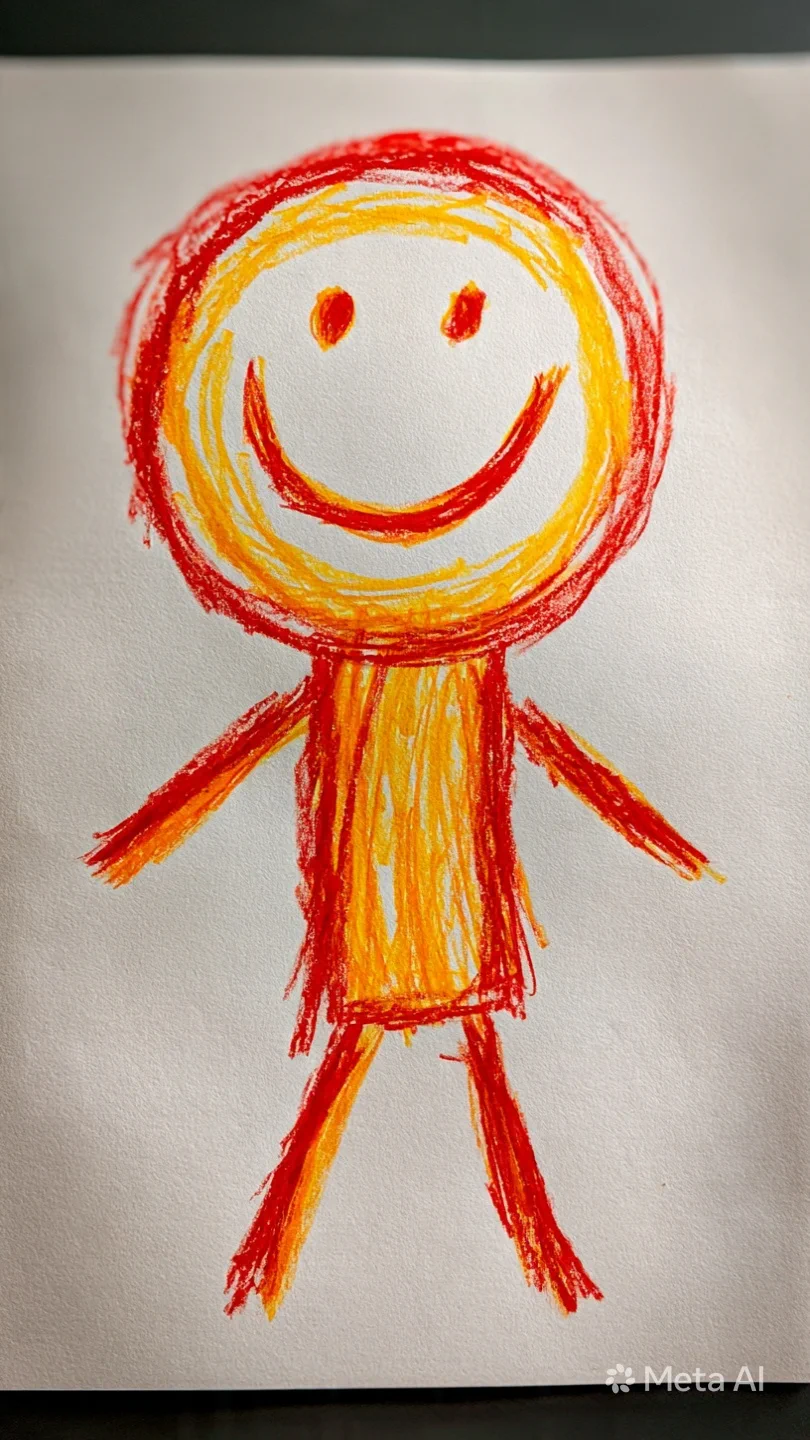
A book where your child recognizes their own artwork on every page takes that effect further: the child isn't just named in the story, they made the pictures. The recognition moment is different in kind, not just degree.
That's what DoodleTale's printed storybooks are built for: a book that goes into bedtime rotation alongside library books, not a keepsake that sits on a high shelf.
COPPA and why it matters for children's AI products
In the US, the Children's Online Privacy Protection Act (COPPA) requires that companies collecting data from children under 13 obtain verifiable parental consent before doing so, and imposes strict limits on what they can collect and how they can use it. A company that builds specifically for children's products should be COPPA-compliant by design. One that added a "kids book mode" to a general-purpose AI platform may not have thought about this at all.
What COPPA compliance looks like in practice for an AI book service:
- Parental consent is obtained before any personal information (name, image) is collected
- The company doesn't use children's data for behavioral advertising
- Data retention periods are limited, with deletion available on request
- The product's privacy policy specifically addresses children's data
This isn't just a legal technicality. A product that has gone through the process of becoming COPPA-compliant has been forced to think carefully about what data they collect, why, and for how long. That's a meaningful proxy for how seriously they've taken the other safety questions too.
What separates trustworthy from careless
Not all AI book services handle these questions the same way. The signals that matter:
Specific age levels (not just "for kids"): A product with reading levels calibrated for ages 3-4, 5-6, and 7-8 has done the work. A single output for "kids" has not.
Free preview before purchase: A confident product shows you the output before asking for payment. This also means you review the content before it reaches your child.
Explicit privacy policy for minors: A company that understands COPPA and has specific data practices for minors has thought harder about child safety than one with a generic terms-of-service.
No model training on user uploads: Your child's drawing stays private and isn't used to improve the AI for other customers.
A company that built specifically for children's products has more accountability around safety than a generic AI tool that added a "generate a children's book" feature to a general-purpose platform. The former is staking their entire product on getting this right. The latter can quietly remove the feature.
Red flags worth knowing
Not every product in this space handles safety the same way. A few patterns that should give parents pause:
No privacy policy specific to minors. A generic terms-of-service that doesn't mention children's data is a sign the company hasn't thought specifically about your use case. Children's data requires different handling than adult data under US and EU law.
The company uses uploaded content to train their AI, with no opt-out. Some services are explicit that anything you upload may be used to improve their models. For a child's drawing and a child's name, that's data you probably didn't intend to contribute to a training dataset. Look for explicit language in both directions. "We do not use uploads for training" is the language you want.
The book generates without a preview step. If there's no review step before the final output, there's no opportunity to catch content that isn't age-appropriate before it reaches your child. Legitimate children's products build in a review step by design.
"For all ages" with no reading level distinction. A book calibrated for a 3-year-old reads differently from one calibrated for a 7-year-old. A product that makes no distinction between these audiences hasn't done the work of actually building for children.
None of these are reasons to avoid AI books categorically. They're reasons to spend five minutes on the privacy page before uploading anything.
The short answer
AI for kids' books is safe when the product was genuinely designed for children, with real privacy commitments, content guardrails, age-specific calibration, and a review step before you buy. Same as you'd spend a few minutes checking the privacy policy on any children's app before installing it.
If you're still weighing which product to use, the comparison of the best AI storybook apps for kids lays out the main options side by side, including how each one handles the questions above.
Frequently asked questions
Yes, when the product was designed specifically for toddlers, with reading levels calibrated for ages 3-4, content guardrails in place, and an output review step before you buy. The same due diligence applies as with any children's app: check who built it and what their privacy policy says about data from minors.
It depends on the company. Some AI book services use uploaded content to train their models; others don't. Before uploading, check the privacy policy for language about model training, data retention, and third-party sharing. A reputable children's product will make this explicit rather than burying it in general terms-of-service language.
Traditional personalized books insert your child's name into a pre-written template story. AI personalized books generate an original story based on your inputs, or in DoodleTale's case, based on your child's actual drawing. The result is a story unique to that specific drawing, not a name-drop version of a generic plot.
Yes, as long as the company's privacy policy is clear that the name is used only to generate the book and isn't retained, sold, or used for advertising. Verify the company's data practices before sharing personal information about a minor.
She handed over a purple dragon with three legs and a very specific name, and the book got both right.
Related: AI personalized children's books: how they actually work · The best AI storybook for kids in 2026 · DoodleTale vs Wonderbly
Try it yourself
Turn your child's drawing into a real storybook
Free preview. No account needed. Ships to US & Canada.
Start for free