How to preserve kids' artwork: 7 methods that actually last
How to preserve kids' artwork: 7 methods that actually last
Seven ways to preserve kids' artwork, from free phone-camera backups to turning one drawing into a printed storybook your child will actually read.
Photograph everything first. That's the safety net that makes every other decision easier. For physical keeping, flat-file portfolios and archival boxes outperform shoeboxes and desk drawers. For the drawing that deserves more than storage, a storybook made from it is the only format your child actually reads rather than just looks at.
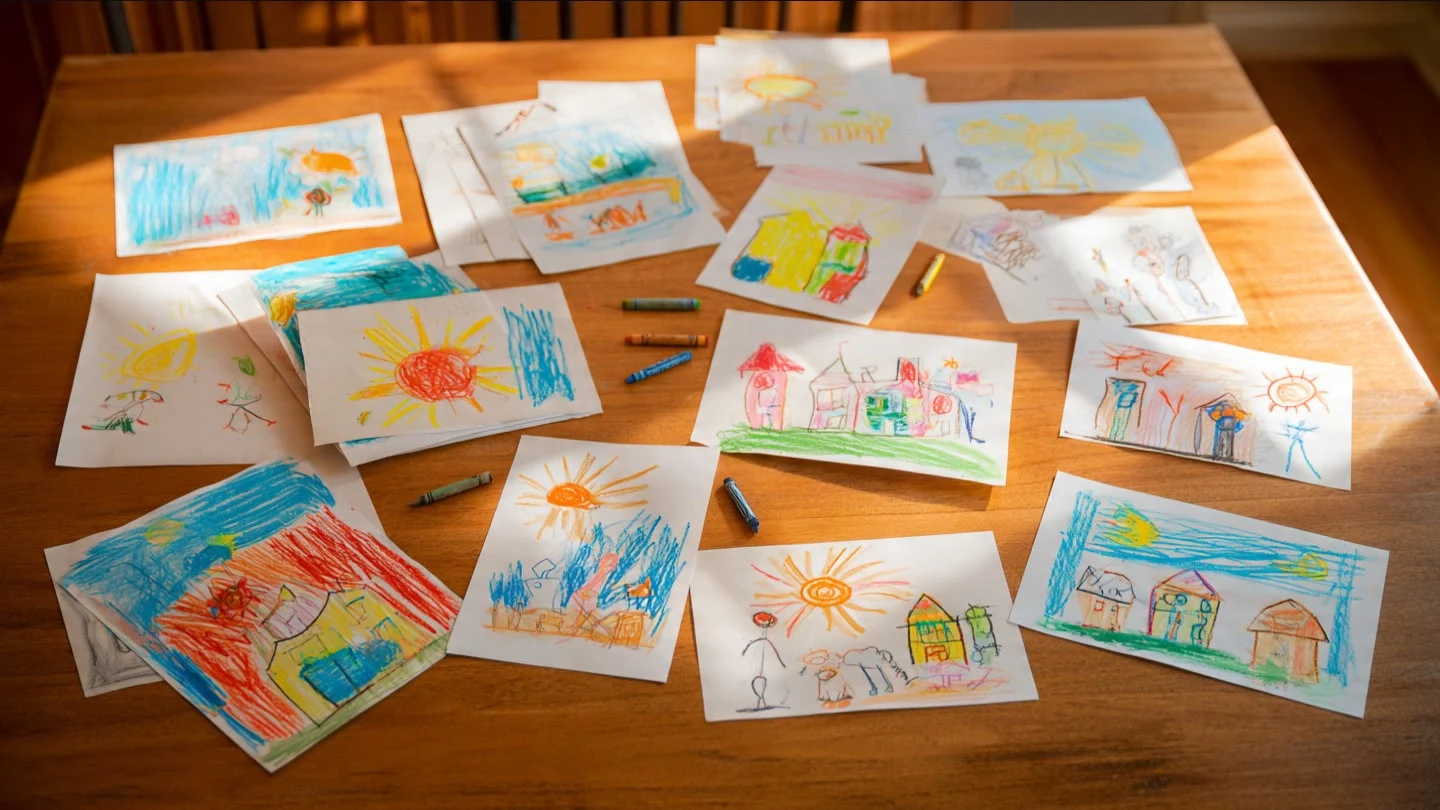
A child produces roughly 800 drawings between ages 3 and 10. Most parents save far fewer than that, and the ones worth saving tend to be the ones that had a plan before they ended up in a pile on the kitchen counter.
There are two real options: preserve the drawing as an artifact (digitally or physically), or transform it into something that stays alive. The methods below cover both, starting with the ones that cost nothing.
1. Photograph every drawing before anything else
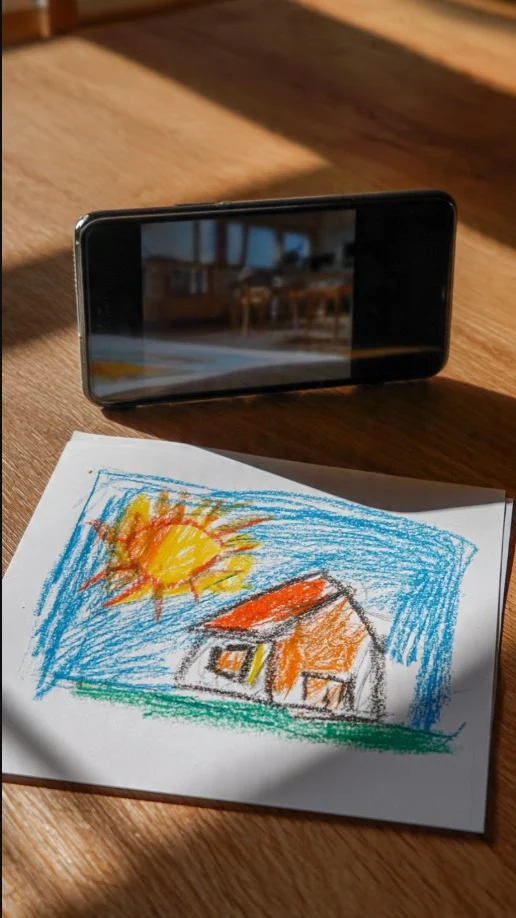
This step is free and it's the most important one. Before sorting, deciding, or throwing anything away: photograph everything. Lay each drawing flat near a window, fill the frame with the art, skip the flash. A phone camera is enough.
This single habit removes the guilt from sorting. Once every drawing has a digital record, you haven't lost anything by letting the physical copy go. You're making decisions from abundance, not scarcity.
Google Photos and iCloud Photos both auto-sort images by date with no setup required. Some parents create a shared album with grandparents, which is also an ongoing gift. Grandparents tend to want more of this than parents expect.
What are the best apps to organize kids' art?
The photo app you already have: a shared "Kids' art" album in Google Photos or iCloud Photos. To keep art separate from the family library, the free Artkive app works too. Keepy, often recommended for this, is no longer in the US App Store or Google Play (October 2026).
2. Flat-file portfolios and archival boxes
For the drawings you want to keep physically, the right storage matters. Standard manila folders warp; regular cardboard boxes off-gas acids over decades that yellow the paper. Better options:
Flat-file portfolios (presentation folders, one per year) keep drawings stored flat and sorted by age. Labeled with the child's age and grade, stored upright on a shelf. IKEA Kallax units hold two years of portfolios per cube.
Archival boxes (acid-free, lignin-free) protect paper from long-term degradation. These are worth it for the drawings that clearly matter. The first portrait that actually looks like someone, the one that captured a phase already passing.
What to skip: shoeboxes, plastic bins without ventilation, anything stored in a garage or basement where temperature and humidity fluctuate. Paper drawings in those conditions won't last a decade.
3. A rotating display that actually rotates
A gallery wall only works if it rotates. Framing five drawings and leaving them for three years turns the wall into a record of who the child was, not who they are.
Dynamic Frames' Lil Davinci is built specifically for this. The front panel opens like a door (no tools, no taking the frame off the wall) and it stores up to 50 artworks inside the frame itself. Swap takes about 30 seconds. Keep one or two on the wall, rotate whenever the child brings something home that stops you, and photograph the outgoing piece before it goes into the stack inside the frame.
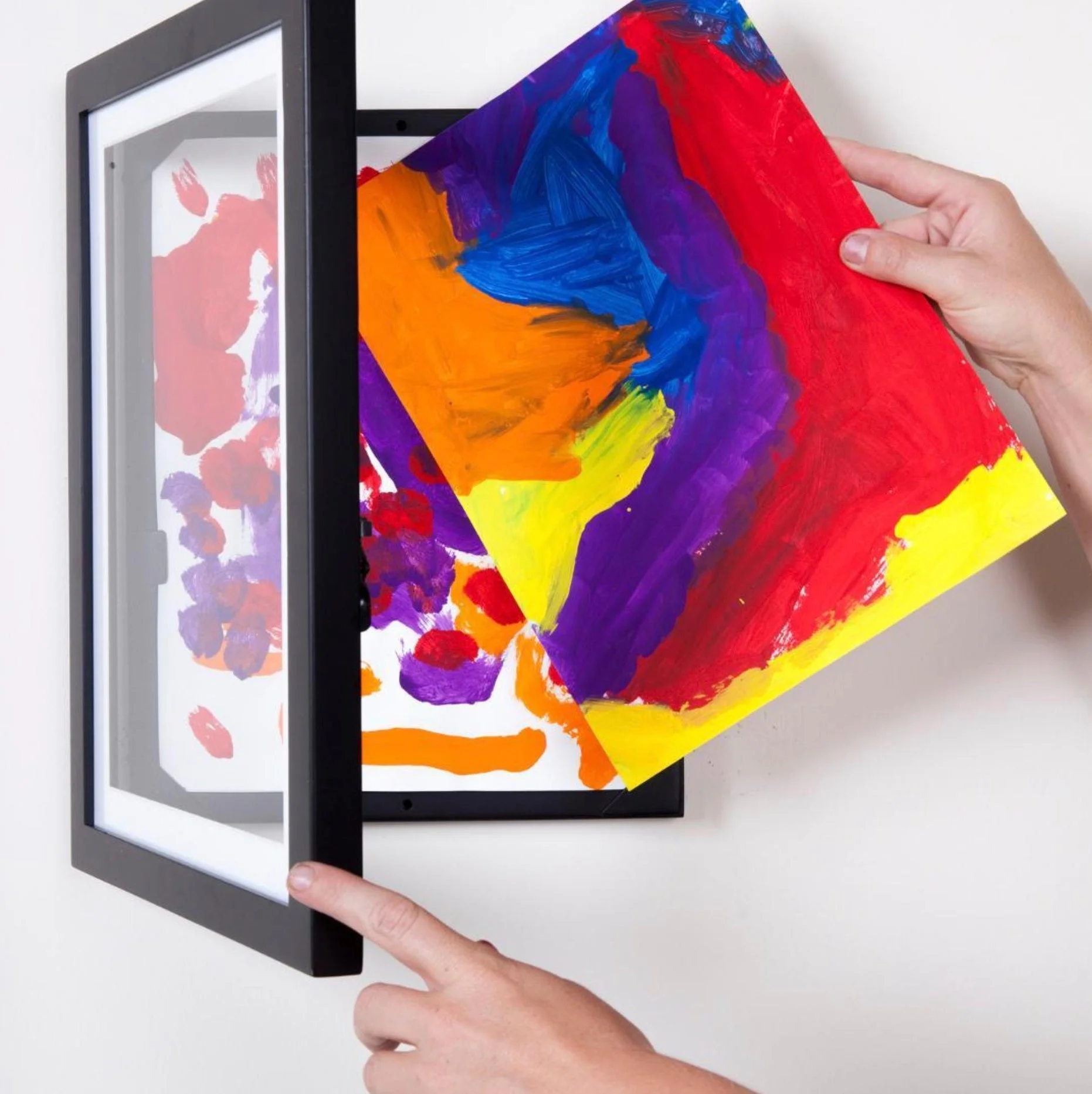
Some families give the child a role: which drawing goes up, which comes down. Kids' choices tend to be more interesting than parents expect, and the process teaches them that their art has a place in the home beyond the fridge.
4. Photo books for the archive
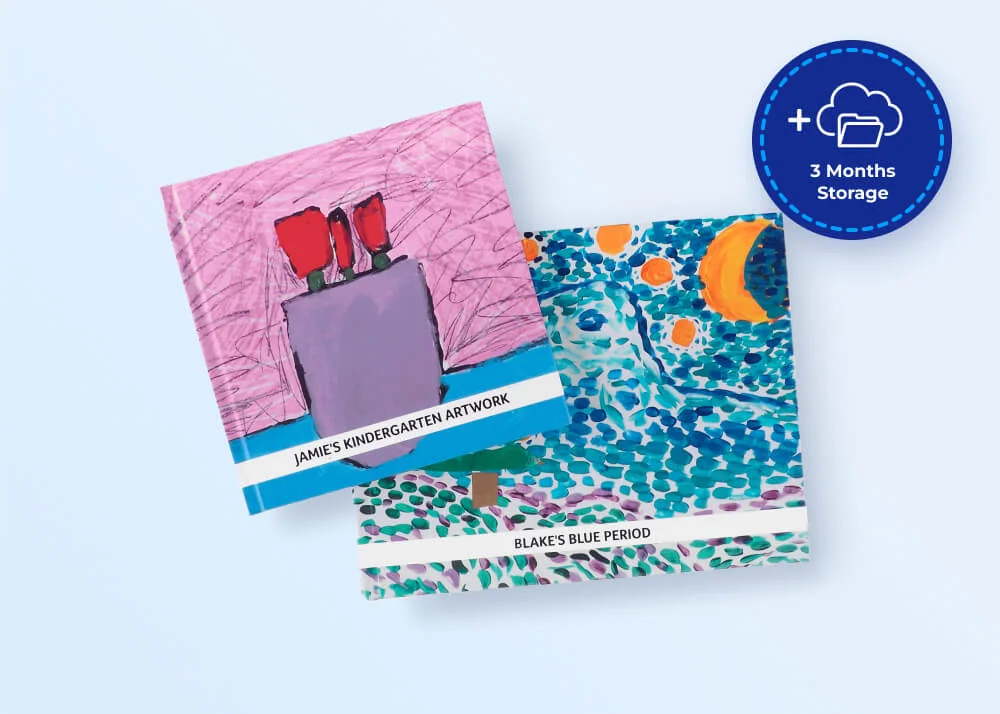
Once you have a year of drawing photos, services like Artifact Uprising, Mixbook, or Chatbooks let you print them as a bound volume using the photos you've already taken. Total cost runs $20–$40 for a standard hardcover.
For parents with years of physical drawings who want a proper archive without doing the photography themselves, two services do the work for you:
Artkive. You fill a crush-proof box with up to 300–400 original drawings and mail them in with prepaid shipping. Artkive photographs everything, builds a digital proof for you to approve, and ships back a hardcover photo book. Books start at $75 for 25 pieces; returning your originals costs an extra $20.
Plum Print. Similar process. A $49.99 deposit gets you a shipping kit; up to 350 pieces. A 10×8 hardcover starts at $175 for 20 pieces ($2.60 per additional). Their website has a pricing slider so you know the exact total before committing. A second book for a grandparent gets 50% off.
Both services are the right choice for large accumulated collections. The limitation: your child flips through the result the way they'd flip through a family photo album, with nostalgia, not engagement. The drawings are still just drawings.
5. Turn one drawing into a storybook
This is the one method that does something the others can't: the artwork becomes something the child actually returns to.
DoodleTale takes a single drawing and generates a complete personalized storybook around it. The subject of the drawing becomes the main character; the illustration style throughout matches the original lines and colors. A wobbly crayon dragon is the hero. That dragon's wobbly lines appear on every page. The result isn't a scan or a photo book. It's a story.
The printed book arrives as a softcover. What was a drawing on a piece of paper becomes a book the child pulls off the shelf at bedtime and asks to have read again. Parents describe the first time their child reads their own storybook as a moment they didn't expect to feel as much about as they do. A collection of those reactions is worth reading before you decide.
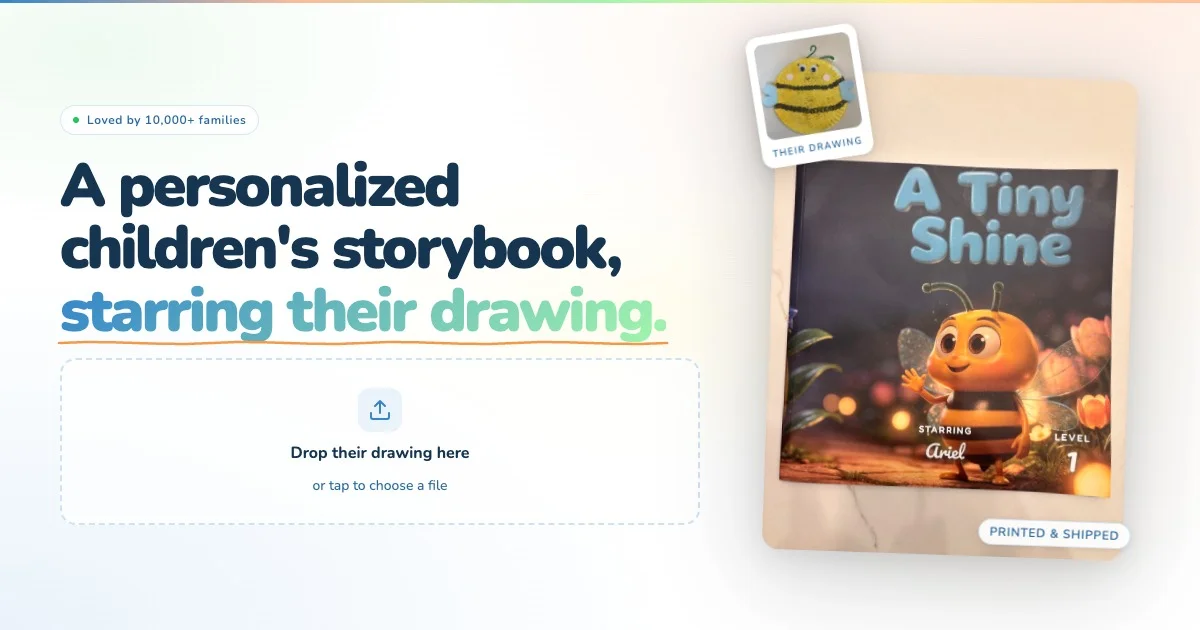
The difference from Artkive: Artkive scans and archives the whole collection as a photo record. DoodleTale takes one drawing and turns it into a story your child reads at bedtime. Different problems, different tools.
This isn't right for every drawing. It's for the one that already has a character who clearly has a name and a story, the one the child narrated to you when they handed it over.
6. Iron-on transfers and fabric items
Digitize the drawing, then use iron-on transfer paper (any craft store) to press it onto a tote bag, t-shirt, or pillow. Kids love wearing their own art. Works best for drawings with bold lines and strong contrast. Fine pencil detail doesn't transfer cleanly.
Etsy sellers also do this professionally. Search "kids drawing iron on transfer" and you'll find services that take your image file and ship a finished item. Good gift option for grandparents who want something the child actually made.
7. Ask your child what they want kept
The most overlooked method is just asking. Kids often have strong opinions about which drawings matter to them, and those aren't always the ones parents would guess. The technically impressive dragon might get set aside; the stick figure family from three years ago is the one they want saved.
Involving the child also helps them build their own relationship with their work. Not everything needs to be kept, and letting them have a say makes the pieces that are saved feel more intentional.
Methods at a glance
| Method | Best for | Cost | Keeps original? |
|---|---|---|---|
| Photograph everything | Safety net, all collections | Free | Yes |
| Flat-file portfolio / archival box | Physical long-term storage | $10–$30 | Yes |
| Rotating display frame | Ongoing wall display | $25–$60 | Yes |
| DIY photo book | Budget-friendly archive | $20–$40 | Yes |
| Artkive | Large collections, hands-off | $75+ | Yes (+$20) |
| Plum Print | Large collections, hands-off | $175+ | Yes (fee) |
| Shared photo album or Artkive app | Digital sharing with family | Free | Yes |
| DoodleTale storybook | One drawing that deserves a story | $9.99–$29.99 | Yes |
| Iron-on transfer | Wearable keepsake | $10–$25 | Yes |
What should I do with the rest of my kids' artwork?
Most drawings can be photographed and let go. A few can be framed or filed. One or two a year, the ones where a character clearly has a story waiting in them, are candidates for something more permanent.
If you haven't built a system for finding that drawing in the first place, what to do with kids' drawings covers the curation system that gets you there.
Frequently asked questions
For physical preservation, acid-free flat-file portfolios or archival boxes will keep paper drawings intact for decades. Paired with digital photos as a backup, you're covered. For artwork you want to actively use rather than archive, turning a drawing into a printed storybook means it stays in regular rotation rather than sitting in a box.
Photograph everything first so the physical volume can be reduced without guilt. Then keep only the drawings that clearly matter in a flat-file portfolio or archival box. Most families end up keeping a small handful per year, not hundreds.
No. Children produce an enormous volume of work, and keeping all of it makes the meaningful pieces harder to find. Photograph everything, then keep only the drawings that stopped you. The ones that captured a phase, a personality, or a specific moment. The photo record is enough for the rest.
As early as you start receiving it. The drawings that capture how a 2-year-old scribbles are as meaningful as the ones from later years. Starting the photograph habit early means you won't lose the period that's already hardest to remember.
Artkive is an archiving service: you send them all your child's artwork in a box, they photograph and catalog everything, and return it as a bound photo book or digital archive. DoodleTale does something different. It takes one specific drawing and builds a completely original storybook around it, with that drawing's character as the hero. Artkive preserves the whole collection; DoodleTale transforms a single piece into something your child actually reads.
The drawing on the fridge right now will be gone within a month. Take 20 seconds to photograph it first.
Related: What to do with kids' drawings (the system that actually works) · Kids art book keepsake: the one worth making · Personalized Father's Day gifts kids can help make
Try it yourself
Turn your child's drawing into a real storybook
Free preview. No account needed. Ships to US & Canada.
Start for free