Personalized storybook gifts for weddings (the flower girl keepsake the gift lists miss)
Personalized storybook gifts for weddings (the flower girl keepsake the gift lists miss)
A personalized storybook makes a keepsake gift for a flower girl or ring bearer, or a way to include a child in the wedding. What the etiquette says and why the gift lists overlook it.
A personalized storybook made from a child's own drawing makes a keepsake gift for a flower girl or ring bearer, or a way to thank any child who was part of the day. Etiquette guides recommend thanking your youngest attendants with a personal gift, and a story that stars the child in their wedding role outlasts the usual jewelry or plush. Order it ahead of time, since a printed book takes 4 to 10 days to arrive.
Every wedding gift list has the same thirty ideas for the flower girl and ring bearer: a bracelet, sparkly shoes, a keepsake box, a plush toy. They're sweet, and a four-year-old will love the shoes for exactly one afternoon.
What almost none of those lists include is a storybook made from the child's own artwork, with the child as the star. It's an odd gap, because it's the one gift on the list a kid keeps growing into instead of out of. Here's why it works, what the etiquette actually says about gifting your youngest attendants, and how to make one without turning it into another wedding chore.
Yes, you're supposed to thank the little ones
It's easy to assume the flower girl and ring bearer are too young to warrant a real thank-you. Etiquette says otherwise. The Emily Post Institute advises that couples thank their attendants with "a tangible gift," and adds a line worth taking to heart: "A warm personal note attached to your gifts to your attendants will let them know how much you appreciate their efforts and support on your behalf." There's no asterisk excusing the small ones from that.
The Knot frames a flower girl gift plainly: it's "about thanking her for being involved in your celebration and building excitement around her role." The same logic applies to the ring bearer. The gift isn't payment for a job. It's a way of telling a child that their small part in a big day mattered, which is a lot for a young kid to take in and worth making tangible.
That's the part parents of the flower girl or ring bearer feel most, too. A young child who is asked to be in a wedding is being trusted with something that feels enormous to them, and the thank-you is what closes the loop. A note the child can't fully read yet still counts, because it's really for the version of them who will read it in ten years and understand what the day was.
What the flower girl and ring bearer actually do
The roles are small on paper and large in the room. Flower girls are typically three to eight years old, and ring bearers run a little older, around six to twelve. That's a guideline, not a rule; planners tend to advise choosing a child who can manage the walk without being carried or needing a parent shadowing them down the aisle.
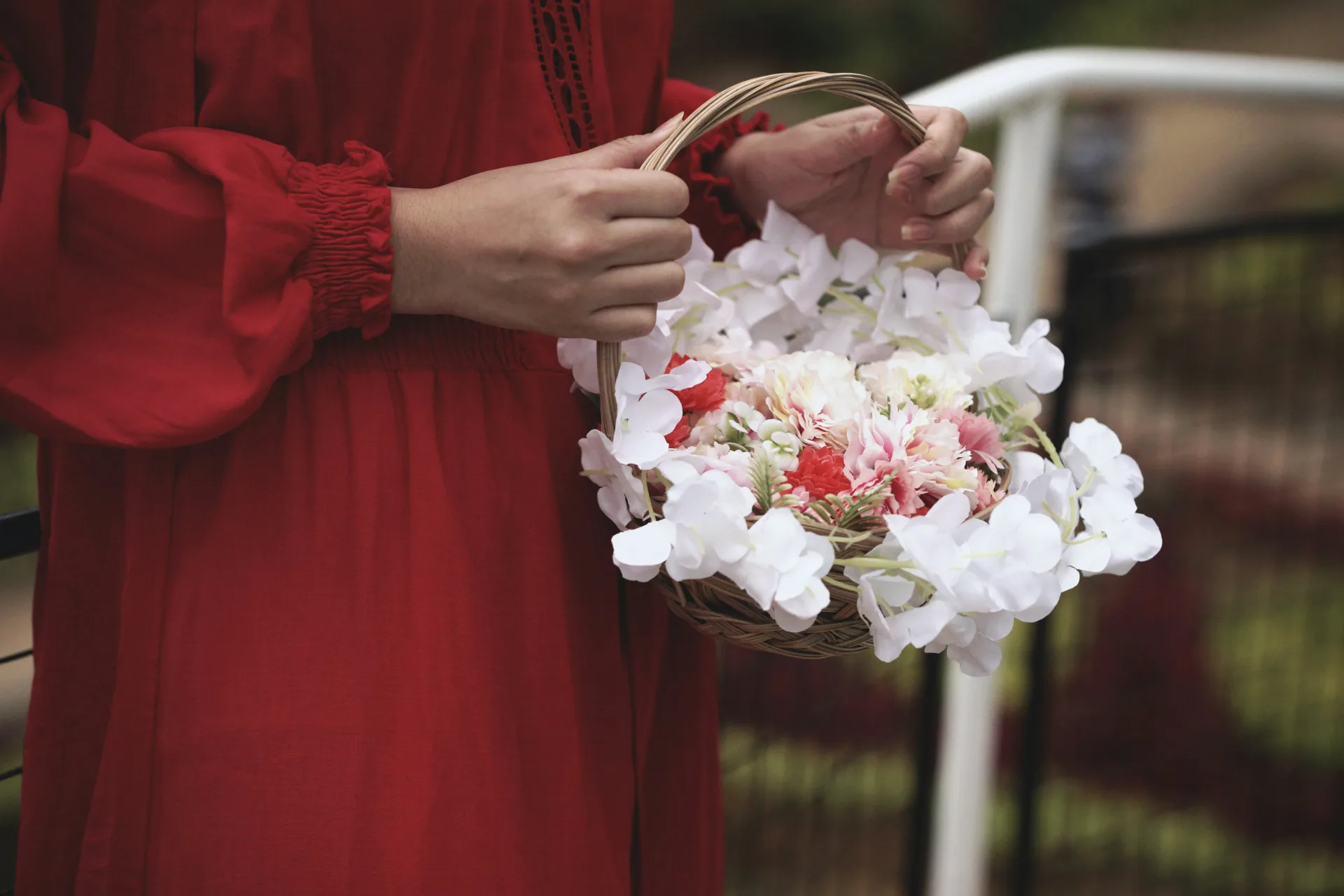
There's more weight to the flower girl's job than the petals suggest. As wedding planner Kimberly Sisti of Sisti & Co told The Knot, "Flower girls walk down the aisle right before the bride and symbolize the bride herself, moving forward from innocence of childhood to adulthood in her new role as wife." The child leading the way carries a small, deliberate piece of the ceremony's meaning.
The ring bearer carries the other quiet symbol of the day, whether it's the real rings or a decoy pillow while the bands stay safely with the best man. Either way, a six- or nine-year-old walking a short aisle holding something everyone is watching is doing a real job, and taking it seriously. That age range, three to twelve across both roles, is also exactly when a personalized book lands hardest: old enough to recognize themselves in a story, young enough to be delighted by it.
For the child, the nerves are real. Most flower girls and ring bearers practice the walk at the rehearsal precisely because the aisle looks a lot longer with a room full of adults watching. Some make it beautifully; some stop halfway to wave at a grandparent, or sit down, or decide at the last second they'd rather not. It usually becomes the story everyone retells fondly. And it's part of why the thank-you matters: the child showed up and did a nerve-wracking thing in front of a crowd, and a gift that names their specific part in the day meets that effort where it actually happened.
The gift-list gap: thirty ideas, none of them this
Look at any "30 flower girl gifts" roundup and you'll find jewelry, hair clips, a jewelry box, sparkly shoes, a plush, maybe an activity or coloring book. Scan the ring bearer lists and it's plush toys, a superhero cape, a personalized baseball, a wooden sword. Good gifts, all of them. But run down The Knot's flower girl list and its ring bearer list and you'll notice the same absence: not one of the sixty-odd ideas is a book made from the child's own drawing, with the child in it.
That's the gap, and it's not because the idea is bad. It's because the gift lists are built around things you can buy in a click and ship overnight, and a book made from a specific child's specific drawing doesn't fit that shelf. It has to be made. So it never makes the roundup, even though it's the one item on any of these lists that a kid actually keeps.
It matters which category a gift falls into, because the categories age differently. Jewelry is outgrown or lost. Sparkly shoes fit for a season. A plush gets loved hard and then retired to a bin. A keepsake tied to the specific day the child was part of doesn't have an expiration the same way, and that's the whole difference between a favor and a memento.
Why the storybook beats the bracelet
A keepsake works differently from a party favor. DoodleTale turns a child's drawing into a printed storybook where their art becomes the illustration and they become the main character. For a wedding, that means a book that stars the child as the flower girl who led the way, or the ring bearer who carried something important, drawn in their own hand. It's a story about the day they were part of, kept in their own words and pictures, rather than something they wear once.
There's a real reason a child connects with a book that's about them more than a generic one, and it isn't just sentiment. Researchers call it the self-reference effect. A 2014 study by Cunningham and colleagues found that even young children remember and engage more with information tied to themselves than with the same information tied to someone else. For a four-to-six-year-old, "this story is about you" isn't a marketing line, it's the thing that makes the book get pulled off the shelf again.
That's why a personalized book tends to get reread while the party favor gets lost in the toy bin. A flower girl who gets to be the hero of her own wedding book understands, in a way a bracelet can't tell her, that she was part of the story, not just decoration in it. The gift does the exact job the etiquette guides are pointing at, telling a child their part mattered, and it does it in the format a young child is wired to hold onto.
What should the child draw for the wedding book
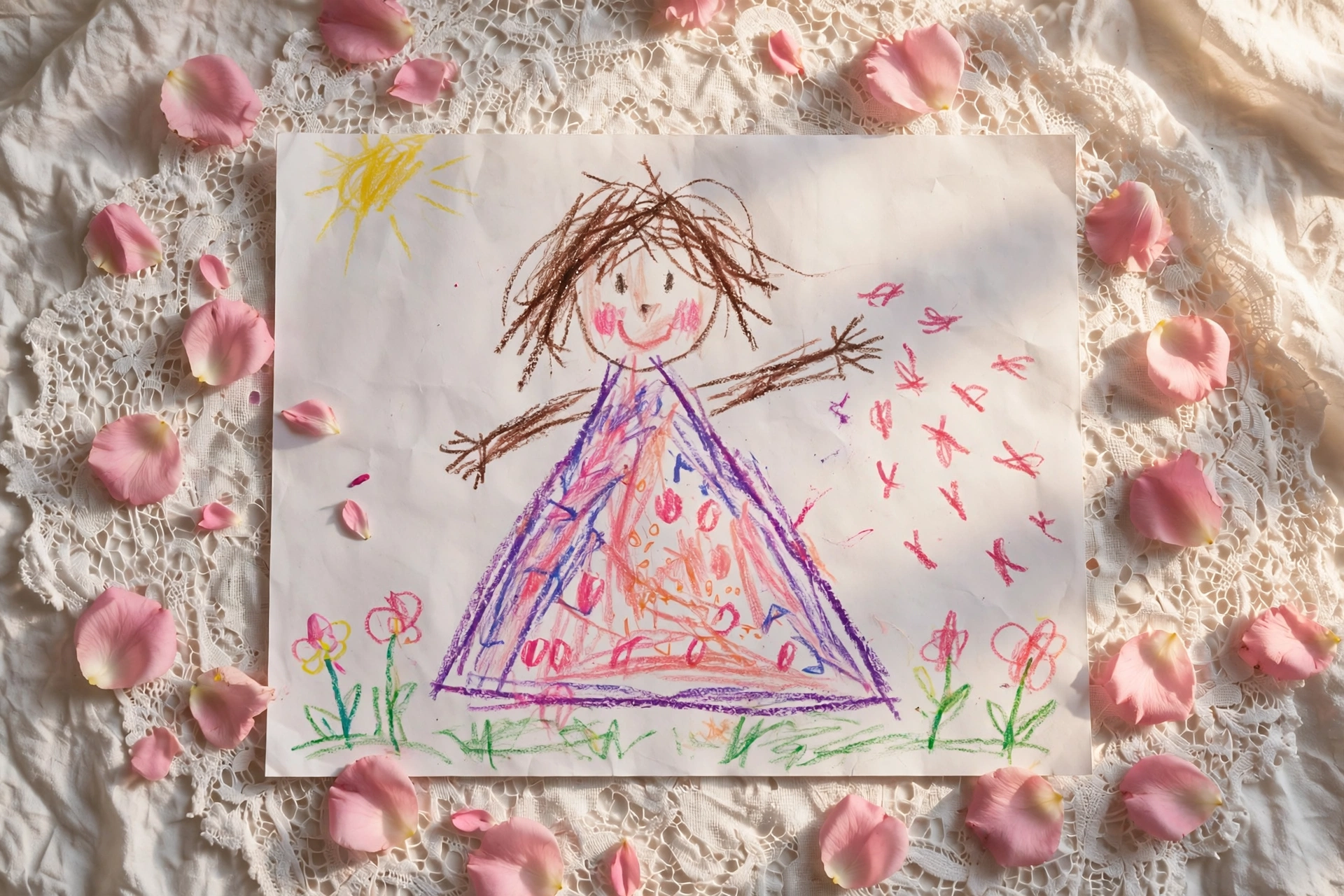
The book starts from one drawing, so the only real prep is getting the child to make it. The easiest prompt is the most literal: draw yourself at the wedding, in your dress or your little suit, doing your job. A flower girl scattering petals. A ring bearer holding the pillow. That single scene is enough for the whole book to grow out of.
If the child needs more of a nudge, a few prompts tend to get a good drawing going: the bride and the child holding hands, the aisle with flowers along it, the child mid-walk with everyone watching, or the party after with cake and dancing. None of it has to be accurate or neat. A wobbly dress, petals the size of dinner plates, a smile that takes up half the face, that's exactly what makes the book unmistakably theirs later.
A couple of practical notes make the drawing translate better. Bolder lines and a bit of color read more clearly than faint pencil, and a single clear subject works better than a crowded page. If the child is too young to draw a recognizable scene, that's fine too; an abstract scribble still becomes a character, and the story can carry the meaning the marks can't yet.
How to make one, and when to give it
The timing has a small wrinkle worth planning around. Most couples hand out flower girl and ring bearer gifts at the rehearsal or rehearsal dinner, or as a surprise after the ceremony. A storybook actually works best given after the day, when the child can connect the book in their hands to the wedding they just walked through. The drawing they made beforehand becomes the payoff they see afterward.
Because it's made to order, you'll want to start it a couple of weeks ahead rather than the night before. The flow is simple: have the child draw themselves in their wedding role, photograph the drawing flat in good light, and build the book from that. A free preview step shows you the illustrated character, the full story, and the cover before you commit, so you can see how the drawing translated before anything is printed. If the child is too young to draw it themselves, a sibling or cousin in the wedding party can, which turns the gift into something the kids made together.
On cost, it sits right alongside the gifts already on the lists rather than above them. A printed keepsake book runs in the same range as a nice piece of children's jewelry or a good plush, and there's a digital version if you're close to the date and would rather not chase a shipping window. The decision isn't really about price. It's whether the thank-you disappears into a toy bin by next month or stays on a shelf the child pulls down for years, and the outlay is roughly the same either way.
If more than one child is in the wedding, each gets their own book: the flower girl's starring her, the ring bearer's starring him, each built from their own drawing of their own role. Two separate books means two children who each feel like the hero, which is the whole point. For couples weighing gifts more broadly, there are other keepsakes you can make from a child's artwork, but for a wedding specifically, the story of their role is the thing worth keeping.
Giving a child a role they actually remember
The harder problem at most weddings isn't finding the gift. It's making a child feel genuinely part of the day instead of used as a prop in the processional. A three-year-old often doesn't remember the ceremony at all; a six-year-old remembers it in fragments. A book that tells the story of their part gives a young child something to hold a memory onto that would otherwise blur.
There are also more ways to include kids than the two classic roles, and pairing a real job with the keepsake makes both land harder. The Knot suggests giving children meaningful tasks like passing out programs, helping hold the veil, reciting a short poem, or carrying a wedding sign, with one important caveat: match the duty to the child's age and maturity so it's a role they can actually pull off. A job a kid can succeed at, plus a book that remembers it for them, is how a small attendant ends up feeling like they mattered rather than like they were briefly on display.
So the case for the storybook is simple. It satisfies the etiquette with a tangible, personal thank-you. It fits how a young child's memory works, since a story about themselves is the kind they're wired to keep. And it fills the gap every gift list leaves open. For the flower girl or ring bearer who deserves more than a party favor, a storybook made from their own drawing keeps their part in the day long after the shoes stop fitting.
The same logic, minus the wedding, applies the moment a new baby arrives and an older child is suddenly not the main event: the best gift for an older sibling.
Frequently asked questions
Common flower girl gifts are jewelry, a keepsake box, sparkly shoes, or a personalized item she'll remember the day by. Etiquette guides frame the gift as a thank-you for being part of your celebration, so something personal beats something generic. A storybook made from her own drawing, with her in it, is a keepsake that outlasts the jewelry.
Yes. It's customary to thank your youngest attendants, ring bearers included, with a small gift and ideally a personal note. Popular picks are a plush toy, a personalized keepsake, or something tied to his role that day. The point is appreciation, not price.
Most couples hand these out at the rehearsal or rehearsal dinner, or as a small surprise after the ceremony. A keepsake like a personalized storybook works especially well given after the day, when the child can connect the book to the wedding they were just part of. Order it well ahead, since custom items take time to make.
Beyond walking down the aisle, kids can pass out programs, hold the veil, recite a poem, carry a sign, or be part of a unity ritual. The Knot advises matching duties to a child's age and maturity so the role feels real. Pairing the role with a keepsake, like a storybook that stars the child in their wedding job, helps a young child feel like they truly mattered to the day.
Flower girls are typically three to eight years old, and ring bearers run a little older, around six to twelve. Wedding planners suggest choosing a child who can handle the walk without needing to be carried, and that age range is also exactly when a personalized book lands hardest: old enough to recognize themselves in a story, young enough to be delighted by it.
The bracelet gets lost by Tuesday. The story of the day she led the way down the aisle doesn't.
Try it yourself
Turn your child's drawing into a real storybook
Free preview. No account needed. Ships to US & Canada.
Start for free