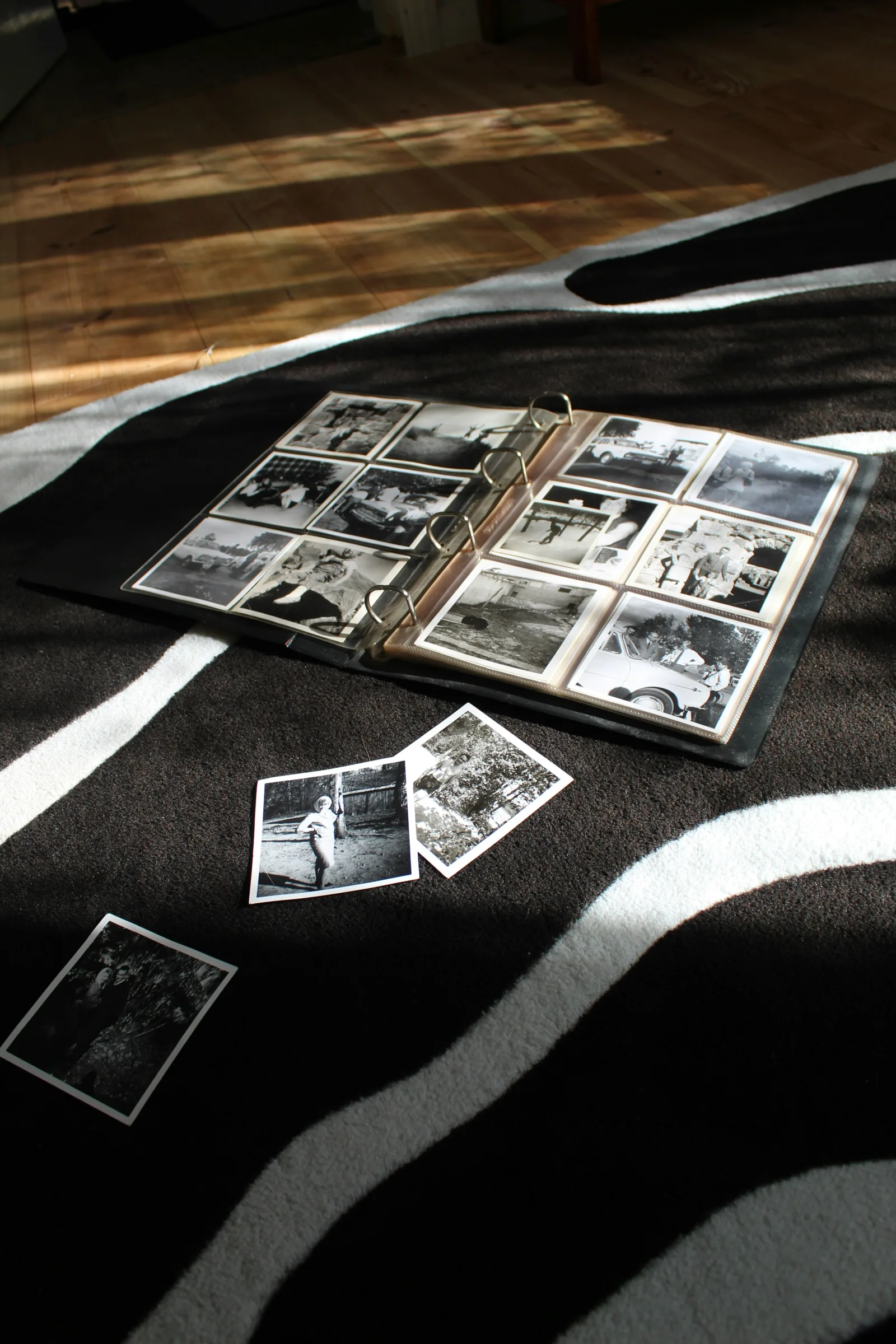
Photo book vs. story book: which keepsake do kids actually reread?
Photo book vs. story book: which keepsake do kids actually reread?
How to make a photo book, what it costs, and how a photo album compares to a story book where your child is the character, using what the research says about why kids reread.
A photo book is an album of your own photos to look back on; a story book is a narrative a child follows and rereads. Both are lovely keepsakes, but they do different jobs: a photo book preserves what happened, while a story book gives a young child something to actively return to. If you want the keepsake a child engages with most, research on how kids read points toward a story where they're the character, not just the subject.
When parents want to turn a pile of memories into something lasting, "make a photo book" is usually the first idea. It's a good one. But it's worth knowing there are two different things you might be trying to make, and they aren't interchangeable.
One is a record: an album you flip through to remember a trip, a year, a face at a certain age. The other is a story: a narrative a child follows and asks for again. Below is how to make each, what they cost, and which one a young child actually comes back to. And to be clear from the start, a photo book is genuinely the right choice for a lot of jobs. The goal here is just to help you match the keepsake to what you're actually trying to keep.
How to make a photo book, start to finish
A photo book is the straightforward one to build, and the process is roughly the same wherever you make it.
First, pick a maker. Shutterfly, Mixbook, and Snapfish are the ones most parents end up choosing between, and reviewers tend to rank them near the top for ease and print quality. Shutterfly is the household name with the most templates and the most frequent sales. Mixbook gets praised for design flexibility and cleaner layouts. Snapfish is usually the budget pick. All three run in a browser, and all three have a phone app if the photos you want are already on your phone, which they usually are.
Next, create a free account and upload your photos. You can pull from your camera roll, from Google Photos, or from a folder on your computer. Most makers will offer to auto-fill the book for you: you pick the photos, it drops them into pages in order, and you tidy up from there. That auto-fill is the single biggest time-saver, and it's why a book that would take days to build by hand takes an evening online.
Then choose a size and a cover. Common sizes run from a small 8x8 square up through an 8x11 or a big 12x12 for a coffee table. The cover choice is softcover (cheaper, more like a magazine) or hardcover (sturdier, more like a real book). This is also where you decide on binding, which matters more than it sounds.
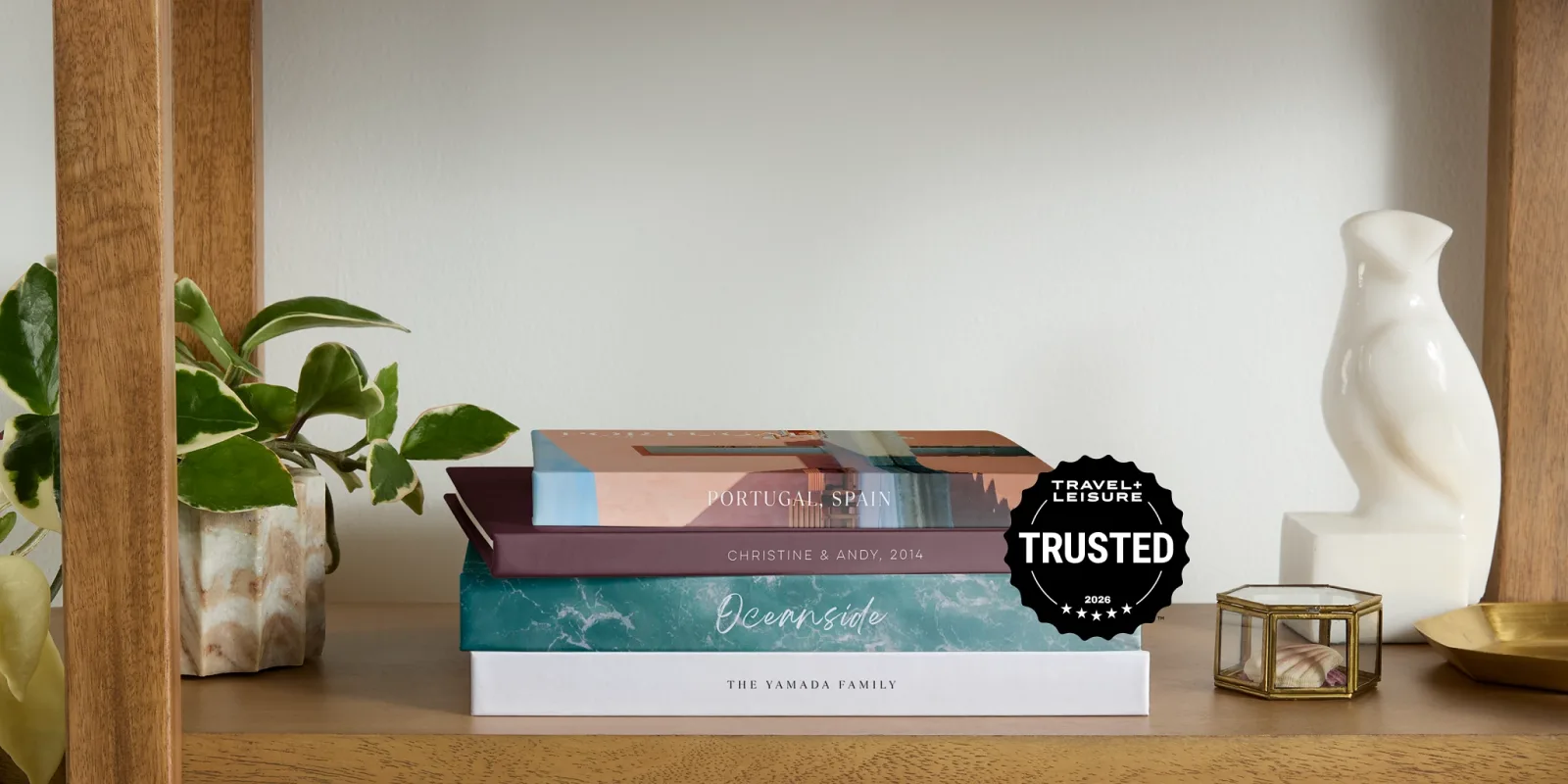
If you want the pages to open completely flat so one photo can span two pages with no seam down the middle, that's a "layflat" book. In a layflat binding there's no gutter swallowing the middle of a wide photo, which is why it's the standard for wedding and travel albums where a big landscape shot deserves the whole spread. It costs more, sometimes a lot more, but it's the single upgrade that most changes how finished the book feels.
After that, it's the fun part: drag photos where you want them, swap the auto-filled layouts, and add a few captions. A date, a place name, a one-line note about what was happening. Captions are what turn a stack of images into something a person can read years later without remembering every detail themselves.
Finally, preview every spread and order. Zoom in on each page to catch a low-resolution photo or a caption typo before you commit, because reprints cost as much as the original. Most books ship in about a week.
What a photo book actually costs
Cost is reasonable and scales with how fancy you go. A photo book is, at its core, a bound collection where the photographs carry the content, and you're mostly paying for size, paper, and binding.
A small softcover starts around $25. A standard hardcover runs roughly $40 to $56 depending on size and page count. Shutterfly's own pricing guide lists a 10x10 glossy hardcover near $56 and an 8x8 softcover under $25, with each extra page adding a dollar or two. Layflat is where the numbers jump: a standard 10x10 layflat sits near $96, a deluxe layflat around $136, and a premium leather layflat close to $194 before any sale. So the honest range is about $25 for a simple softcover up past $150 for a premium layflat, with most family books landing somewhere in the middle. Watch for the near-constant discount codes, which routinely knock 40 to 50 percent off, and remember shipping is on top.
For the money and the hour or two it takes, you get a real object off a shelf instead of photos trapped on a phone. That's a good trade.
What a photo book is genuinely best for
There are jobs a photo book does better than anything else, and it's worth naming them, because for these a story book would be the wrong tool.
A trip is the obvious one. A week somewhere, in order, with the good light and the bad hotel breakfast and the face someone made at the aquarium. Nothing holds "here is what this trip looked like" better than an album built from the actual pictures.
A year in review is the other classic. A lot of families make one book per year, birthday to birthday, and line them up on a shelf. Watching a kid grow across five spines is its own kind of keepsake, and it's something only a photo book gives you.
Then there are the everyday cases: a book for the grandparents who don't see the kids enough, a first-year baby album, a wedding, a milestone. In all of these the photograph is the point. You want the real face at the real age, and a photo book preserves exactly that.
What a photo book doesn't have is a plot. It's a record rather than a narrative, and that's fine. It's just a different thing from the book a child climbs into your lap to hear again.
Album vs. narrative: two different keepsakes
One distinction makes the choice easier. An album asks you to remember. A narrative asks a child to follow along.
With an album, the reader supplies the story from their own memory. You look at the photo of the aquarium and you remember the day. That works beautifully for the person who was there. It works less well for a two-year-old who has no memory to supply yet, and for whom the photo is just a picture of themselves.
A story book asks something different of a child. Instead of looking at pictures of the past, they follow a narrative from beginning to end, and if it lands, they ask for it again. That rereading is where a lot of early learning happens: vocabulary, prediction, the sense of how a story is shaped. A child can't reread an album in that sense, because there's nothing to find out. They can reread a story a hundred times and still lean in for the part where it turns.
Why rereading is the whole point
The value of a children's book is largely in the return trips. The first read is discovery. The tenth read is where the words settle in, where a kid starts finishing your sentences, where a story becomes part of how they see the world. So the real question about any keepsake is simple: will a child come back to it on their own?
The gap widens when the book is about the child, and here the research gets specific, worth trusting over the marketing claims that float around this topic. In a study of preschoolers, children learned new words significantly better from the personalized sections of a book than from the non-personalized ones (Kucirkova, Messer & Sheehy, 2014). In related work by the same researchers, toddlers and their parents smiled and laughed more with a personalized book than with a non-personalized one, and more than with the child's own favorite book (Kucirkova, Messer & Whitelock, 2013). More engagement, from both sides of the lap.
That's not just one research group's finding, either. A National Literacy Trust review of the evidence looked at how personalized elements affect the cognitive and emotional sides of early shared reading, including motivation, confidence, and engagement, and treated personalization as a real lever on how children take to a book, not a gimmick. When a child is more engaged and asks for a book more often, they get more of the rereading that actually teaches.
The self-reference effect: why "that's me" sticks
There's a memory reason underneath all of this. Children as young as four to six remember information better when it's tied to themselves, a well-documented pattern called the self-reference effect (Cunningham et al., 2014). It isn't a new or shaky idea, either. The effect was first pinned down in adults nearly fifty years ago: people recall words far better when they've judged whether the word describes them than when they've only judged its meaning (Rogers, Kuiper & Kirker, 1977). What that research showed in a lab is the thing every parent already half-knows: the self is a powerful hook for memory.
A child pays closer attention to, and better remembers, a story they're inside of. A photo book shows them their face. A story book can make them the character, which is a different and stronger kind of "that's me." One is recognition. The other is being part of the plot.
The "mirror" a book can be
There's a phrase for why this matters, from the scholar Rudine Sims Bishop, an emerita professor at Ohio State often called the mother of multicultural children's literature. She wrote that books can be mirrors: "Literature transforms human experience and reflects it back to us, and in that reflection we can see our own lives and experiences as part of the larger human experience. Reading, then, becomes a means of self-affirmation, and readers often seek their mirrors in books."
Her point was about children seeing their identity and world represented in the stories they read. But it explains the small, specific magic of a child finding themselves inside a book, too. A photo album reflects a child's appearance. A story where they're the hero reflects them as someone things happen to and around, which is closer to how a child experiences being themselves.
None of this makes a photo book lesser, just different. A photo book is the best possible way to hold onto what a season actually looked like. A story book is the better way to give a young child a keepsake they'll climb into your lap to reread.
Which one to make
The honest answer is that it depends on what you're trying to keep.
Make a photo book when the goal is the record: the trip, the year, the grandparents' visit, the everyday faces you'll forget the exact shape of. Nothing preserves "here is what this time looked like" better than a well-made album, and you can put one together in an afternoon.
Make a story book when the goal is a keepsake a young child actively engages with. And if you want the most personal version of that, the one that uses the self-reference advantage instead of just showing a photo, DoodleTale turns your child's own drawing into a printed story book where their art is the illustration and they are the main character. It's the difference between a child pointing at a picture of themselves and a child hearing a story that is about them. Two kids who both draw a dragon end up with two completely different books, because the story is built around what they actually made.
Plenty of families make both, a photo book for the shelf and a story book for the bedtime pile, because they answer different wishes. If you're weighing the personalized-book options specifically, there's more than one way to put a child in a book, and the right one depends on whether you want their face on the page or their imagination in the plot.
If you want the whole collection rather than a chosen few, how to make a scrapbook covers the real time cost and why so many albums stall. And for one occasion the gift lists consistently miss, see storybook gifts for weddings.
Frequently asked questions
Pick a maker like Shutterfly, Mixbook, or Snapfish, create a free account, and upload your photos. Choose a size and a cover, let the tool auto-fill the pages or drag photos in yourself, add captions, preview every spread, and order. Most people finish a simple book online in an hour or two, and it arrives in about a week.
A small softcover starts around $25, a standard hardcover runs roughly $40 to $56 depending on size, and premium layflat books climb past $90 into the $150-plus range. Shutterfly's own pricing shows a 10x10 hardcover near $56 and a deluxe layflat around $136. Extra pages add a dollar or two each, and shipping is on top.
A photo book is an album, a bound collection of your own photographs to look back on, with no plot. A story book is a narrative your child follows from beginning to end and rereads. A photo book preserves what happened; a story book gives a child a story to return to, which is what drives rereading.
Layflat is a premium binding where the pages open completely flat with no gutter down the middle, so a single photo can span both pages without a seam. It looks more polished and is popular for wedding and travel albums. It costs more than standard binding, which folds slightly at the spine.
For looking back on a trip or a year, a photo book is ideal. For a keepsake a young child actively engages with, a story book tends to win, because children pay more attention to and remember content that features them as a character, not just their picture. The most personal option makes the child the hero of the story, not just the subject of the photos.
For the version where your child is the hero of the story and not just the subject of the photos, a printed storybook made from their drawing is the keepsake they're most likely to ask for again.
A photo book remembers what they looked like. A story book remembers who they were.
Try it yourself
Turn your child's drawing into a real storybook
Free preview. No account needed. Ships to US & Canada.
Start for free