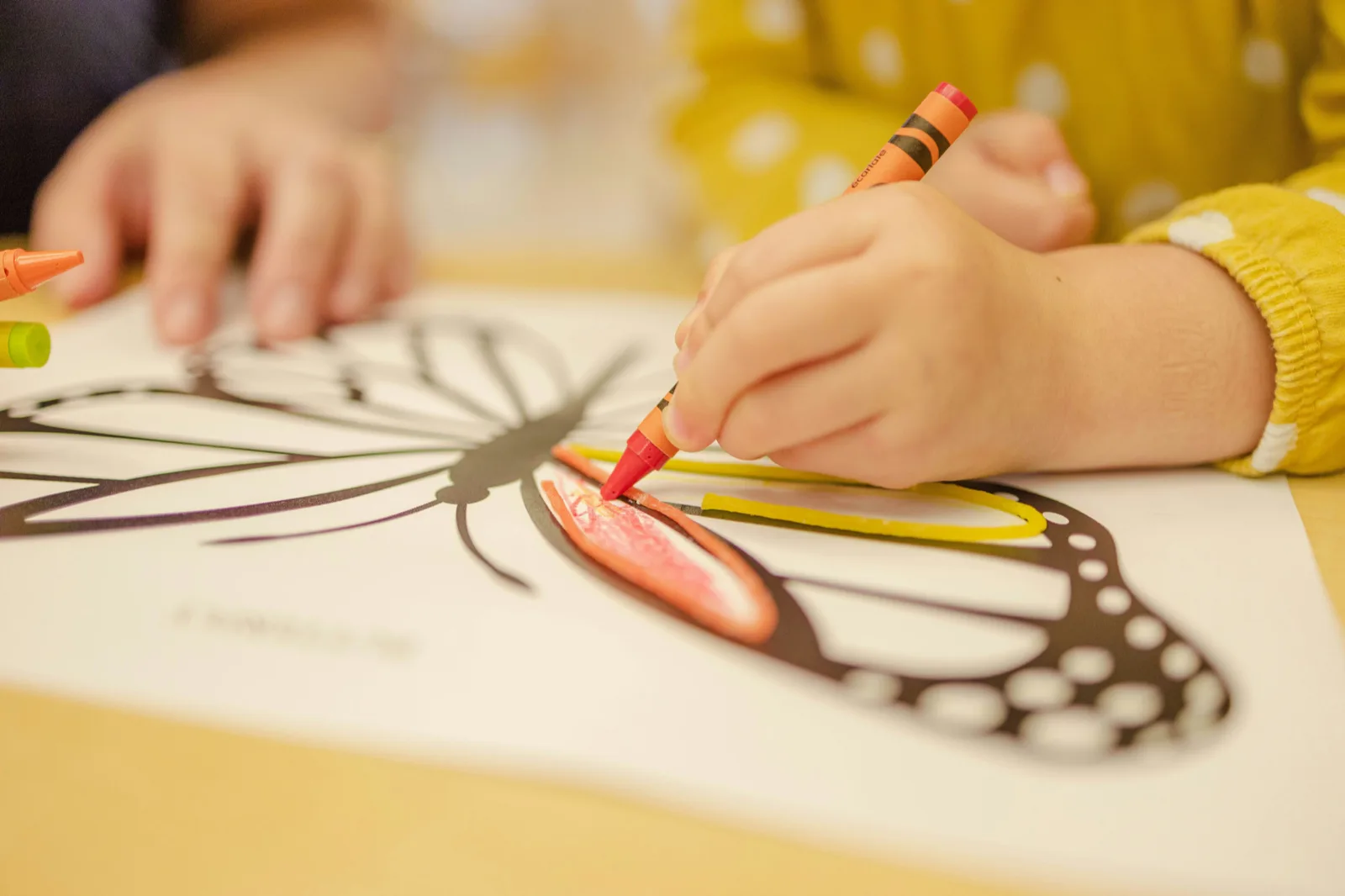
Things for kids to draw when they're bored (a list that actually gets used)
Things for kids to draw when they're bored (a list that actually gets used)
50+ real ideas for what kids can draw when they're bored, grouped by age and by theme, plus why boredom is worth protecting and what to do with the drawings worth keeping.
The fastest fixes are prompts a child can't get wrong: draw your day, draw your pet as a superhero, draw a monster nobody's invented yet, or copy something simple in the room slowly and badly on purpose. But the boredom itself is worth protecting, it's where kids' own ideas come from. Below are more than 50 prompts sorted by age and by theme, plus one thing worth doing with the drawings they end up proud of.
"I'm bored, there's nothing to do" is a sentence every parent hears, usually five minutes after handing over a stack of blank paper. Drawing is the obvious answer, but "just draw something" almost never lands, because the problem was never the paper. It's the blank space and the quiet fear of filling it wrong.
This is a list of things kids can actually draw when they're stuck, sorted by age and by theme so you can hand over the right one. But first, one thing worth knowing before you rush to rescue a bored child: the boredom is doing something.
Boredom is not the emergency it feels like
The instinct to fix a bored child fast is strong, and mostly worth resisting. In a well-known experiment on boredom and creativity, people who did a boring task first, copying numbers out of a phone book, then came up with more creative and more varied ideas on a following test than people who skipped the boring part (Mann & Cadman, 2014). Boredom pushes the mind to wander, and wandering is where new ideas get made.
It matters more now than it used to, simply because there's less of it. Children ages 0 to 8 average about two and a half hours of screen media a day, according to the 2025 Common Sense Census. That's well over the one hour a day the American Academy of Pediatrics suggests for children ages 2 to 5. A screen is very good at removing boredom instantly, which also removes the small uncomfortable gap where a kid would otherwise have to invent something.
As clinical psychologist Stephanie Lee of the Child Mind Institute puts it, "Boredom also helps children develop planning strategies, problem-solving skills, flexibility and organizational skills, key abilities that children whose lives are usually highly structured may lack." A crayon and ten unstructured minutes is one of the cheapest ways to build those skills. So the boredom can stay. It just needs somewhere to go.
There are really two ways to answer "what should I draw." You can give a subject to copy, which is easier and lower-pressure, or you can give a prompt to invent, which is harder but produces the drawings kids actually get excited about. Most children need the first kind to warm up and the second kind to get hooked.
Easy things to draw, by age
The right prompt depends less on skill than on what a child can start without feeling like they'll fail. Match the list to the age and the paralysis usually breaks.
Ages 3 to 5 do best with things built from circles and lines, where there's no wrong version:
- A cat, a snail, a ladybug, or a fish
- The sun, a cloud, a rainbow, a single flower
- A balloon, an ice cream cone, an apple
- A caterpillar made of as many circles as they can fit on the page
- A spider with as many legs as it wants, counting optional
- A snowman, even in July
- Their own hand traced, then turned into a turkey or a tree
- A face making the silliest expression they can think of
At this age, the scribble is the point. The circle that's meant to be a face and the four lines meant to be legs are how a child first learns that a mark can stand for something real, the first step toward writing, per ZERO TO THREE. Don't correct the proportions.
Ages 6 to 8 are ready for scenes and small stories inside a drawing:
- Their bedroom, their house from the outside, or the family car
- A dinosaur wearing something a dinosaur wouldn't wear
- An underwater world, a treehouse, or a rocket with rooms inside it
- Their pet doing a job (the dog as a mail carrier, the cat as a chef)
- The tallest tower they can imagine, plus whoever lives at the top
- A robot built out of things from the kitchen
- A birthday cake for someone who has never had one
- A comic strip of three boxes: something happens, then something goes wrong, then it's fixed
Ages 9 to 10 want a bit of challenge and a lot of ownership:
- A map of an imaginary country, with names for the towns
- Their own invented creature, plus a label explaining what it eats
- The same object drawn from three different angles
- A "cross-section" drawing: the inside of a spaceship, a castle, an ant colony
- A trading card for a made-up hero, with stats down the side
- Their bedroom as it might look 100 years from now
- A maze on paper, with something waiting in the middle
- A single continuous line drawing, pen never lifting off the page
A bigger prompt bank, grouped by theme
Age is a good first filter, but kids don't always want what's on their shelf. A dinosaur-obsessed five-year-old will happily attempt an "ages 9 to 10" creature if it's a dinosaur. Sort by what your child is into instead, and dial the detail up or down to fit them.
Animals and creatures are the safest place to start, because most kids already have a favorite:
- A pet that's part dog and part something else entirely
- The world's laziest animal, caught mid-nap
- Two animals that would never be friends, being friends anyway
- A bug so small it would need a magnifying glass to see
- An animal wearing the child's own shoes
- A whole family of one animal, from the tiniest baby to the grumpiest grandparent
Machines and vehicles work for the kid who likes how things fit together:
- A car that runs on something other than gas
- A machine that makes breakfast while you're still asleep
- A bicycle built for an elephant
- A spaceship shaped like their favorite food
- A robot whose only job is to find lost socks
- The most useless invention they can think of, drawn like it's serious
Invented worlds and maps are for the child who wants to build something bigger than one object:
- An island that only exists in their head, with a name across the top
- A city built entirely underwater, or up in the clouds
- The floor plan of a fort they'd actually want to live in
- A door in the base of a tree, and whatever is on the other side
- Weather that doesn't exist yet (what would a "sprinkle-storm" look like?)
- A restaurant that only serves one impossible food
Everyday life, drawn slowly is the quiet, low-pressure track, and it doubles as real observation practice:
- Their shoe, drawn without lifting their eyes to check the paper
- What's left on their plate after dinner
- The view out one window, exactly as it is right now
- Their own hand holding something small
- The messiest corner of their room, every object in it
- A grown-up in the house, mid-yawn or mid-sneeze
Feelings and story prompts pull out the drawings that tend to surprise you:
- What "grumpy" looks like if it were a shape or a color
- The best part of today and the worst part, side by side on one page
- A picture of a feeling they don't have a word for yet
- Their worry drawn as if it were an animal
- A memory from when they were little
- What their bedroom sounds like at night, drawn as a picture
Silly and challenge prompts are the ones that get laughs, which is often what breaks a stubborn "I'm bored":
- A drawing where absolutely everything is upside down
- The ugliest, most ridiculous hat they can design
- Finish a squiggle you scribble for them, turning it into something real
- A self-portrait using only shapes, no careful copying allowed
- A creature made only from their own scribbles, discovered after the fact
- The same simple thing, an apple or a house, drawn ten times, each one weirder than the last
That's more than 50 starting points, and any one of them can spin off into three more once the hand is moving. You don't need to get through the list. One prompt that gets a stuck kid drawing has done the whole job.
Let it be messy, that's the part that works
It's tempting to steer a bored child toward a "nice" finished drawing, the kind that looks good on the fridge. Resist that too. Early-childhood educators draw a clear line between product art, where a child copies a sample to make a predetermined result, and process art, which is open-ended and driven by the child's own choices.
Process-focused art experiences support preschoolers across expressive language, social and emotional development, thinking skills, and fine motor control, according to NAEYC. The object at the end matters less than the deciding, the trying, and the changing of the mind halfway through, all of which vanish the moment a drawing has one correct version to match.
In practice this means handing over a prompt and then getting out of the way. No "the sky should be up there," no "cats don't have five legs," no gentle redirects toward realism. (If an older child already says they're bad at drawing, here is what helps.) A prompt like "draw the laziest animal" invites a hundred right answers, which is exactly why it beats "draw a dog well."
Prompts that beat a blank page
Copying a cat is a fine warm-up, but the drawings kids talk about for days come from prompts they can't look up. These pull from the child's own world, so there's no correct answer to fall short of. That's why they work.
Try handing over one of these instead of a subject:
- Draw your day. What you ate, where you went, the best and worst part, all on one page.
- Draw the dream you had, or the weirdest one you can remember.
- Invent a monster that doesn't exist yet, then decide what it's afraid of.
- Draw your family as animals. Everyone has to be a different one.
- Design a machine that does the chore you hate most.
- Draw what "delicious" looks like, or "loud," or "cozy," as a picture with no words.
A five-year-old asked to "draw something" will stall. The same child asked to "draw what our dog thinks about all day" will fill the page, because now it's a puzzle, not a performance. Open prompts like these are also the ones that reveal the most, a child's drawings say more than parents usually expect, and a "draw your day" is a small window into what actually stuck with them.
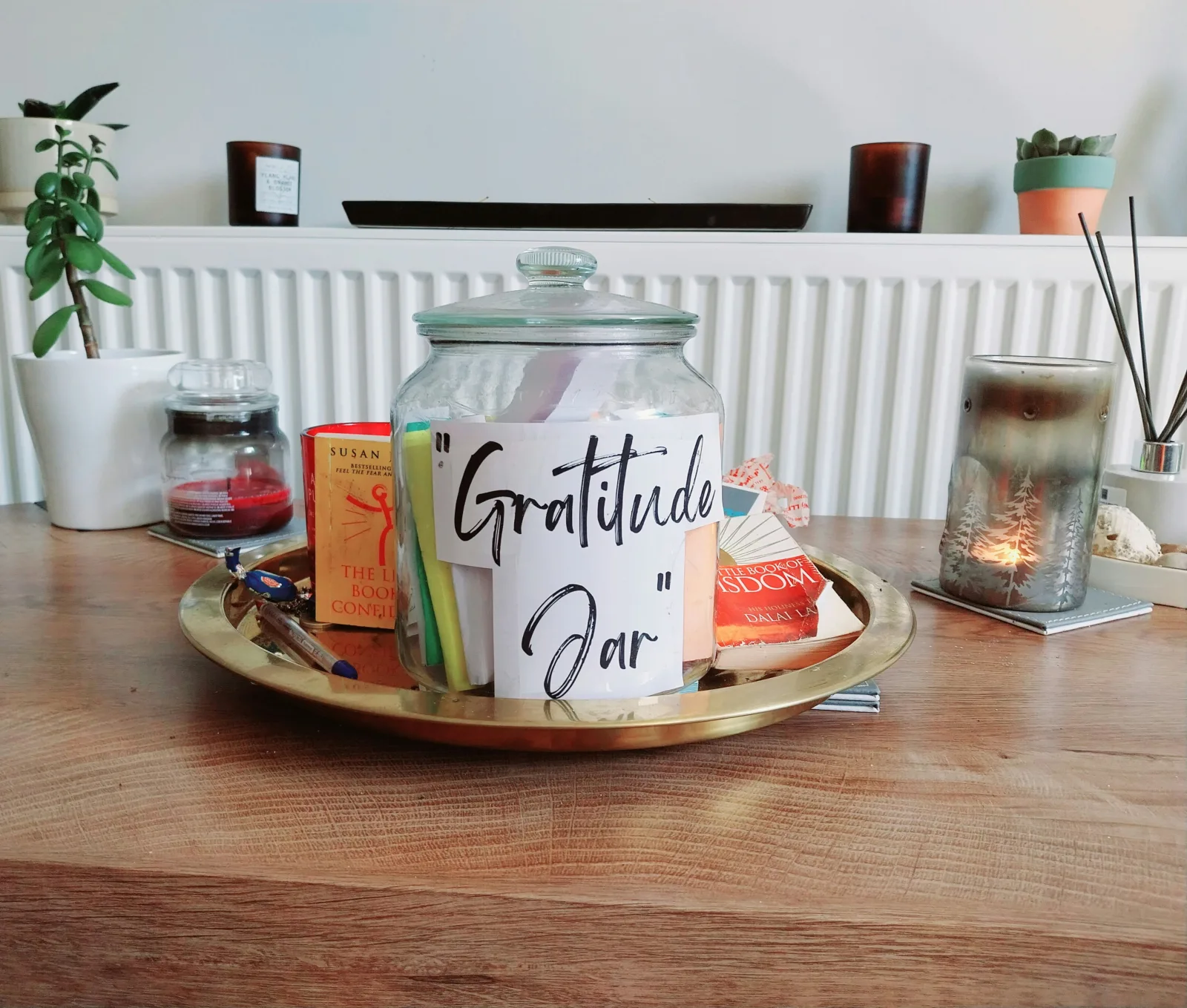
If your child freezes even with a prompt, drop a bowl of prompt slips near the crayons and let them pull one at random. Removing the choice removes half the pressure. The hand starts moving before the "is this a good idea" part of the brain gets a vote.
Why the bored-afternoon drawing is worth keeping
It's easy to treat the drawing a bored kid makes as disposable, a way to fill twenty minutes before dinner. Some of them are. But that pile of "nothing to do" drawings is doing real developmental work, and every so often one of them is a keeper.
Drawing builds grip, hand and finger control, eye-hand coordination, and the visual-motor skills that later feed into handwriting, as pediatric occupational therapists describe in detail at The OT Toolbox. It's also, quietly, how a lot of kids work through what's on their mind. A child who can't yet say "I felt left out today" will often draw it first. None of that is visible while it's happening. It just looks like a bored kid with a crayon.
Then there's the occasional drawing that stops you, the invented creature with the sad eyes, the whole imaginary country with its own weather. Those are the ones worth doing something with beyond the fridge. DoodleTale turns a single drawing into a real printed storybook, where the child's own art becomes the illustration and they become the character in the story. For a kid who made something out of a boring Tuesday, seeing it come back as a real book they can hold tells them the idea was worth having.
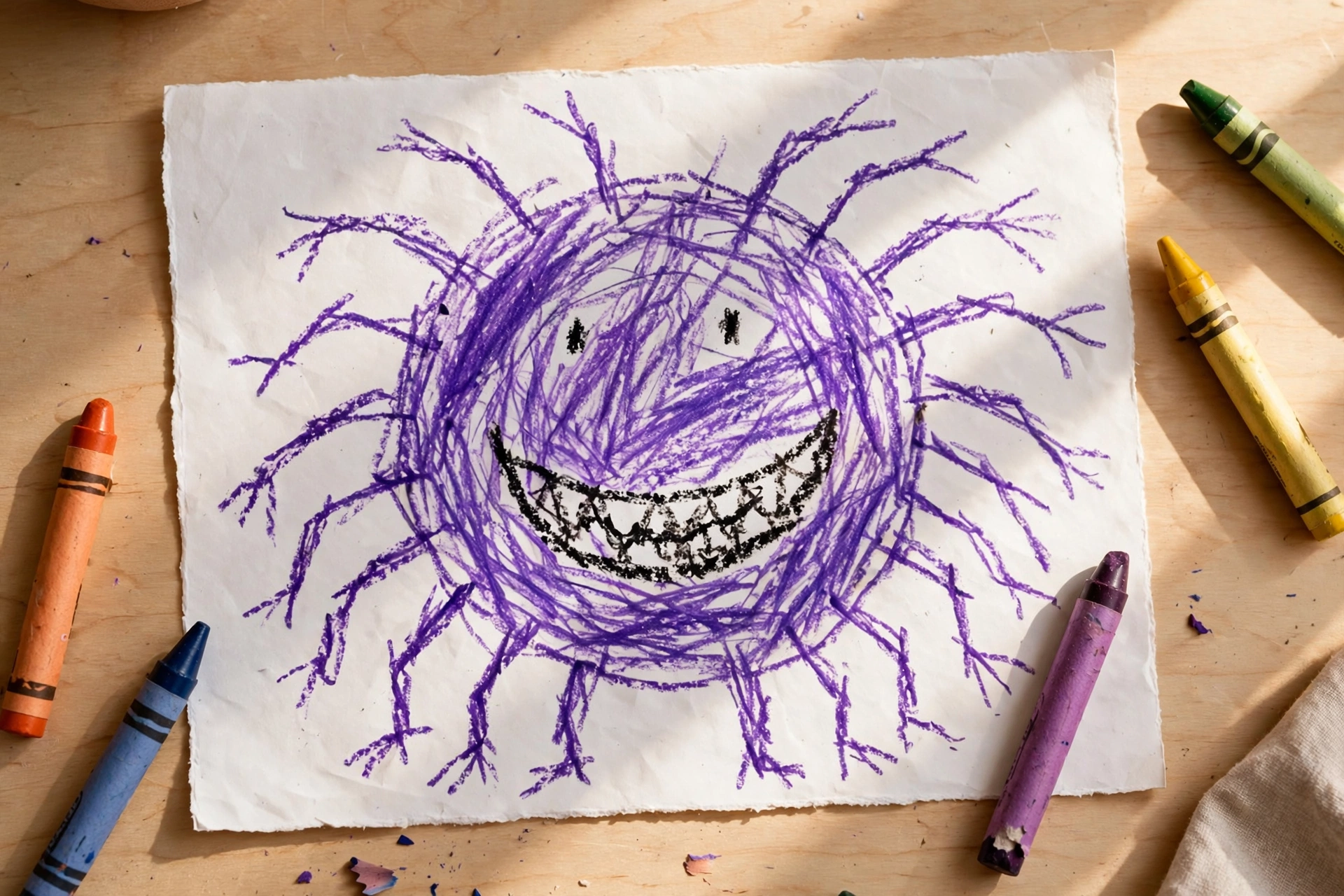
That's the whole loop, really. Boredom makes the gap, the drawing fills it, and once in a while the drawing turns out to be worth keeping forever. The trick isn't preventing the boredom. It's making sure there's a crayon within reach when it hits, and paying attention to the ones they're proud of.
Prompts solve the blank page. Getting a child to reach for paper on their own is a different problem, and how to encourage kids to draw more covers that side without turning it into homework.
Frequently asked questions
Start with something in front of you, your shoe, your snack, the view out the window, drawn slowly and badly on purpose. If that stalls, switch from copying to inventing: draw a house for an animal, a machine that does your least favorite chore, or what your day looked like as a picture. The best prompts come from your own world, not a list, because there's no correct version to fall short of.
Anything built from circles and lines: a cat face, a flower, a sun, a snail, a balloon, a caterpillar. Easy drawings aren't the ones with fewer details, they're the ones a child can start without feeling like they'll get it wrong. Simple shapes remove the fear of the blank page, which is the real thing that stops most kids before they've made a single mark.
Draw your day, the weirdest dream you can remember, your family as animals, your pet as a superhero, or a map of an imaginary country. Pull a prompt at random from a jar so you don't have to choose, which removes half the pressure. "No ideas" usually means "nothing feels good enough," so prompts that can't be done wrong, like a monster nobody has invented yet, tend to break the block fastest.
It's one of the most useful things a bored child can do. Drawing builds fine-motor control, hand-eye coordination, and the scribble-to-writing progression that underpins early literacy, according to ZERO TO THREE. It's also how many kids process feelings they can't yet put into words, which is real cognitive work even when it looks like idle play with a crayon.
For the bored-afternoon drawing that turns out to be a keeper, turning it into a printed storybook is the most durable way to give it a home.
The best thing a bored kid can draw is whatever they'd never have thought of if you'd handed them a screen instead.
Try it yourself
Turn your child's drawing into a real storybook
Free preview. No account needed. Ships to US & Canada.
Start for free