Personalized books for autistic kids: what actually makes one work
Personalized books for autistic kids: what actually makes one work
Most advice about books for autistic children is about behavior. This is about the book: predictable structure, the special interest, reading level versus age, and what to avoid.
Three things, none of which is the personalization by itself. The structure has to be predictable enough to survive fifty re-reads. The subject should lean into the child's existing focused interest rather than trying to broaden it. And the reading level has to match where the child actually reads, not their age. A book that gets those right earns attention. A book that gets them wrong is a nicely printed object nobody opens twice.
Search for books for autistic children and you mostly get books about being autistic: picture books explaining a diagnosis, stories where a character learns to cope, guides for siblings. Those have a place, and they are not what most parents are looking for on a Tuesday night.
What a lot of parents actually want is a book their child will sit with. One that holds up to being read the same way forty times, that does not derail at page nine into a lesson, and that is about the thing their kid cares about rather than about their kid's neurology.
A note on language before anything else. This post uses identity-first language, autistic child rather than child with autism, because that is the stated preference of most autistic self-advocates, including the Autistic Self Advocacy Network. Preferences vary and plenty of families use person-first language deliberately. Use whichever your child and family use.
Structure matters more than story
The single most useful property a book can have here is predictability, and it is worth being precise about what that means, because it is not the same as being boring.
Predictable structure means a reader can tell, at any page, roughly where they are and what kind of thing happens next. The same pattern repeats. Pages are laid out the same way. The ending resolves rather than twisting. Nothing arrives that the shape of the book did not prepare you for.
This is why so many autistic children re-read the same handful of books far past the point where an adult would have moved on. The re-read is not stalled progress. Once a book is fully known, it costs almost nothing to process, which makes it available for enjoyment, comfort or regulation in a way that a new book is not. A book that is only good once is close to useless for that purpose.
Practically this means a few things when choosing. Repeating refrains and predictable page patterns are a feature. Surprise endings, unreliable narrators and structural jokes are expensive. Books that change format partway through, a sudden fold-out, a page where the text runs sideways, can break a re-read for a child who relies on the layout being stable.
The National Autistic Society's guidance on communication makes the neighboring point about language: literal, concrete and specific does more work than figurative and implied. A book that leans heavily on sarcasm, idiom or implication asks a reader to do simultaneous translation, which is real work being spent on something other than the story.
The special interest is the way in, not the thing to manage
If a child is deeply into trains, or the water cycle, or a particular video game, or elevators, the temptation from a lot of well-meaning advice is to use that interest as leverage to move them somewhere else.
The research does not support treating it as a problem. Winter-Messiers' interview study of children's special interests found that when children were talking about their area of focus, their social behavior, communication and emotional regulation were all observably better than when discussing a neutral topic. The interest was not competing with those skills. It was where those skills showed up.
For books, that translates into something simple. A book about the interest gets read. A book about something else, with the interest sprinkled on for palatability, usually gets detected.
This is also where personalization earns its keep, and where it can be oversold. Putting a child's name into a generic story is a thin effect that tends to wear off. Building the story around the specific thing they care about is a much larger one, because the subject is doing the work rather than the name field.
Reading level, not age level
Reading ability and chronological age come apart in both directions here, and more sharply than in most groups.
Some autistic children read years ahead of age expectations, sometimes strikingly so, while still wanting picture books. Others have strong comprehension and slow decoding, or the reverse. A nine year old may be reading fluently and still prefer a short book they can finish. An eight year old may want long, dense factual text and no narrative at all.
The failure modes point in opposite directions and both are worth avoiding. A book pitched too high stops being readable and becomes a chore administered by a parent. A book pitched too low is noticed, and being read down to is its own insult, particularly for an older child who is already aware of being treated as younger than they are.
The workable rule is to pick by where the child reads comfortably and let the subject carry the age. A short, simple book about a genuinely age-appropriate topic works. A long, complex book about a topic they have outgrown does not.
For what it's worth, we build our own books in three levels for exactly this reason: one to two sentences per page for ages 3 to 4, two to three for 5 to 6, and a paragraph per page for 7 to 8, chosen at setup rather than inferred from the child's age. Any book you choose, the check is the same. If the child's attention holds to page four, the level is right.
A storybook is not a Social Story
This distinction gets blurred constantly in marketing, and it is worth keeping straight.
Social Stories are a specific method developed by Carol Gray in 1991, with defined criteria about tone, perspective and sentence types. A properly written one describes a situation, the relevant cues, and common responses, in a patient and factual voice. The goal is accurate description rather than compliance, and the criteria explicitly steer away from directive language telling a child what to do.
A personalized storybook is not that. It is a story, made to be enjoyed, and its job is to be worth reading.
Both can be useful. Confusing them causes two specific problems. A family who buys a storybook expecting a behavioral tool gets a nice book that does not do the thing they needed. And a story that has been quietly engineered to correct behavior tends to be detected by the child, which contaminates reading time with the feeling of being worked on.
If you need a Social Story, use the actual method, ideally with your child's speech and language therapist. If you want a book your child enjoys, buy a book, and let it be a book.
What we got wrong about "gentle"
We build personalized storybooks at DoodleTale from children's drawings, and one of our slower lessons is relevant here.
Early on our story engine had a single underlying shape, the one that makes stories work: a character wants something, something blocks it, the difficulty escalates across three attempts, then a resolution. It is a good structure and most of our books still use it.
The first thing we learned, building the Bedtime mode, was that a well-made escalating story is actively wrong for some jobs. Raising tension three times is the opposite of what a settling story needs, so Bedtime got its own shape with no conflict in it at all: a named cozy place, one small thing not yet right, a few settling steps each quieter than the last, then the thing being right.
What is relevant to this post is what that shape turned out to be good for beyond bedtime. It is the most predictable structure we have. Nothing in it ambushes the reader. It has the same beats in the same order every time, it resolves rather than twisting, and it holds up under repeat reading, because there is nothing in it whose value depended on not knowing it yet.
We did not build that for autistic readers and it would be wrong to claim we did. We built it because the exciting version was ruining bedtimes. But the property it has, a shape that survives being fully known, is the same property that makes a book re-readable rather than disposable, and it is the thing we would point a parent at first.
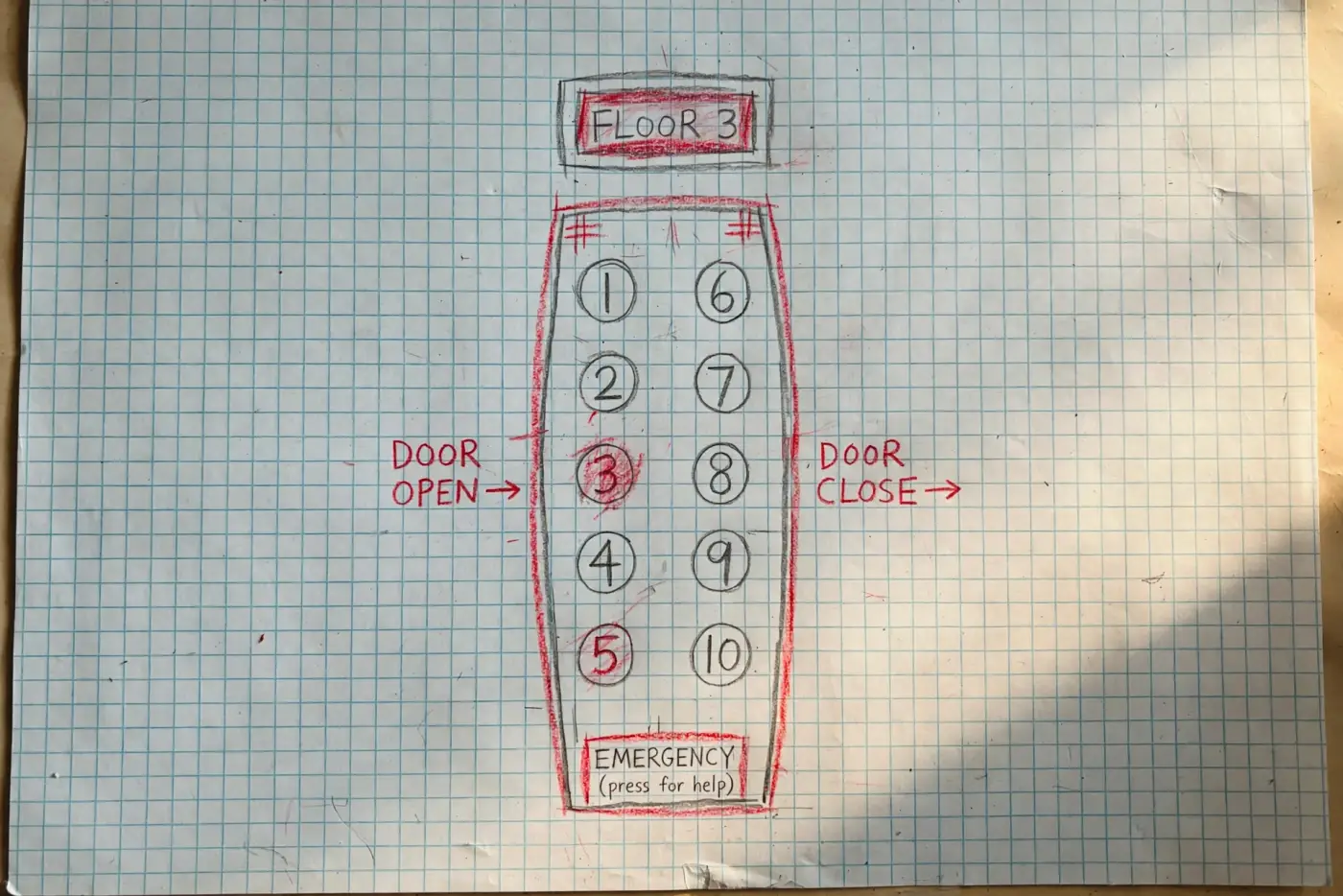
The other half is what the book is about. The character comes from a drawing the child made, which means the subject is whatever the child is currently full of. If that is elevators, the book is about the elevator they drew, kept in their own proportions rather than corrected into a generic one, with their name on the cover as the author.
The physical book is part of the decision
Book choice discussions tend to stay on content, and for a lot of autistic children the object itself decides whether the book gets picked up.
Paper finish is the one that comes up most. Gloss pages throw reflections that move as the book moves, which some children find genuinely unpleasant and most adults never notice. Matte paper does not do that. Weight matters too: a floppy paperback that will not stay open needs a hand holding it flat, which is one more thing to manage while reading.
Size is worth thinking about rather than defaulting to bigger. A large-format book is harder to hold, harder to keep at a fixed distance from the eyes, and harder to take somewhere. A square format that opens flat on a lap tends to be easier to use unsupported than a tall thin one.
Then there is illustration density. Busy spreads with a lot happening at the edges can pull attention away from the part the text is about, and a child who processes visual detail thoroughly may work through every corner of the page before returning to the sentence. Clear figures against uncluttered backgrounds are easier to read alongside text, which is a different requirement from being beautiful.
None of this is a rule, because sensory preferences vary enormously and some children specifically like the thing another child cannot tolerate. The useful move is to notice which books in your house already get handled and which stay on the shelf, then look at what the handled ones have in common physically. That pattern is often more predictive than subject matter.
What to look for, and what to skip
A compressed version, for when you are actually choosing something.
Worth looking for: a repeating structure you can describe in one sentence; consistent page layout; concrete, literal language; an ending that resolves; a subject that matches the child's current focus; a reading level chosen by ability rather than age; illustrations that are clear rather than busy; and a book that can be finished in one sitting at the child's actual attention span.
Worth skipping: structural surprises and format changes mid-book; humor that runs entirely on sarcasm or idiom; sensory-heavy content presented as delightful (crowds, sirens, parties, loud birthday scenes) unless you know your child enjoys it; any book that frames an autistic child as a problem being resolved by the end; and anything marketed as teaching a social skill that turns out to be a plot.
Worth being skeptical of: claims that personalization itself produces developmental or therapeutic outcomes. Personalized books are often genuinely more engaging. That is a good enough reason to buy one, and it is not the same as a clinical claim. Anyone stating otherwise should be showing you the study.
If you want to try ours
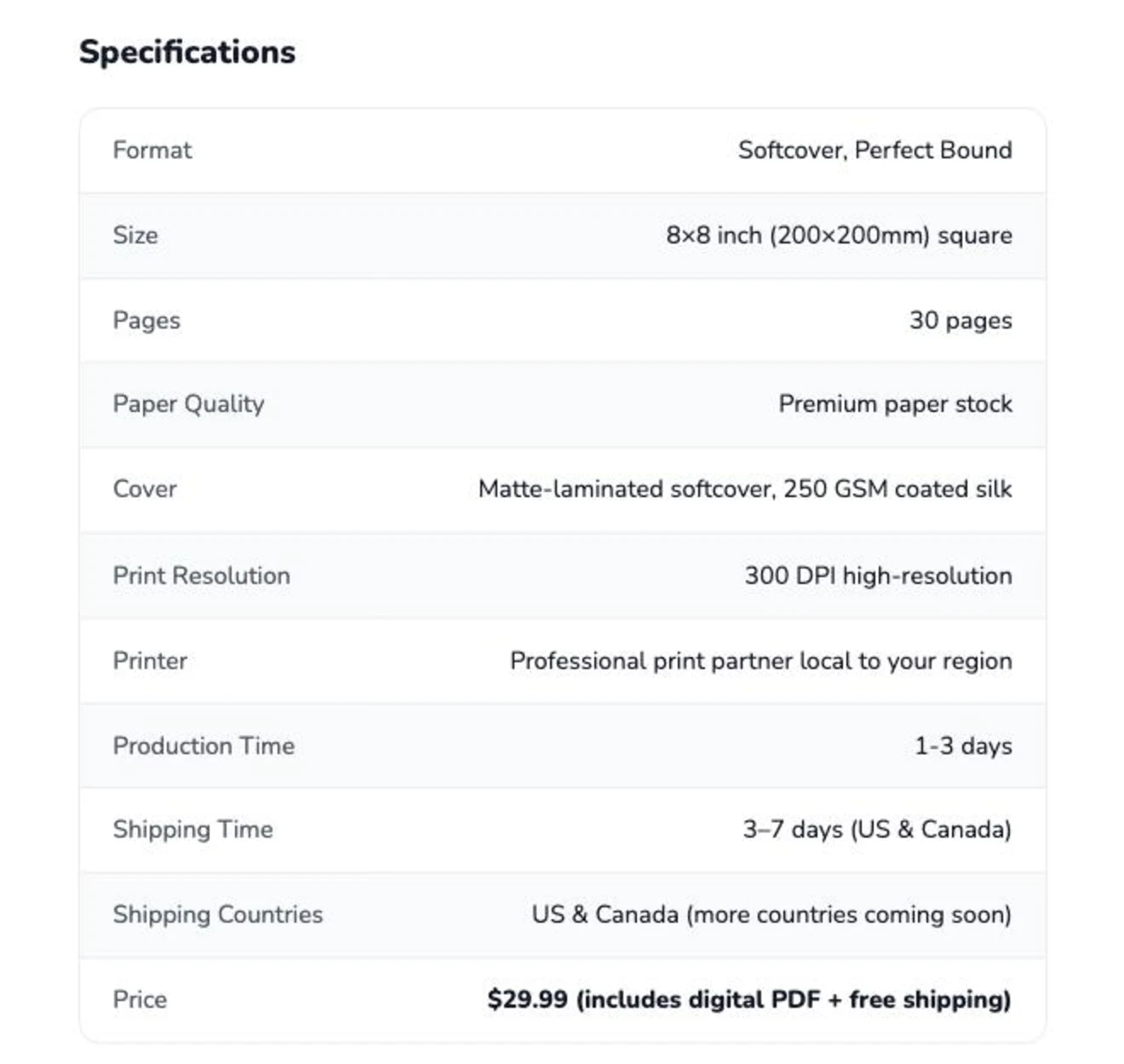
DoodleTale builds a 30-page illustrated storybook from one drawing your child made. You upload the drawing, the character arrives in about a minute, and you pick the reading level and the story mode, including the Bedtime shape described above. The character, the full story, and the cover are free to preview before you decide anything, which matters more than usual here: you can judge the character yourself rather than taking our word for it. A printed 8×8 inch premium softcover is $29.99 with free shipping in the US and Canada, and $9.99 for digital. There is also a free printable Activity Kit made from the child's own character, a coloring page, paper doll, sticker sheet or face mask.
If the character looks wrong, the preview shows you that first, which is the honest reason we lead with it.
Frequently asked questions
They can be, for reasons that have little to do with the personalization being a novelty. A book built around a child's own special interest gets attention that a general book does not, and a book with a fixed, repeatable structure supports re-reading, which many autistic children rely on. Fit matters far more than the label on the product.
No. Social Stories are a specific method developed by Carol Gray with defined criteria, written to describe a situation accurately rather than to direct behavior. A personalized storybook is entertainment. They can sit alongside each other, but a storybook is not a Social Story and should not be sold or used as one.
Reading level, and the two often differ in both directions. Pitching a book at chronological age can make it unreadable, while pitching it too low is noticeable and insulting to an older child. Pick by where the child reads comfortably and let the subject matter carry the age.
Usually it is an asset. A focused interest is a reliable route into reading, vocabulary and sustained attention, and research on special interests generally finds them motivating rather than limiting. Building on the interest tends to work better than steering away from it.
Unpredictable structure, loud sensory content presented as fun, jokes that depend entirely on sarcasm or figurative language, and anything framing the child as a problem being solved. Also avoid books that promise to teach a social skill and then deliver a plot instead.
For the adjacent reading questions, ADHD and reading together covers attention and story length, and a gift for a kid who hates reading starts with whether a child won't read or can't.
Predictable structure, their actual interest, their actual reading level. The personalization is the smallest part.
Try it yourself
Turn your child's drawing into a real storybook
Free preview. No account needed. Ships to US & Canada.
Start for free