
Reading with an ADHD kid: length, working memory, and the re-read
Reading with an ADHD kid: length, working memory, and the re-read
Why a child with ADHD loses the thread halfway through a chapter, why they re-read the same book, and how to pick book length so reading time stops being a fight.
Usually not because they cannot read. Following a story means holding characters, goals and earlier events active across many pages, and that carrying-forward job runs on working memory, which ADHD reliably taxes. The practical fixes are about load rather than motivation: pick books short enough to finish in one sitting, allow movement, recap before you start, and stop treating re-reading the same book as a problem.
A child reads four pages competently, out loud, without stumbling. Then they ask who the girl is. The girl has been in every one of those four pages and was introduced by name on the first one.
It looks like they were not paying attention. Frequently they were paying close attention, page by page, and simply did not carry anything from page one into page four.
This post is narrow on purpose. It is not about reluctant readers in general, which is a broader problem with a different starting question: a gift for a kid who hates reading covers that, beginning with whether a child won't read or can't. This one is specifically about the mechanics that ADHD changes, and what to do about book length, re-reading and the moment the thread gets dropped.
Following a plot is a memory task
Reading a story looks like one skill and is at least two.
Decoding turns marks into words. That is what phonics instruction targets and what most reading support addresses. Separately, there is the job of holding the story together: remembering who the characters are, what each one wants, what already happened, what is still unresolved, and updating all of that with each new page.
That second job runs on working memory, which is the ability to hold information active and manipulate it while doing something else. Russell Barkley's work on executive function in ADHD argued that the condition is better understood as a difficulty with behavioral inhibition and the executive functions that depend on it, working memory among them, than as a deficit of attention alone. CHADD and the CDC both describe the same cluster: attention, impulse control and executive function together, not attention by itself.
The consequence for reading is specific. A child can decode perfectly and still lose the plot, because the plot lives in the part that is taxed. That is why "sound it out" advice lands so badly here. The sounding out was fine.
It also explains a frustrating pattern parents describe: comprehension that is excellent on a single page and poor across a chapter. Tested on one paragraph, the child does well. Asked what the book is about, they cannot say. Nothing about that is contradictory once you separate the two jobs.
Length is the lever, not difficulty
The usual instinct when reading goes badly is to make the book easier. Often the more useful adjustment is to make it shorter.
A child whose decoding is age-appropriate does not need simpler words. They need fewer pages between the start and the end, because every page is another page of material to hold.
The practical rule is to pick books the child can finish in one sitting at their real attention span. That span is usually shorter than their reading level would predict, and the two get confused constantly. If that is eight minutes, an eight-minute book read to the end beats a better book abandoned at the halfway point. Finishing is the thing being built. A child who has finished six books has evidence that books get finished; a child with six bookmarks in six abandoned books has the opposite evidence and draws the obvious conclusion.
Chapter books can work when the chapters are genuinely self-contained enough to function as endings. What tends not to work is a long continuous narrative read ten minutes a night over three weeks, because the gap between sessions is exactly where the held information falls out. If you are doing that, the recap is not optional.
Which is the cheapest intervention here: thirty seconds before you start, out loud, of who we're with and what they're trying to do. Not a quiz. You say it, not them. Quizzing reintroduces the failure at the start of the session and sets the tone for the rest of it.
Movement is not the enemy of attention
A child who is standing on one leg, pacing, or spinning a fidget while you read is often listening better than a child who is being made to sit still.
Sitting still, for a lot of children with ADHD, is itself an effortful task. Requiring it means spending self-regulation on posture, and that effort comes out of the same limited budget the story needs.
The test is not whether the child looks attentive. It is whether they can tell you what happened. If a child pacing the room can recount the page and a child sitting neatly cannot, the pacing is working and the neatness was theater.
Understood.org's material on ADHD and reading covers the related environmental adjustments, most of which are unglamorous and effective: reduce competing noise, cut visual clutter near the page, break sessions up rather than extending them, and read at the time of day the child is actually available rather than the time that suits the schedule. For a lot of families that last one is the biggest single change, because the default reading slot is bedtime, which is when a depleted child has the least executive function left.
The re-read is doing real work
Many children with ADHD land on one book and read it relentlessly. Parents often worry this is avoidance or stalled progress.
It is usually neither. A fully known book has almost no working memory cost. Nothing needs holding, because everything is already held. All the effort that was going into tracking who the girl is becomes available for other things: fluency, expression, noticing the pictures, actually enjoying it.
For a child who mostly experiences reading as difficult, the re-read is also the only place where reading is easy. That is not a small thing to have access to, and taking it away in favor of variety trades a reliable good experience for an unreliable one.
The same logic makes a case for predictable structure generally, and for re-reading as an actual strategy rather than a concession. If a new book is going badly, reading it a second time is often more productive than pushing on to a third new book, because the second pass is where the plot finally assembles.
What we found out about story length the hard way
We build personalized storybooks at DoodleTale, and page count turned into a much more consequential decision than we expected.
Our books are 30 pages. That number was not an aesthetic choice, and we tried other things. The tension is real: a longer book gives the story room to breathe, develop a character and earn its ending, and every instinct about making a good book pushes toward more room.
What we kept running into is that a story's structure has to fit the number of pages it is given, and the failure is not graceful in either direction. Too few pages for the shape and the plot skips steps. Too many and the story stops advancing, which produces a specific and immediately recognizable failure: pages that repeat each other, a middle that pads, the same beat described twice in different words. We spent a long stretch fixing exactly that, and the root cause was never the writing. It was giving a story more pages than it had events for.
The reason this belongs in a post about ADHD is what the fix implies. A book is not improved by being longer, and a padded middle is not neutral. Every repeated page is another page of material a reader has to carry without getting anything new for it. A tight 30 pages where every page advances something is measurably easier to follow than 50 pages where twelve of them restate.
So when choosing books, the count on the back cover is less informative than whether anything happens on each page. A short book that moves is easier to hold than a long book that idles, and the long idling book is the one that produces the "who is the girl" moment.
What tends to help
Most of the useful adjustments are about load rather than effort, and they stack.
Recap before you start rather than testing afterward, and match the book to the attention span you actually have rather than to the reading level. Judge whether it is working by what the child can tell you, not by whether they sat neatly. Move reading out of the bedtime slot if you can, since that is when a depleted child has the least executive function left and it is the hour most families default to.
Taking turns by page helps more than it sounds like it should. Alternating readers halves the continuous load and the handovers themselves act as attention resets. Audiobooks are worth using without guilt, though it is worth being clear about what they do: they build story, vocabulary and comprehension, and they do not build decoding. Running the audio alongside the printed text gets you both at once.
Then the two that matter most and get resisted most. Pick books about whatever the child is currently obsessed with, because interest does not fix working memory but it does buy attention, and attention is the input everything else runs on. And let them re-read, since that is the one place reading gets to feel easy.
Keep reading aloud to them longer than feels necessary
There is a point, usually somewhere around seven or eight, where a child can technically read alone and the shared reading quietly stops. For a child with ADHD that handover is often premature, and worth delaying by a couple of years.
The reason is the split described above. When a child reads alone, they are running decoding and plot-holding simultaneously, and both are drawing on the same depleted budget. When you read aloud, the decoding is free. All of their capacity goes to the story. That is the part they are good at, and the part that makes reading worth doing at all.
Children who are handed independence too early often end up reading well below what they can actually understand, because the books they can decode comfortably alone are less interesting than the ones they can follow when someone else does the reading. That gap is where a lot of children decide reading is boring, and they are not wrong about the books they have been left with.
Reading aloud also lets you carry the thread out loud without it being a test. You can say "this is the bit where he's still pretending he didn't take it" in passing, as commentary rather than as a question, and the child gets the recap without being put on the spot.
The version that works well for a lot of families is alternating rather than choosing: they read a page, you read three. Their decoding practice still happens. The story still moves fast enough to stay interesting. And the handover points themselves work as natural attention resets, which is worth more here than it would be for another child.
Where a personalized book fits
Honestly: it is one option, and its advantage here is narrower than the marketing for this category usually suggests.
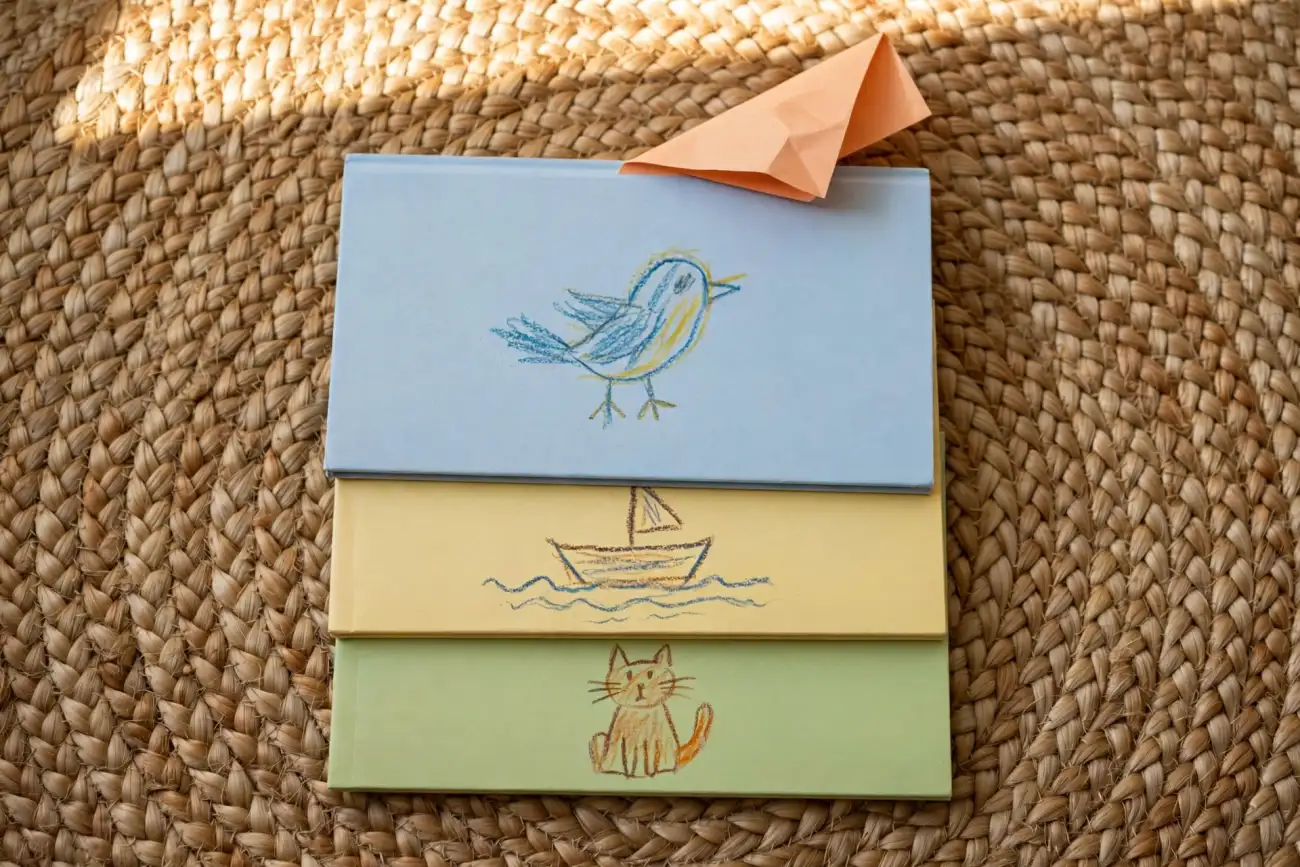
A DoodleTale book starts from a drawing your child made. The creature they invented becomes the illustrated character, kept in their own proportions rather than tidied up, and your child is named as the author. It is 30 pages, it is one sitting, and it is about the thing they are currently full of, which covers the three levers in this post that a book can control: length, subject and structure.
You pick the reading level at setup, three of them, from one or two sentences a page up to a paragraph a page, which matters because decoding ability and attention span often need setting independently. The character, the full story, and the cover are free to preview, so you can see the drawing's transformation yourself. Printed is $29.99 for an 8×8 inch premium softcover with free shipping in the US and Canada, digital is $9.99, and the printable Activity Kit made from their own character is free.
What it does not do is address decoding difficulty, and a meaningful number of children with ADHD also have a co-occurring reading disability. If that is what is happening, a nicer book is not the intervention. An evaluation is.
When to look past book choice
Some of what looks like an attention problem during reading is a decoding problem wearing a disguise, and the two co-occur often enough that it is worth ruling in or out.
Signals worth raising with your pediatrician or your child's school: reading accuracy well behind peers rather than just stamina; avoidance of reading specifically rather than of sitting still generally; trouble with rhyming and sound manipulation in a younger child; or a child who is clearly bright in conversation and disproportionately behind on the page.
Book length and re-reading are worth adjusting regardless. They are just not a substitute for an assessment if one is indicated.
Frequently asked questions
Holding a plot together requires keeping people, goals and events active in working memory across many pages, and working memory is one of the executive functions most consistently affected in ADHD. The child usually understood each page as they read it. What did not happen is the carrying forward, which is a different job from comprehension.
Short enough to finish in one sitting at that child's real attention span, which is often shorter than their reading ability suggests. Finishing matters more than page count. A completed short book builds a track record of success; an abandoned long one adds to a pile of evidence that books do not get finished.
No, and it is often doing useful work. A known book costs almost nothing to process, so attention that was going into tracking the plot becomes available for fluency, expression and enjoyment. Re-reading is also one of the few ways a child with ADHD gets to experience a book as easy.
Generally yes. Many children with ADHD sustain attention better while moving, and requiring stillness spends effort on sitting that is then unavailable for the story. Standing, pacing, bouncing or handling something are usually worth allowing unless they are clearly a substitute for listening.
They count for story, vocabulary and comprehension, and they do not build decoding. Both are worth having. Pairing an audiobook with the printed text is a common approach that keeps the eyes on the words while removing the decoding bottleneck that can make the story unreachable.
For structure and predictability in more depth, personalized books for autistic kids covers the re-read from a different angle, and a bedtime routine that actually sticks is relevant if your reading slot is the last twenty minutes of the day.
They did not stop paying attention. They stopped carrying it forward. Those need different fixes.
Try it yourself
Turn your child's drawing into a real storybook
Free preview. No account needed. Ships to US & Canada.
Start for free