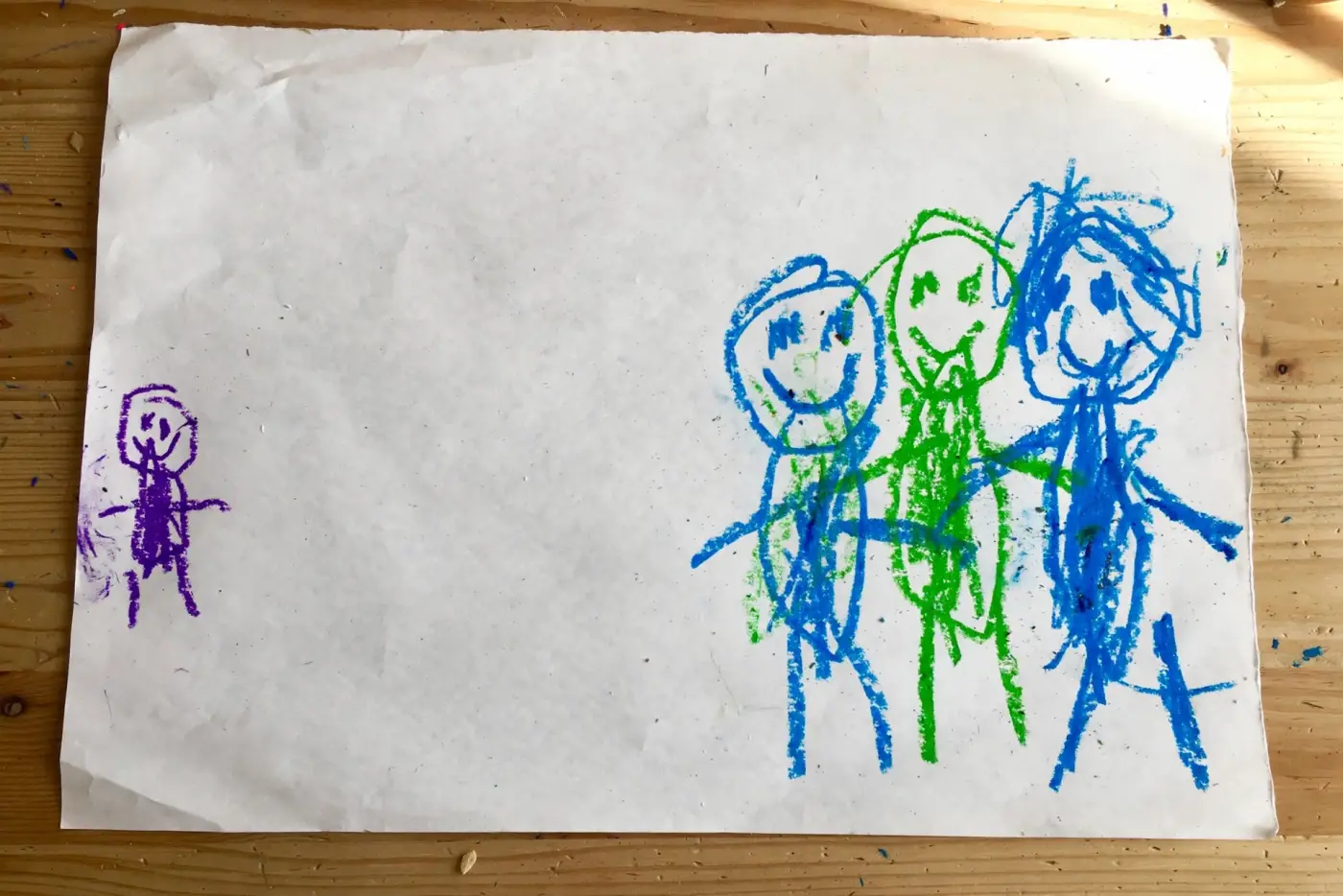
The shy kid who never wants to be the center of attention
The shy kid who never wants to be the center of attention
Shyness is a temperament, not a fault to fix. What actually helps a quiet child, what makes it worse, and why being credited is different from being watched.
Stop treating it as a problem to solve. Give a slow-to-warm child the warm-up time they actually need, stop announcing the shyness over their head, and choose things that let them be credited rather than watched. Being proud of something you made is available to a quiet child. Being on a stage is not.
At the birthday party your child spends the first forty minutes attached to your leg. Another parent says something kind about how it takes some kids a while. You say "she's just shy," which is true, and then you spend the rest of the party quietly managing the gap between how much fun everyone else appears to be having and how much fun your child appears to be having.
Then at minute forty-one she is in the middle of the game and doesn't want to leave.
That's not a child who overcame anything. That is a child with a warm-up period, doing the thing she was always going to do, on her own schedule. The forty minutes were not wasted time before the real party. They were part of how she joins.
The temperament is not the problem
Somewhere between a quarter and a third of children are slow to warm in new situations. They watch before they join, prefer two friends to eight, and find a loud room costly in a way other children don't. The American Psychological Association keeps a resource page on shyness in children for parents who want the clinical framing.
The useful line to hold is this: the temperament is not the target. The skill is. A shy adult who can give a presentation, make a phone call, and walk into a room of strangers isn't a former shy person. They're a shy person who got good at doing those things while feeling that way. That's what you're building, and it's built by practice with support, not by being pushed in and expected to enjoy it.
Which also means the goal is not an extroverted child. A quiet child who has two real friends, can order their own food, and is happy is not a project with outstanding work.
Stop saying it over their head
"She's just shy" is said with affection roughly a hundred percent of the time and it still does damage, because of who is saying it and where the child is standing.
The child hears their most trusted adult hand a stranger a summary of who they are, in a tone that's usually a little apologetic. That is a strong signal. Children take descriptions from parents as facts about themselves, and a fact about yourself is much harder to move than a mood you happen to be in.
The swap is small. "She likes to watch first." "He takes a while to warm up, and then he's in." Same information, delivered to the other adult, but the version the child overhears is a description of a process rather than a diagnosis. And it's more accurate, because the watching is the first step and not an absence of it.
Also worth dropping: the apology. There is nothing to apologize for, and a child who repeatedly hears their parent apologize for them learns that their default setting is an inconvenience.
Give the warm-up its actual length
Most of the friction around a shy child comes from the gap between the warm-up time they need and the warm-up time the schedule allows. Arriving at a party ten minutes late, when the noise is already at full volume and the groups have formed, is the hardest possible entry for this child.
Arriving ten minutes early is a different event entirely. An empty room fills up around you, which is enormously easier than walking into a full one. Same party, same children, completely different cost.
The same trick works almost everywhere. Get to the classroom before the other kids. Walk the route to the new activity the week before. Meet one child from the group one-on-one before the group happens. None of this is coddling, it's just front-loading the part they find expensive so that the part everyone else enjoys becomes available to them too.
What doesn't work is the countdown. "In five minutes you're going to go say hi" converts the warm-up into a deadline, and a deadline is the one thing that reliably makes a slow-to-warm child dig in.
Let them do the hard thing in small pieces
Some things a quiet child does have to learn to do, and ordering food is the standard one. The instinct is to split the difference: order for them most of the time, then occasionally announce that today they're doing it themselves, in a busy restaurant, with a line behind you.
Break it smaller. First they choose and you say it. Then they say it and you're standing next to them. Then they say it while you look at the menu. Then they do it. Four visits, or fourteen, at whatever pace holds. Each step is small enough to be survivable and real enough to count, which is the whole design.
What makes this work is that the child is never surprised. Announcing the step in advance, on the way there, removes the thing that shy children find genuinely intolerable, which is not the task but the ambush. The same structure covers phone calls to a grandparent, asking a librarian a question, and knocking on a neighbor's door.
Two rules keep it from going sideways. Do not add a step because the last one went well, since a good day is not a new baseline. And do not praise the outcome in front of an audience afterward, because turning the thing they just managed into a public event is the fastest way to make the next one cost more than the last.
Side by side beats face to face
Shy children talk more when they're not being looked at. This is the most practically useful thing on this list and the easiest to test tonight.
In the car, in the dark at bedtime, on a walk, while both of you are doing something with your hands, conversation that would be impossible across a table becomes ordinary. The child who answered "fine" to every question about school will narrate the entire social politics of the lunch table from the back seat, unprompted, if nobody turns around.
Building shared activities that face outward rather than inward gives you a lot of these. Cooking. Building something. Drawing at the same table, which does double duty, because a child who draws alongside you has something to talk about that isn't themselves. How to encourage kids to draw more covers the version of this where the drawing is the point.
Being credited is not the same as being watched
This is the distinction that matters most when choosing anything for a quiet child, and it took us a while to get right in our own product.
We make personalized storybooks, and the obvious version of that is the one built around a photograph of the child. Their face on the cover, their face on every page, the child rendered as the visible star. Books built around a child's face work well for plenty of children and are a genuinely different product.
For a shy child they're frequently the wrong shape. A photo book makes the child the thing being looked at. Handing a child who hates being looked at a bound object whose entire premise is looking at them, and then watching them open it in front of relatives, is a specific kind of ordeal.
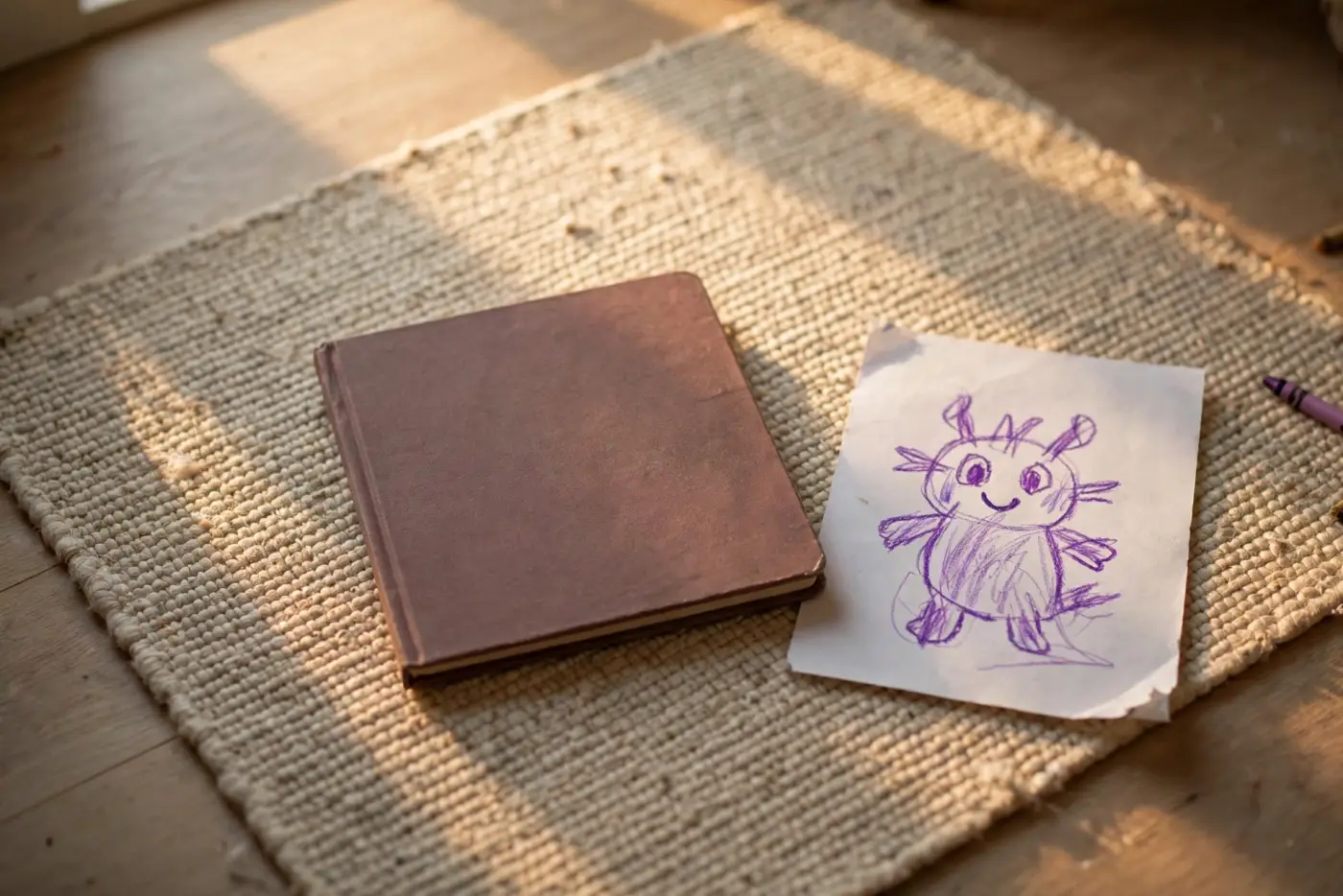
DoodleTale books are built the other way around. The thing on the cover is the creature your child drew, illustrated from their actual drawing with its actual proportions kept. Your child is the named lead of the story, but what is on display is their work. That is the difference between being exhibited and being credited, and quiet children feel it immediately. A shy child won't stand up and perform. A shy child will absolutely hand you a thing they made and watch your face while you look at it.
The making is also private. The child picks what the character wants, chooses the kind of story, and sees the whole book free before anyone else does. No audience is required at any point, and there's no stage anywhere in the process. A digital copy is $9.99, a printed 8 by 8 inch softcover is $29.99 with free shipping in the US and Canada, and books come in three reading levels for ages 3 to 8, so a child who reads independently can read their own without being read to in front of anyone. The confidence books page has four of them, with the drawing each one came from.
Gifts and activities that don't come with an audience
The general filter, useful well beyond books: does enjoying this require the child to perform in front of someone?
Things that usually pass are things a child can do alone and then show if they want to: making, building, reading, drawing, collecting, growing something. Things that usually fail are things with a built-in audience, including well-meant ones. The surprise party. The class presentation dressed up as a treat. The gift that has to be opened in a circle while everyone waits for the reaction.
Frequently asked questions
If the quiet also shows up around reading, it's usually the performance rather than the story that's the obstacle. Gifts for a kid who hates reading goes into that version of it.
Warm-up time isn't a delay. It's how some people arrive.
Try it yourself
Turn your child's drawing into a real storybook
Free preview. No account needed. Ships to US & Canada.
Start for free