Selective mutism: the child who talks at home and not at school
Selective mutism: the child who talks at home and not at school
Selective mutism is an anxiety disorder, not shyness and not defiance. How to recognize it, why waiting it out is the wrong call, and what helps in the meantime.
Selective mutism is an anxiety disorder, not a personality trait and not defiance. A child speaks freely at home and cannot speak at school, consistently, for a month or more beyond the settling-in period. The distinction from shyness matters because the responses differ: a shy child benefits from time and a longer warm-up, while a child with selective mutism usually needs assessment and structured treatment, and generally does better the earlier it starts.
A teacher says, at the first parents' evening, that they have not yet heard your child's voice. You are briefly confused, because at home the same child narrates continuously, argues, does voices, and will not stop talking during dinner.
That gap is the central feature, and it is what separates this from a quiet kid.
This post is about selective mutism specifically, as a clinical condition. If what you are actually describing is a child who warms up slowly, hangs back at parties and then joins in, that is temperament rather than a disorder, and the shy kid who never wants to be the center of attention is the more useful page. The two get conflated constantly, and the responses that help each one are close to opposites.
Nothing here is a substitute for an assessment. This post exists to help you recognize the pattern and know what to ask for.
What it is
The Selective Mutism Association describes it as an anxiety disorder in which a person cannot speak in certain social settings, such as school, while speaking comfortably in others, such as at home with family. In the DSM-5 it sits among the anxiety disorders, which is the important part of the classification and a relatively recent change in how it is understood. It was once grouped with oppositional conditions, and the older framing, that a child is refusing, still lingers in how it gets described in staffrooms.
The criteria are roughly these, and they are worth knowing because they are what an assessment will look at:
The lack of speech is consistent in particular settings, not occasional. It lasts at least one month, not counting the first month of school, since almost every child is quiet in the first weeks. It interferes with school or social functioning. It is not explained by unfamiliarity with the language being spoken, which matters for multilingual children who may be in a normal silent period while acquiring a new language. And it is not better accounted for by a communication disorder, which is part of why a speech-language pathologist is often involved.
The word "selective" causes a lot of damage, because in everyday English it implies choosing. It does not mean that here. The ASHA description is clearer about the mechanism: the child is not electing to be silent, the speech is blocked. Many children describe wanting to answer and finding that nothing will come out. Some describe a physical sensation of the throat closing.
How it actually presents
It is rarely as tidy as total silence.
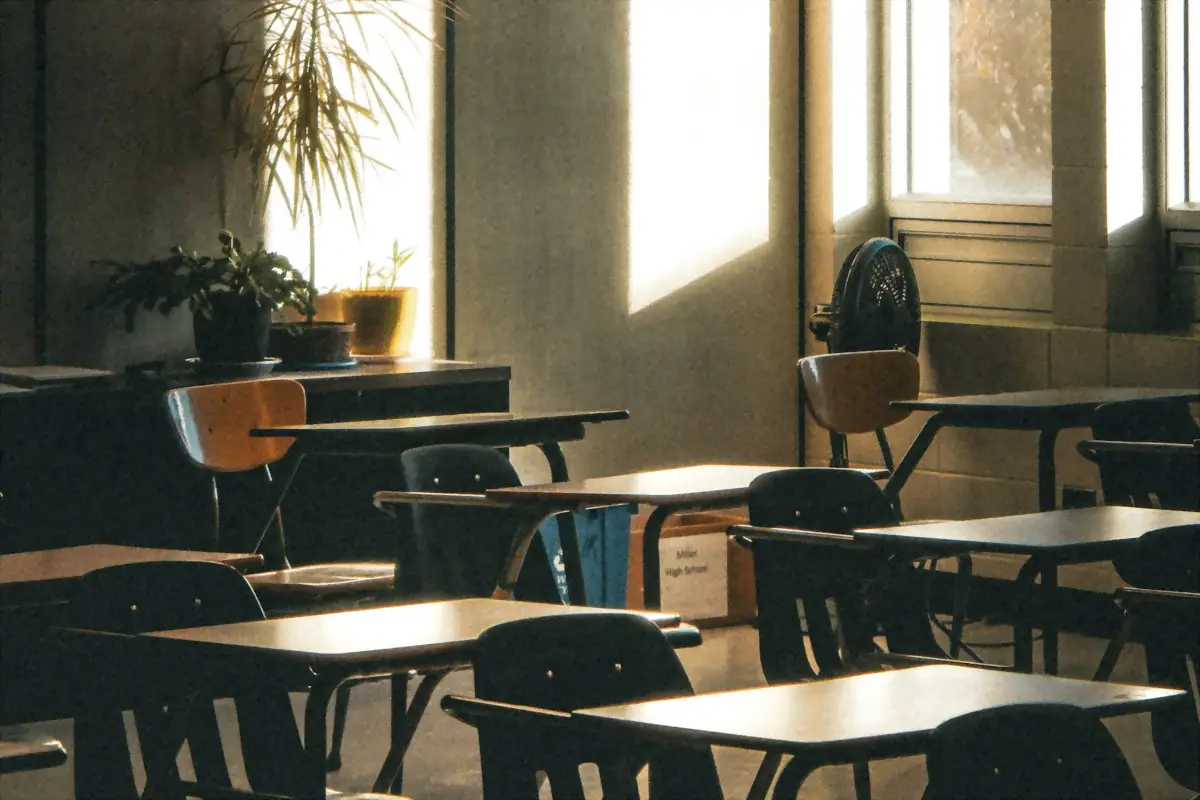
Speech commonly exists on a gradient by audience and setting. Full speech at home with immediate family. Less with grandparents. Whispering to one trusted friend. Nodding and pointing with a teacher. Nothing at all in a group. The same child may speak in the empty classroom before anyone arrives, and not once the room fills.
Other things that show up alongside it: a frozen or blank expression that gets misread as sullenness, stiff posture, avoiding eye contact, slowness to respond even non-verbally, and reluctance to eat or use the bathroom at school. That last one catches people by surprise and is common, because both involve being observed or having to ask.
It is also frequently missed for the opposite reason. A silent child who does their work and never needs chasing is an easy child to have in a classroom of thirty. The Anxiety and Depression Association of America notes that it commonly begins before age five but is often not identified until school entry, when speech demands rise and the difference becomes visible.
And it is frequently misattributed. To rudeness. To stubbornness. To trauma, which is a persistent myth. To a child being spoiled at home. To bilingualism, which is a real confound worth ruling out properly rather than a default explanation.
Why waiting is the wrong instinct
The most common advice a parent gets is to give it time.
The reasoning behind not waiting is straightforward. Every week the pattern runs, it gets more established, and not only in the child. The class learns that this is the kid who does not talk. Teachers stop directing questions their way, sometimes kindly. Other children start answering on their behalf, which is well-meant and removes the last occasions where speech might have been needed. A role hardens around the silence, and by the time anyone intervenes, the child is being asked to break a pattern that everyone around them now expects.
Anxiety also tends to consolidate through avoidance in general. Each time speaking is avoided, the anxiety around it is relieved, which reinforces the avoidance. That loop does not weaken on its own by running longer.
The organizations working on this consistently favor early intervention, and it is treatable. The thing to avoid is spending two years finding out whether it resolves by itself.
What helps, and what makes it worse
The single most useful reframe is that the goal is to lower the demand on speech before expecting any, rather than to encourage speech directly.
Things that reliably backfire:
Asking the child to say hello, thank you or goodbye in front of someone. Rewards or bribes for talking, which add performance pressure and a sense of owing. Expressing visible delight when speech happens, because that raises the stakes on the next attempt. Explaining the child to others in their hearing ("she doesn't talk"), which confirms the identity. Surprising them with a person or situation on the theory of throwing them in. And any framing of the silence as a choice, because it is not one and the child knows it is not one.
Things that tend to help:
Removing the immediate demand. Letting non-verbal communication count fully, at least at first, rather than withholding a response until words arrive. Allowing warm-up time before any expectation. Small groups and one adult rather than a class. Letting speech happen sideways, into a game, a puppet, a recording made at home, or during a shared activity where no one is looking at the child.
The structured versions of this, which is where a clinician earns their keep, work by grading the steps: a child who can speak to a parent in an empty classroom, then with the teacher at the far end of the room, then closer, then present. Each step small enough to be achievable. This kind of graded approach is the mainstay of treatment, and school participation is not optional, since school is where the problem lives.
What we see when speech is not the channel
We build personalized storybooks at DoodleTale from children's drawings, and there is one structural feature of what we do that is relevant here, though I want to be careful about how far to take it.
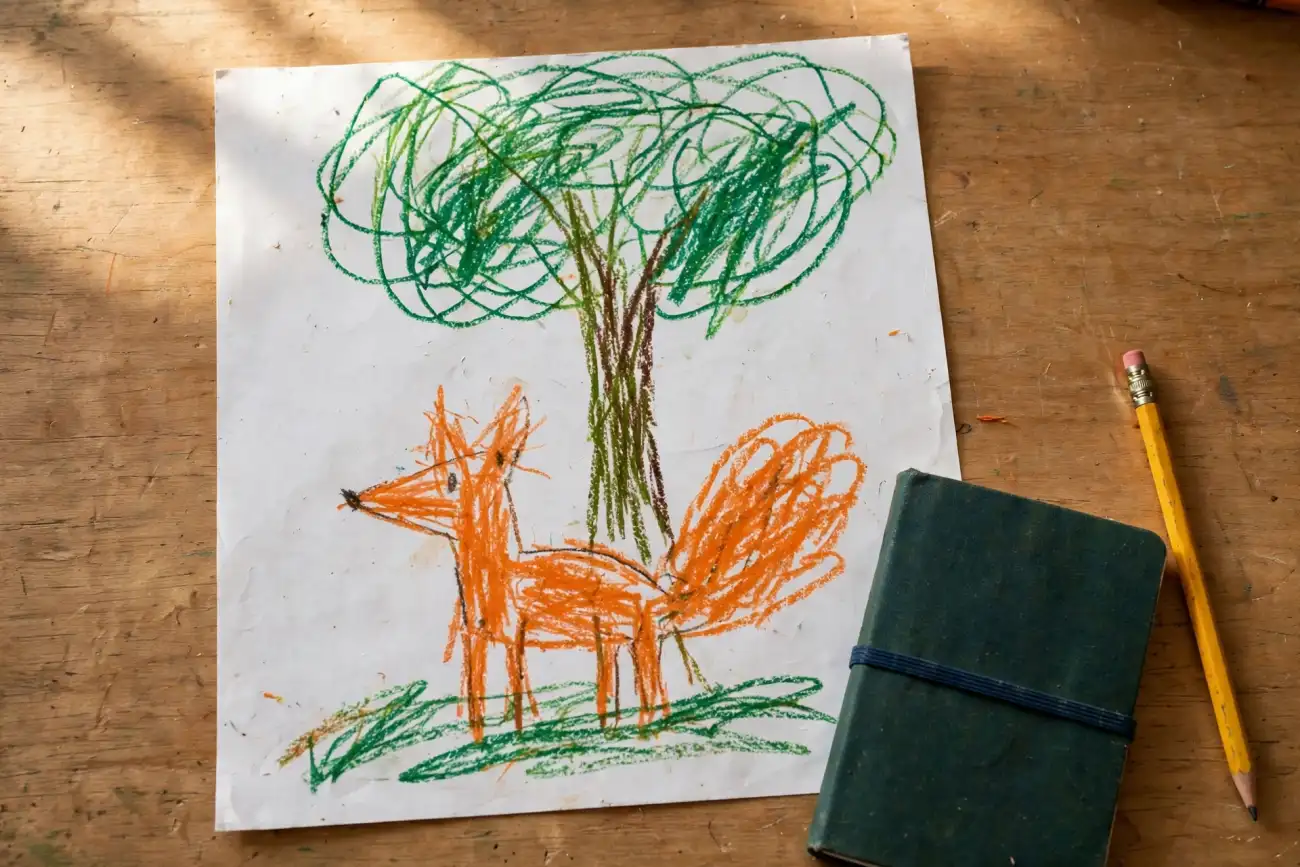
The entire input to our process is a drawing. A child uploads a picture they made, and from that the character, the story and the book get built. At no point does the child have to explain the drawing, describe what it is, defend it, or answer a question about it. There is no step where someone asks "what is it?" and waits.
That absence was not designed as an accessibility feature. It came from something we learned about drawings generally: asking a child what a drawing is tends to be a worse move than describing what you see, because the question implies there was a correct answer and they may have missed it. So we built a pipeline that takes the drawing on its own terms.
The result, for this particular population, is a route by which a child produces something substantial, has it taken seriously, and ends up credited by name as the author of a 30-page book, without having spoken a word in the process. For a child whose main experience of school is being unable to supply words on demand, producing something that arrives complete and does not require narration is a different kind of transaction.
What I am not saying is that this treats anything. It does not. Selective mutism is an anxiety disorder with actual treatment, and a book is not it. What a non-verbal channel can plausibly do is give a child somewhere to be competent and visible while the real work happens elsewhere, which is worth something on its own and should not be oversold as more.
What school accommodation actually looks like
"Tell the school" is the advice everyone gives and it is not specific enough to act on. What you are asking for are concrete changes to how the day runs, and it helps to arrive with the list rather than asking the school to invent it.
In the US this usually runs through a 504 plan or, where there is an educational impact that qualifies, an IEP. The mechanism matters less than the content, and the content is mostly small operational changes.
The ones that come up most often: attendance and participation recorded non-verbally rather than by roll-call response. A designated adult the child can approach, and a non-verbal way to signal needing the bathroom or help, which removes two daily situations that otherwise require asking. Assessment that does not depend on speaking, so reading and comprehension can be demonstrated in writing, by recording at home, or one-to-one, rather than the child being marked down for a skill the disorder prevents them from displaying.
Then the ones about how adults behave. No prompting for greetings. No calling on the child to answer in front of the class until a plan says to. Not announcing or explaining the child's silence to other students or to visiting adults. Advance warning of changes such as a substitute teacher, an assembly or a new seating plan, since unfamiliar adults reliably reset progress.
And the structural one: arrival time. Many children can speak in a classroom that is empty and cannot once it fills, so getting into the room before the crowd, with a few minutes of low-demand time, is one of the highest-value changes available and costs the school nothing.
Put the plan in writing, and include what happens when the teacher changes. Progress with one teacher does not transfer automatically, and an unwritten arrangement disappears in September.
What to do next, in order
Write down the pattern before you talk to anyone. Where does speech happen, with whom, at what volume, and where does it stop. Include the settings where it does work. A concrete map is far more useful at an appointment than "she doesn't talk at school," and it also protects against the account getting flattened into shyness.
Rule out the obvious confounds. Hearing should be checked. If your child is acquiring the school's language, a normal silent period needs distinguishing from this, and that distinction usually needs someone who knows both patterns.
Ask your pediatrician for a referral. Assessment typically involves a psychologist, psychiatrist or developmental pediatrician, often with a speech-language pathologist to rule out an underlying speech or language disorder.
Bring the school in as participants, not as an audience. The classroom is where the behavior occurs, so whatever plan emerges has to be run there. Ask specifically what the teacher will do differently rather than asking them to keep an eye on it.
Change the pressure at home immediately. You do not need a diagnosis to stop prompting for hellos, stop rewarding speech, and stop explaining your child in front of them. Those are free and they start working before any appointment.
Keep at least one place where competence is not verbal. Drawing, building, music, sport, cooking. A child whose entire school experience is defined by what they cannot do needs somewhere the ledger reads differently.
Frequently asked questions
It is an anxiety disorder in which a child consistently does not speak in specific situations, most often school, while speaking normally in others, usually at home. It is classified among the anxiety disorders in the DSM-5. The child is not choosing silence; the speech is blocked by anxiety in that setting.
No. Shyness is a temperament that varies by degree and usually eases once a child warms up. Selective mutism is situation-bound and consistent: near-total speech in one setting and near-total silence in another, persisting for at least a month beyond the first month of school, and interfering with education or social functioning.
Waiting is not the recommended approach. The pattern can become more entrenched over time as the silence gets built into how a child is known at school, and early intervention is generally considered more effective. It is treatable, and treatment works better the sooner it starts.
Pressure to speak usually raises the anxiety that is causing the silence. Bribes, rewards for talking and attention drawn to it tend to backfire. The approaches with support work by reducing the demand on speech first and building up through small, graded steps, often with a clinician's guidance.
Assessment usually involves a psychologist, psychiatrist or developmental pediatrician, and a speech-language pathologist is often part of the picture to rule out a speech or language disorder. Treatment is commonly behavioral, and school has to be involved because school is where the difficulty occurs.
For the temperament version of this, which is a genuinely different thing, the shy kid who never wants to be the center of attention covers warm-up time and being credited without being watched. Helping a kid with big feelings covers the in-the-moment side of anxiety more generally.
It is not selective and it is not a choice. It is anxiety with a very specific shape, and it responds to treatment.
Try it yourself
Turn your child's drawing into a real storybook
Free preview. No account needed. Ships to US & Canada.
Start for free