Why does my child draw scary or dark pictures?
Why does my child draw scary or dark pictures?
Why does my child draw scary or dark pictures? Monsters, black crayon and battles are usually normal. What the research says, what to say, and real warning signs.


Turn your child’s drawing into a book
Free preview, no account needed.
Usually because fear, villains and danger are a normal part of being four, five or six, and drawing is one of the ways kids play with them. Black crayon mostly tells you the character is meant to be nasty, not that your child is sad. A drawing on its own is a poor guide to how a child is doing. Behavior is a better one. Ask about the drawing instead of interpreting it, and call your pediatrician if your child keeps drawing one real event that frightened them, or has new nightmares, regression, or fears that stop them doing things they enjoy.
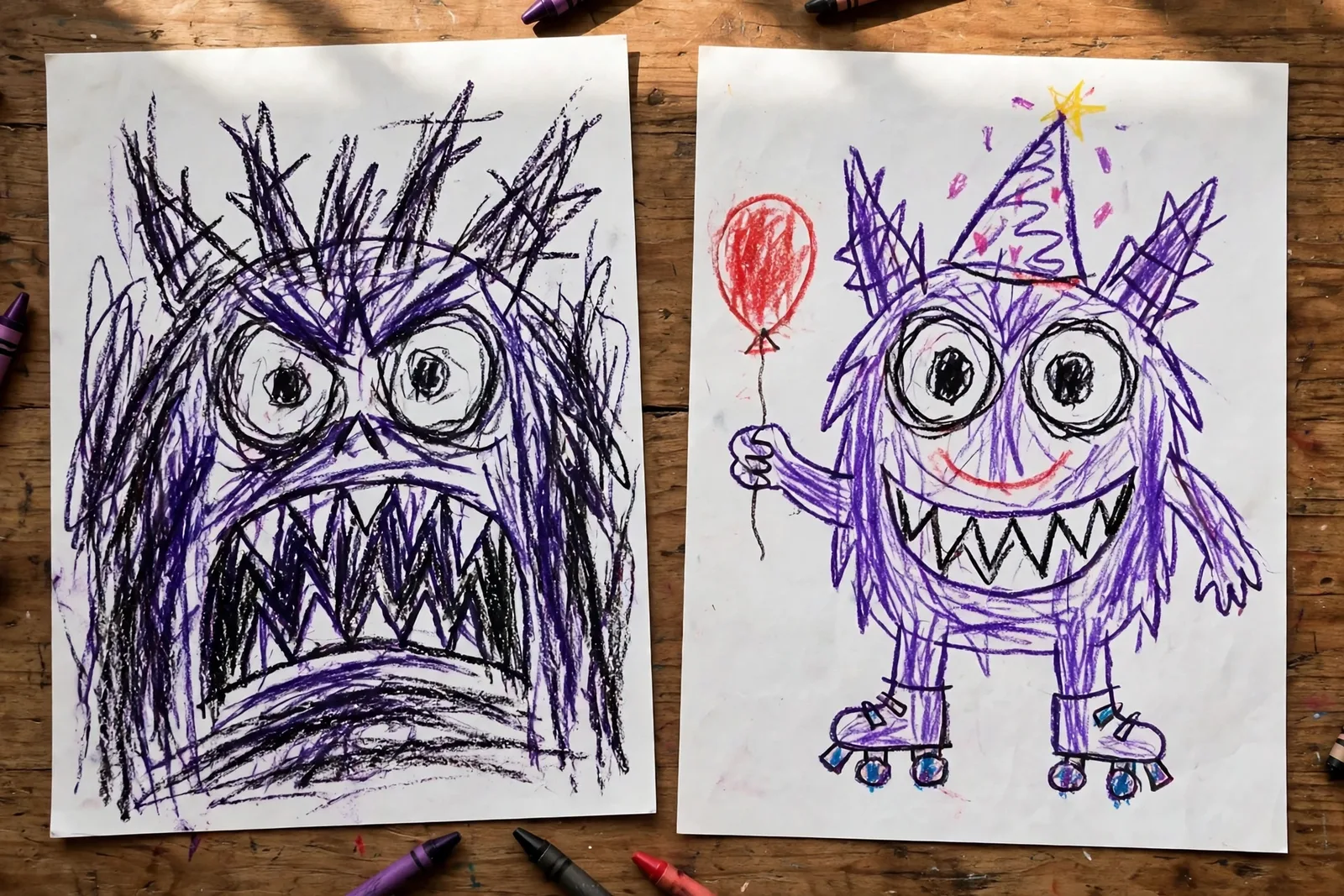
You glance at the paper and there it is: a huge purple creature with a mouth full of zigzag teeth, scribbled so hard the crayon has gone shiny, and a very small stick figure underneath it. Maybe it's a battle with a lot of red. Maybe it's a person lying down with crosses for eyes. Your first instinct is worry, and your second is to wonder whether you should say something.
Most of the time, you're looking at a normal child doing a normal thing. G.K. Chesterton made the point more than a century ago, in an essay defending scary fairy tales: "The baby has known the dragon intimately ever since he had an imagination. What the fairy tale provides for him is a St. George to kill the dragon." Kids don't need adults to introduce them to monsters. They already have them.
Scary drawings are a normal part of childhood
Fears of the dark, monsters, storms and animals are one of the most ordinary parts of early childhood. The NHS puts it plainly: "Common fears in early childhood include animals, insects, storms, heights, water, blood and the dark. These fears usually go away gradually on their own." The psychologist Stephen Garber, co-author of Monsters Under the Bed and Other Childhood Fears, has described how "kids naturally, around the ages of 4 and 5, develop these fears of the dark and other fears."
The numbers back this up. In a study of 190 ordinary schoolchildren aged 4 to 12, most reported fears and scary dreams, and fears about imaginary creatures were more common in the younger children and faded with age.
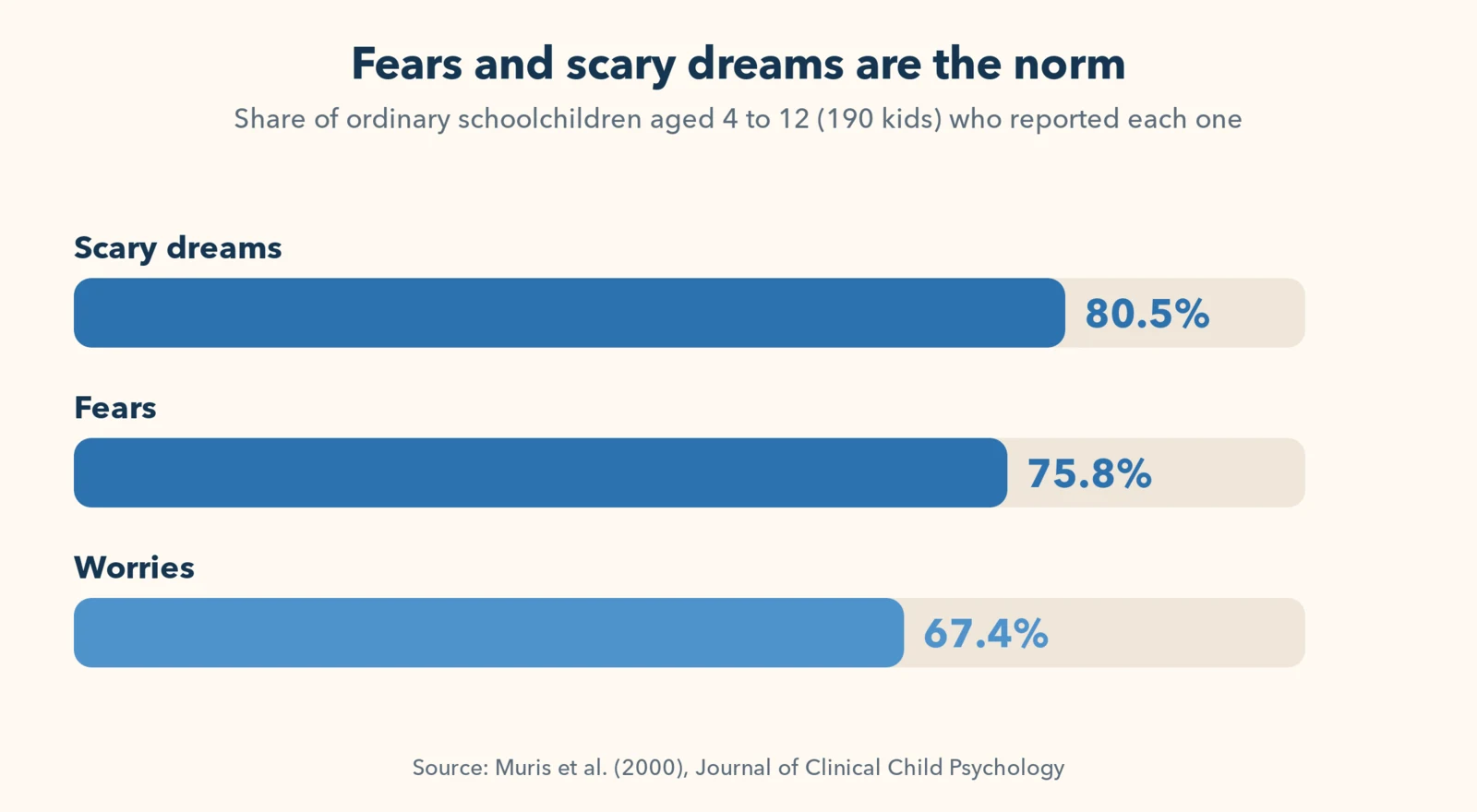
It would be strange if those fears never showed up on paper. A child who spends the evening thinking about what lives under the bed is likely to draw it the next morning. A child who has just discovered that stories have bad guys will draw bad guys.
And plenty of scary drawings aren't about fear at all. Sharp teeth, five eyes and a lot of slime are simply more fun to draw than a house. If your child is cackling while they scribble, you are watching entertainment, not a cry for help.
Four kinds of dark drawings, and what they usually mean
Monsters and creatures. The most common kind, and the least worrying. A monster is a handy container. It can hold the dark hallway, the dog that barked, the scene from a movie, or nothing in particular. Your child doesn't have to know which.
Good guys, bad guys and battles. Swords, explosions, a villain getting zapped. This tends to peak around four and five, and often lasts well beyond, especially once superheroes arrive. Scholastic's parenting guide describes "good guy versus bad guy" play as "a natural part of your child's social and moral growth," because a child acting out both roles "is actually trying on power from both perspectives."
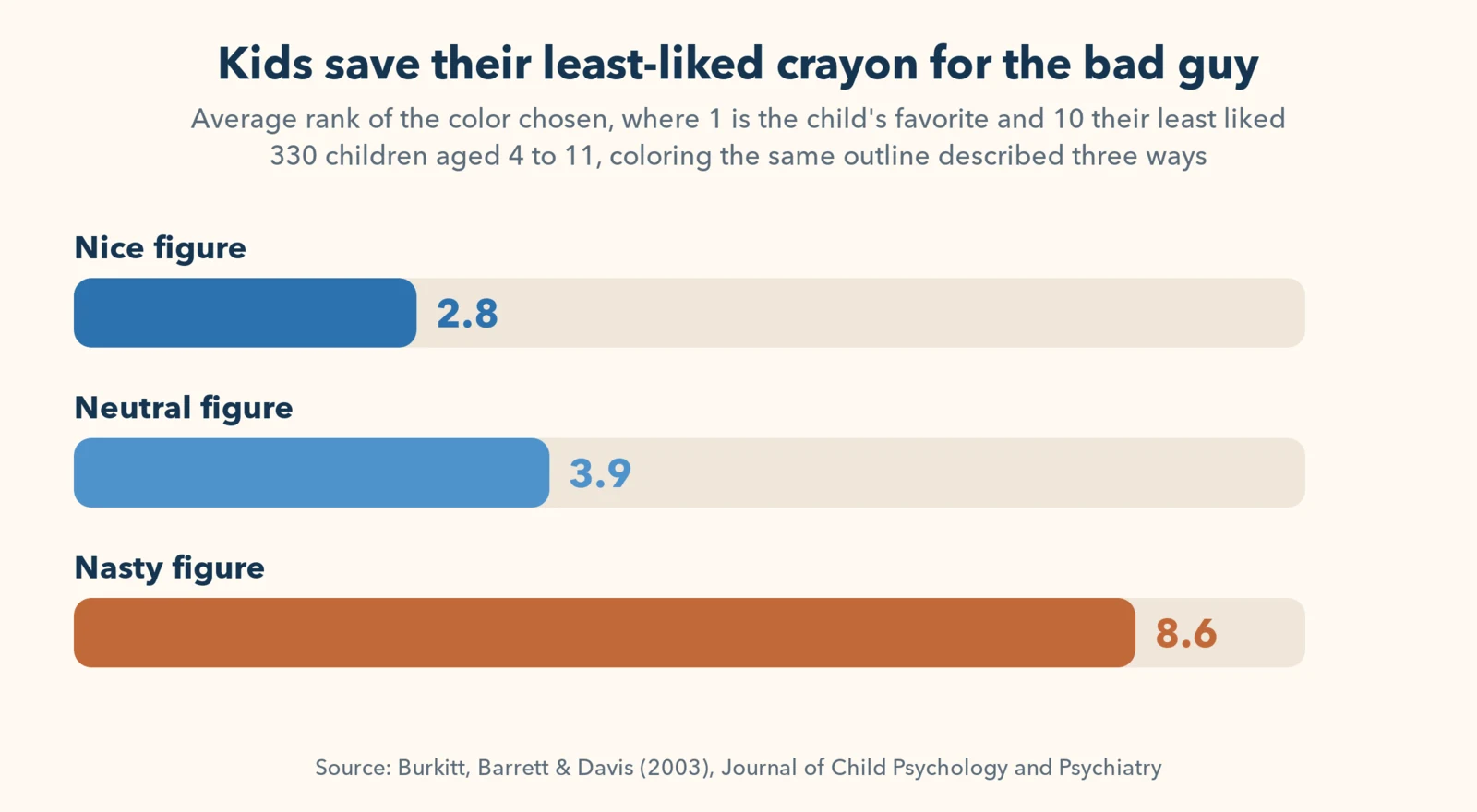
Lots of black. This is the one parents ask about most, and it rests on a myth. In a study of 330 children aged 4 to 11, British researchers asked kids to fill in identical outlines of a man, a dog or a tree, described as nice, nasty or neutral, using one crayon for each. The children "used their more preferred colours for the nice figures, their least preferred colours for the nasty figures," and black "tended to be the most frequently chosen colour" for the nasty ones. The authors cautioned against reading a particular color as a sign of a particular feeling. A black monster tells you the monster is bad. It doesn't tell you your child is sad.
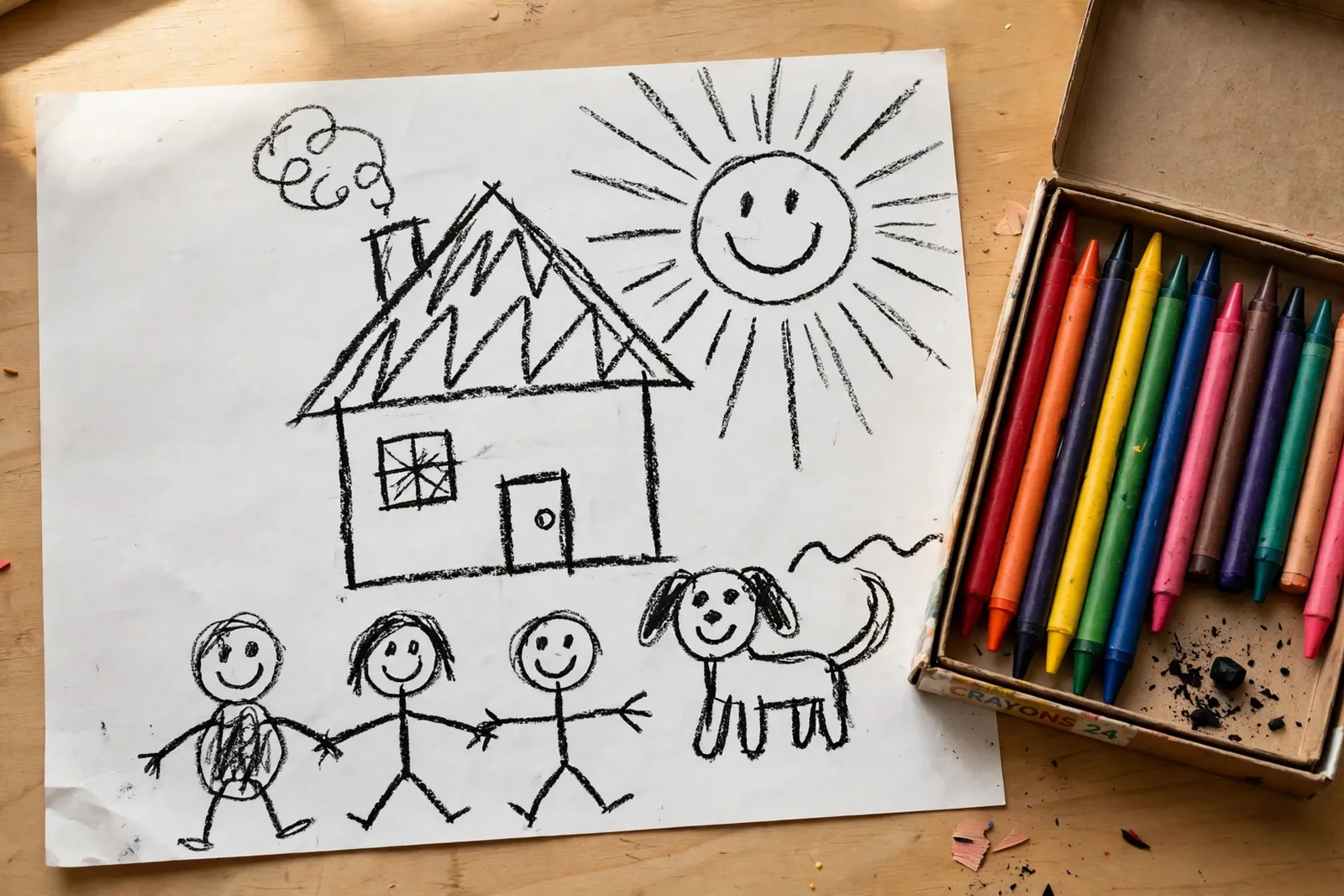
And sometimes black is just the darkest, boldest crayon in the box, or the one nobody else was using.
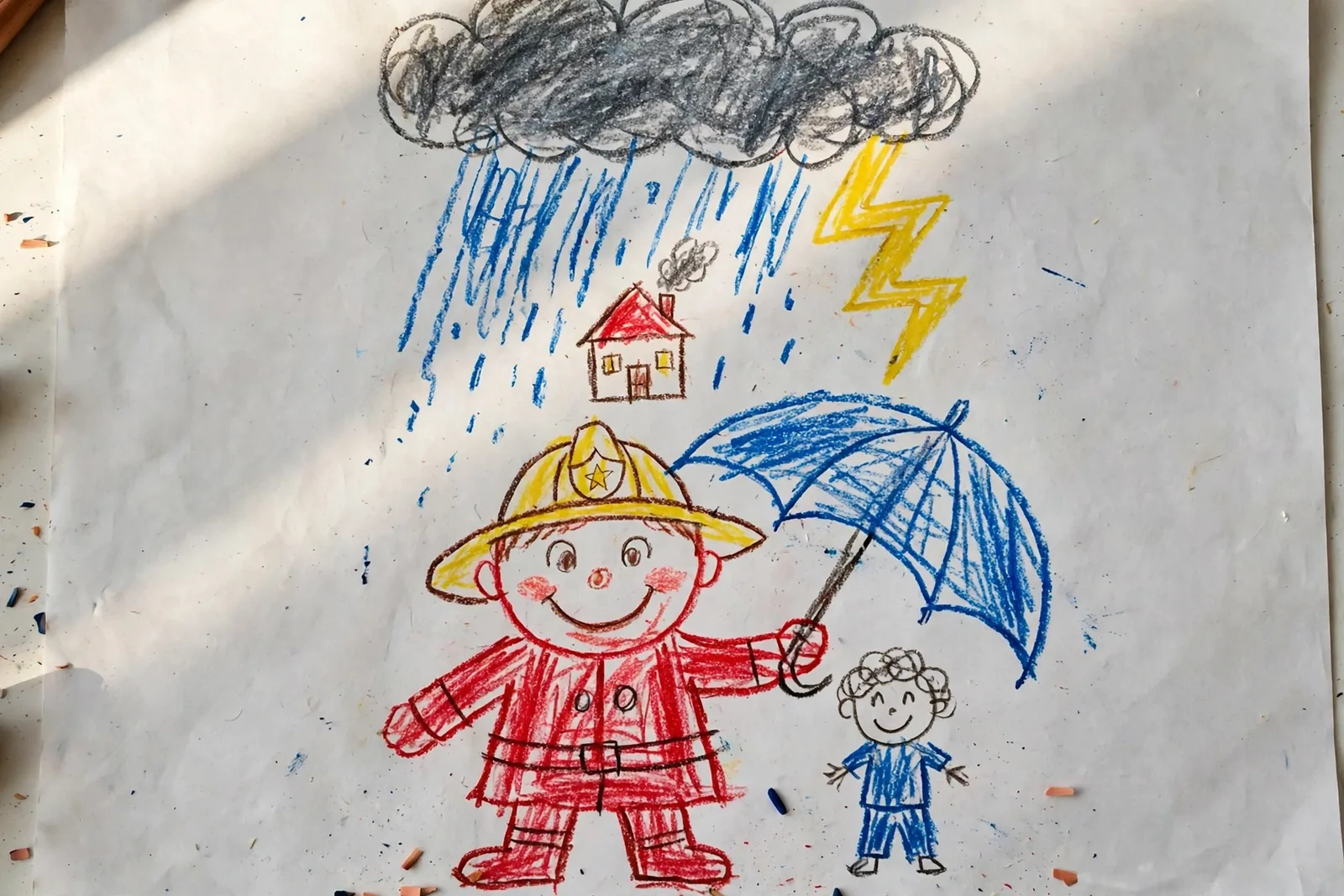
Death, injury and sad figures. These are the hardest for parents to look at. Often they follow something real: a pet that died, a grandparent in the hospital, a news story overheard at dinner. A child drawing a grave for the hamster is doing what adults do with a eulogy. Look at what else is in the picture. The art therapist Cathy Malchiodi, writing about children's drawings after 9/11, observed that "if you had helpers or believed that help was coming, you were able to cope with tragedy more effectively," and that children with less support were less likely to draw helping adults at all. These were her observations rather than a controlled study, but the idea is a useful one. A sad drawing with a helper in it is a child making sense of something.
What a drawing can't tell you
The internet is full of guides to decoding children's drawings, from the meaning of a missing hand to the meaning of purple. Most of them have no evidence behind them. Even the formal versions psychologists once used, where a child draws a person or a house and a clinician interprets it, hold up poorly. A major review in Psychological Science in the Public Interest concluded that "the validity evidence for human figure drawings is even more limited" than for other projective tests.
The National Child Traumatic Stress Network, noting that young children often don't have the words to explain what is wrong, makes a related point: "Behavior is a better gauge and sudden changes in behavior can be a sign of trauma exposure." The drawing is a starting point for a conversation, not a diagnosis. What kids' drawings reveal about them covers what drawings can and can't tell you in more depth.
Does drawing the scary thing actually help?
It's often said that kids "draw out" their fears and feel better for it. The research is more interesting than that. Jennifer Drake and Ellen Winner tested it directly. Children aged 6 to 12 were asked to think of a disappointing event, then either drew that event or drew a house. A second study added a group that copied pictures. "Mood improved significantly more in the distract than in the vent or copy condition." Drawing improved mood through distraction, "not via venting."
That doesn't make scary drawings bad. It means the benefit may come less from staring at the monster and more from the act of making something. As Drake put it in a 2015 essay for the National Endowment for the Arts, "It is the act of creating something that makes children feel better." What drawing does reliably do is get kids talking. Malchiodi notes that "drawing while talking about an emotionally laden event can actually stimulate two to three times as much narrative than just talking alone."
So treat the drawing as an invitation. You don't need to make your child draw their fears, and you don't need to stop them either.
What to say about a scary drawing
Ask, don't analyze. "Tell me about this one. What does he do all day?" invites a story. "Are you scared of something?" puts words in your child's mouth. The Child Mind Institute's guidance for parents after a frightening event suggests the same approach: "To start a discussion, you may comment on what a child has drawn." Comment on the drawing itself, not your theory about it. What to say when your child shows you a drawing has phrases for this.
If a real fear comes out, take the feeling seriously without arguing about whether the monster exists. Then give your child some power. Maurice Sendak, explaining why children love Where the Wild Things Are, told NPR that the fun is "the absurdity of his having control over them by staring into their yellow eyes. It's what every child would like, to have control over such things."
Drawing can do that. Ask what the monster is afraid of. Ask what it would look like on roller skates. Draw a superhero version of your child standing next to it. You're not erasing the monster. You're handing your child the pen.
Monster spray: two schools of thought
Parents of anxious bedtime kids eventually face the monster spray question, and experts genuinely disagree.
One view says don't play along. Garber has said "our role as parents is to support our kids and help them face fears, not avoid them," and a newspaper profile summarized him as wary of anti-monster sprays because they can suggest parents believe in the monsters too. The other view treats it as a tool. A handout from a clinician's guide to pediatric sleep, published by the American Psychological Association, describes it as "a fun way to help your child feel safe and in control at bedtime."
Both sides agree on the goal, which is a child who feels in control. The handout gives a useful test: over time, you should see your child "using the spray less and less" as they come to believe the monsters won't come back. If that's happening, it's working. If your child needs more spray each night and the fear is growing rather than shrinking, the facing-it approach is the better fit.
When to look past the drawing
The question is never "how scary is the picture?" It is "how is my child doing?"
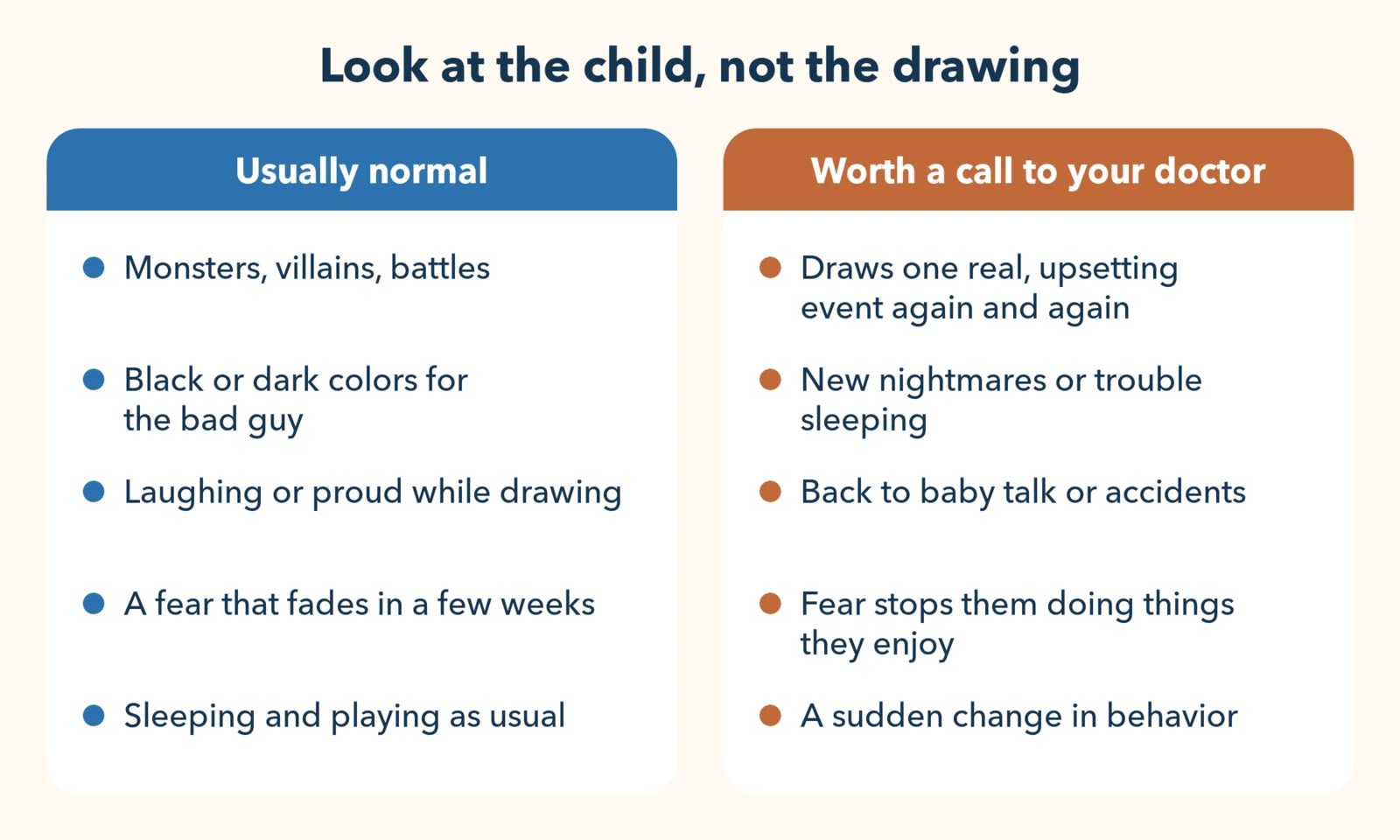
The NCTSN's list of signs in preschool children who may have experienced trauma includes "re-creating the traumatic event (e.g., repeatedly talking about, 'playing' out, or drawing the event)," along with "difficulty at naptime or bedtime" and "regression in previously mastered stages of development (e.g., baby talk or bedwetting/toileting accidents)." The key word is repeatedly, and the key detail is a specific event. A child who draws a different monster every day is playing. A child who draws the same car crash every day for weeks is stuck.
For ordinary fears, the NHS says anxiety starts to cause problems when the fear is "very strong, or getting worse, and does not go away" or if "it gets in the way of daily activities, stopping your child doing things they enjoy." In any of those cases, start with your pediatrician, who can refer you to a child therapist if needed. Helping a kid with big feelings has more on the everyday side of this.
Give the monster an ending
Once a monster is on paper, it can change. It can lose its roar, find a friend, or turn out to be scared of the dark itself. That is Chesterton's St. George, in crayon. The story a child tells about the monster matters more than how many teeth it has.
DoodleTale turns a child's drawing into a printed storybook with that character as the hero, so a monster your child drew can star in a story with a kind ending. Let your child pick which monster. It's usually the one with the most teeth, and it should be.
Yes. Fears of monsters, the dark and storms are common in the preschool years, and drawing monsters, villains and battles is a normal part of play from about age four. On its own, a scary drawing tells you very little. Changes in sleep, mood or behavior tell you much more.
Usually less than parents fear. In a study of 330 children aged 4 to 11, kids used black most often for nasty figures and their more-liked colors for nice ones. Black tends to say something about the character being drawn, or simply about which crayon is closest, rather than about the child's mood.
Not by itself. Look at the rest of your child's life. If they sleep, play and enjoy their usual activities, monster drawings are almost always play or ordinary fear. If they keep drawing a specific real event that scared them, or have new nightmares or regression, talk to your pediatrician.
Ask about it before you interpret it. "Tell me about this one. What does he want?" invites the story. If a real fear comes out, name the feeling without arguing about whether monsters exist, then give your child some power in the story, like a way for the monster to be beaten or befriended.
A drawing alone is not a reliable sign. What trauma specialists look for is behavior, especially repeatedly drawing or playing out the same upsetting event, along with new sleep problems, new fears, or a return to younger behaviors like baby talk. If you see that combination, talk to your pediatrician or a child therapist.
The monster under the bed gets a lot smaller once it has a name and a favorite snack.
Try it yourself
Turn your child's drawing into a real storybook
Free preview. No account needed. Ships to US & Canada.