Send kids' artwork to make a book: what to know before you mail
Send kids' artwork to make a book: what to know before you mail
Send kids' artwork to make a book: how mail-in services work, what they cost per piece, how long they take, and what happens to your originals.
Mail-in services like Artkive and Plum Print send you a box, you ship your child's original drawings to them, and they photograph everything and print a bound book from the reproductions. It works well for a large collection, takes closer to two months than two weeks, and getting the originals back is a paid extra you have to choose up front. If you only have one drawing you care about, an upload-based service like DoodleTale does it from a phone photo and nothing leaves the house.
Search for a way to send kids' artwork off and get a book back and the results do not obviously belong together. One service wants a box of originals. One wants a single photo. A third turns out to be a print-on-demand platform aimed at adults publishing novels.
They are answering different versions of the request. This is the part most guides skip: what the mail-in route actually involves once you commit to it, and what you should decide before you tape the box shut. If you want the wider comparison of routes, including doing it yourself, how to make a book from kids' artwork covers all three.
What sending kids' artwork to make a book actually involves
Both major mail-in services follow the same shape, and the shape is worth knowing before you start.
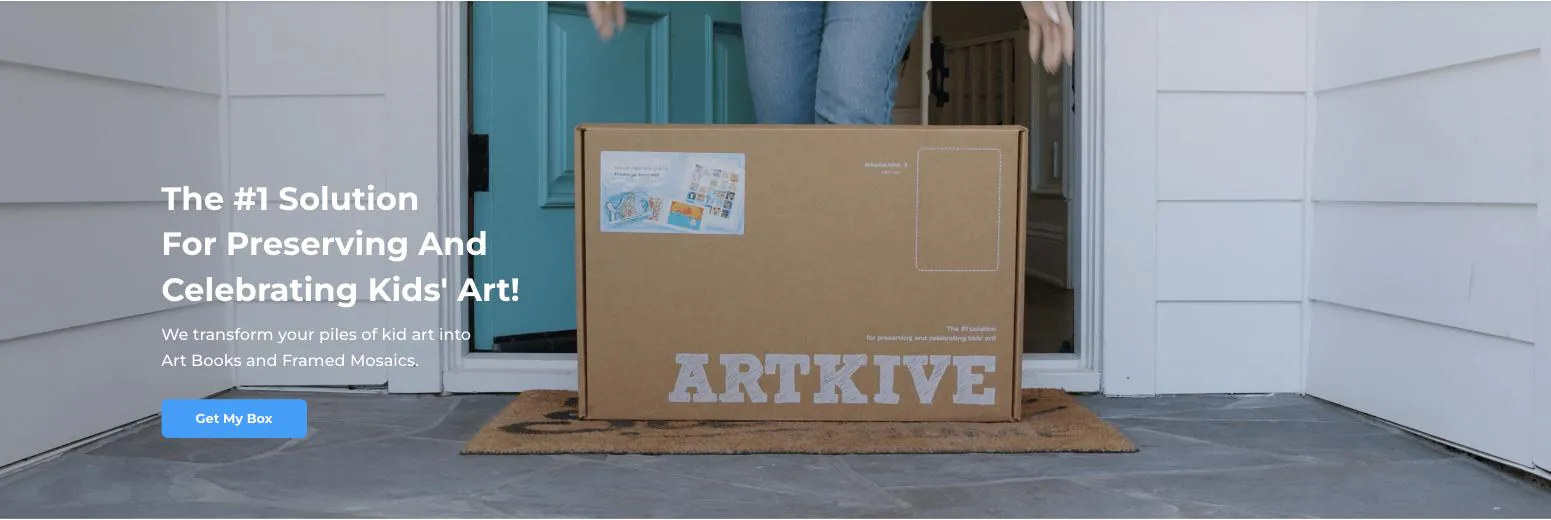
You order a kit. They ship you a crush-proof box and a prepaid label. Artkive's box holds somewhere in the range of 300 to 400 pieces. Plum Print takes up to about 350 and charges a $49.99 deposit for the kit, which then applies to your order.
You fill it. This is the step people underestimate. Filling the box is a decision-heavy afternoon, because you are not packing, you are curating. Every piece you include costs money at the per-piece rate, and every piece you leave out is one you have decided is not worth keeping.
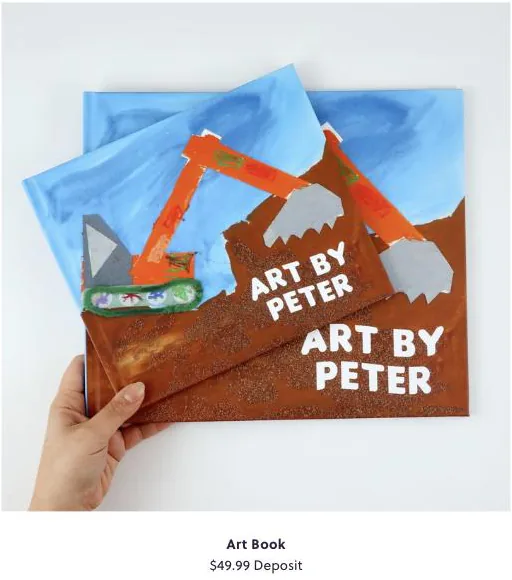
You ship it and wait. Their team photographs each piece professionally, builds a digital proof, and you review and approve it. Then it prints and comes back to you as a hardcover with each page reproducing one piece of art, usually with the child's name and the year.
The output is an archive. A gallery catalog of your child's work, arranged by date or theme, which is genuinely the right answer if you have three years of drawings in a cupboard and no system. It is not a story, and nobody is reading it at bedtime. That is not a knock, it is just what the format is for.
The part to decide before you seal the box: your originals
This is the question worth slowing down on, because it is the one that has no fix afterwards.
Getting your originals back is an add-on. Both services offer it, both charge for it, and neither treats it as the default. Artkive's return runs around $20. Plum Print handles it as a separate paid option. If you assume the box comes back and you did not tick the box that makes it come back, that is a bad week.
So decide before you ship, not after. And whichever way you decide, photograph everything first.
That last part is not optional advice. "We photograph every piece at high resolution" is a promise about their scan, not about your paper. Shipping carries risk that no amount of careful handling removes, and a phone camera on a flat surface near a window handles a stack of drawings in half an hour. How to preserve kids' artwork walks through getting clean shots without a scanner. Thirty minutes of photographing removes the one outcome here that cannot be undone.
If a specific drawing is genuinely irreplaceable, the one your child made the week their grandfather died, the first thing they drew that looked like a person, consider keeping it out of the box entirely and handling it separately.
How long it really takes
Plum Print publishes its timeline in its FAQ, and it is the most honest number to plan around.
The kit reaches you in 2 to 6 business days depending on your coast. Once your materials arrive at their studio, turnaround is roughly four to six weeks. After you approve the proof and pay the invoice, the book ships in 5 to 7 business days. A rush option of about two weeks exists if you contact them directly.
Add it up and you are looking at closer to two months than two weeks, before you account for your own packing time. Artkive works on a comparable scale.
The practical takeaway: this is not a gift you order in December for Christmas. If a mail-in book is going to be a present, start it a full season ahead, and confirm the current timeline on the service's own site rather than trusting a number in any article, including this one.
What it costs per piece
Mail-in pricing scales with volume, which is why the sticker price looks alarming until you divide it.
Artkive hardcovers start around $75 for 25 pages, with originals returned for about $20 more. Plum Print's $49.99 deposit gets you the kit, and a 10×8 hardcover starts at $175 with a 20-piece minimum, then roughly $2.60 for each additional piece. Their site has a pricing slider that shows you the total before you commit, which is worth using before you decide how much goes in the box.
For a large collection that math is reasonable. Somebody photographed 200 pieces of paper individually, color-corrected them, laid them out, and bound the result. For a small collection it is expensive, and for a single drawing it makes no sense at all.
If it is Artkive specifically you are weighing, the full price ladder and the clause that fixes your bill before the box ships are worth reading first, along with what parents switch to instead.
If you only have one drawing, do not mail anything
The volume question decides everything. Mail-in services are built for a box. Sending one piece of paper into a system designed for 350 is using the wrong tool.
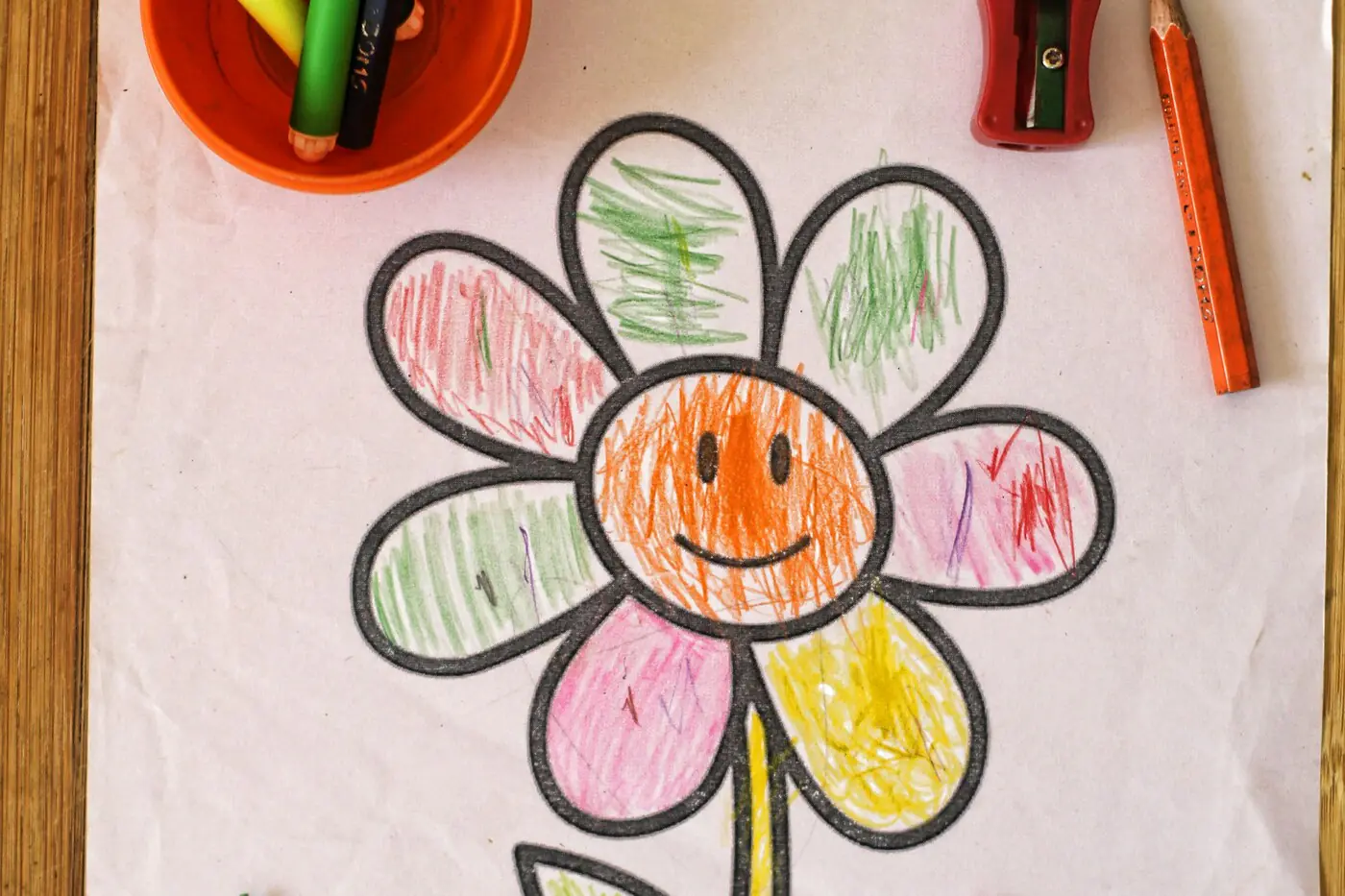
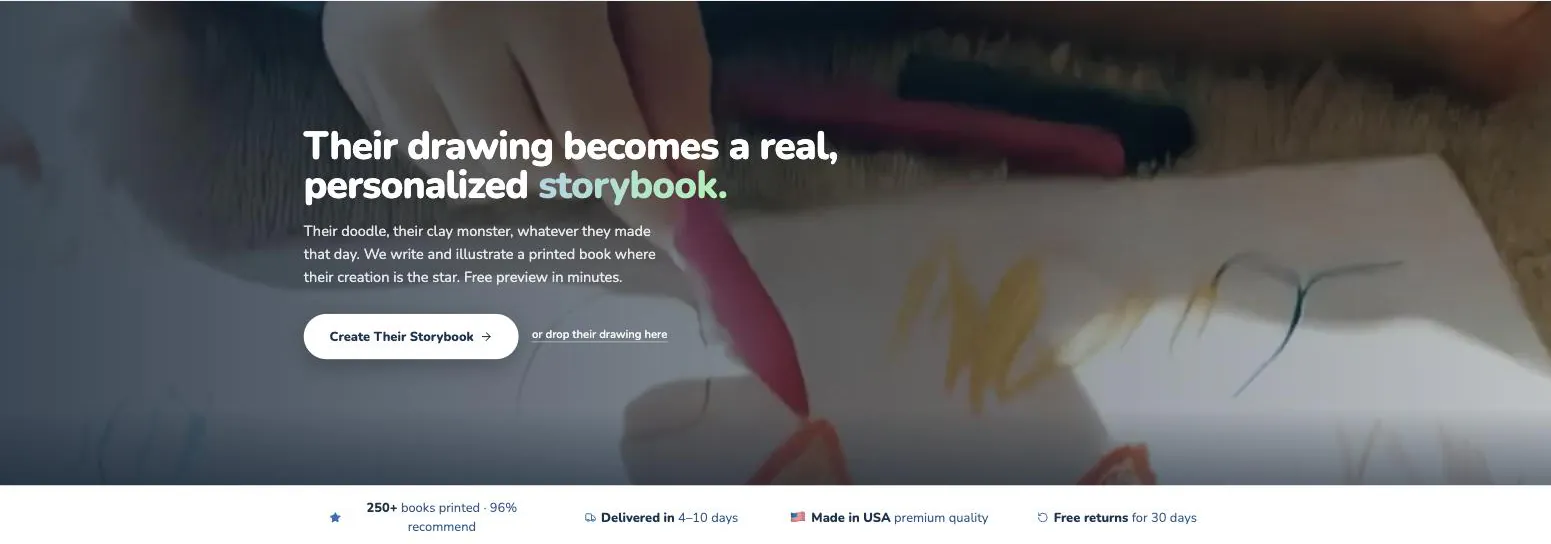
DoodleTale is the other answer to the same search. You photograph one drawing with your phone and upload it, and it generates a printed storybook where that drawing becomes the main character, with your child as the named hero of the story. Any medium counts: crayon, marker, paint, or a photo of something they built out of clay or paper.
Nothing is mailed, so the original stays where it is, curl and all, and there is no shipping risk to think about. There is a free preview of the whole book before you pay, and no account needed to see it. The printed version is an 8×8 inch softcover, 30 illustrated pages, at $29.99 with free shipping in the US and Canada in 4 to 10 days, or $9.99 for the digital. Full specifications are on the printed book page.
The real difference is not the logistics, it is what you end up with. A mail-in book is an archive of what your child made. A storybook built from one drawing is a narrative where that drawing becomes the world the story happens in. One is a thing a parent shelves and shows people. The other is a thing a child brings to you at bedtime.
Which one you actually need
Count the drawings.
If the answer is dozens or hundreds and the goal is to stop the pile from growing, mail-in is the right route. Order the kit, photograph everything before it ships, choose the originals-return option up front, and start two months before you need it.
If the answer is one, the one that made you stop and actually look, mail-in is overkill and slow. Upload it and keep the paper.
Plenty of families do both, years apart. The archive handles the volume problem once. The storybook handles the one drawing that was never really about volume. If you are weighing this against framed prints, canvases, and the rest, the best gifts made from kids' artwork lays the options out side by side.
Before you ship: the five things to settle
If you have decided on mail-in, run through this before the box leaves your house.
Photograph every piece. Flat surface, natural light, phone directly overhead, no flash. This is the only step here that protects you against an outcome with no remedy. (If the child hasn't filled the pages yet, making your own doodle book is the cheaper first step.)
Choose the originals-return option explicitly. It is a paid add-on at both services, and assuming it happens by default is the most common expensive mistake in this whole process.
Pull anything genuinely irreplaceable out of the box. Not the good drawings, the irreplaceable ones. There is usually a difference, and it is usually obvious which is which.
Do the per-piece math before you fill it. At roughly $2.60 a piece past the minimum, the difference between 40 pieces and 90 is real money. Use their pricing slider rather than filling the box and finding out.
Check the current turnaround on their site. Published timelines move with season and volume, and December is not the same as March. If the book is for an occasion, confirm the date directly with the service and pay for rush if it is tight.
None of this is difficult. All of it is easier before the box is taped than after.
Frequently asked questions
Prices and turnaround times change. Confirm both on the service's own site before you pack a box you cannot unpack.
Try it yourself
Turn your child's drawing into a real storybook
Free preview. No account needed. Ships to US & Canada.
Start for free